CM Fadnavis Pays Tribute to Birsa Munda on Janjatiya Gaurav Diwas
Synopsis
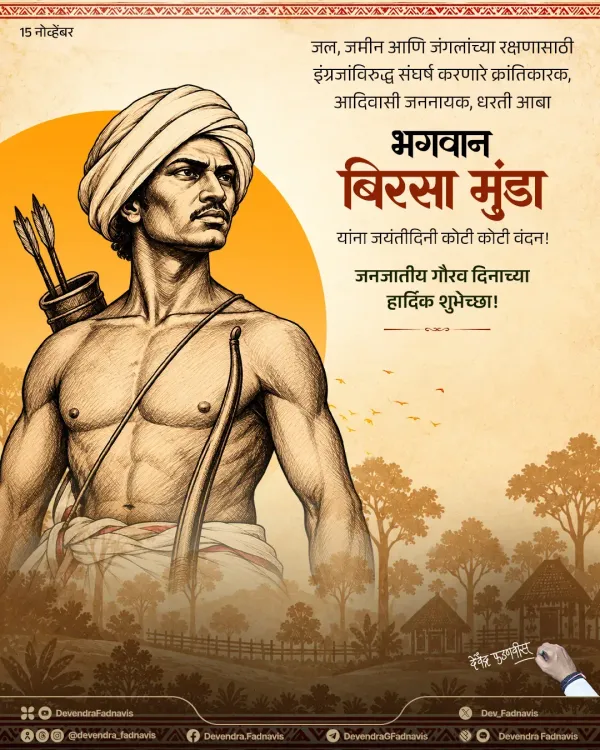
Maharashtra Chief Minister Devendra Fadnavis paid tribute to 'Dharti Aaba' Bhagwan Birsa Munda on his birth anniversary, marking Janjatiya Gaurav Diwas on 15 November 2026 and saluting the tribal leader's historic struggle for water, land, and forest rights.
Key Takeaways
Janjatiya Gaurav Diwas is observed every year on 15 November , the birth anniversary of tribal icon Bhagwan Birsa Munda .
The national observance was formally instituted by the Government of India in 2021 to honour tribal contributions to the freedom struggle.
Birsa Munda led the Ulgulan movement against British colonial rule, demanding tribal rights over water, land, and forests.
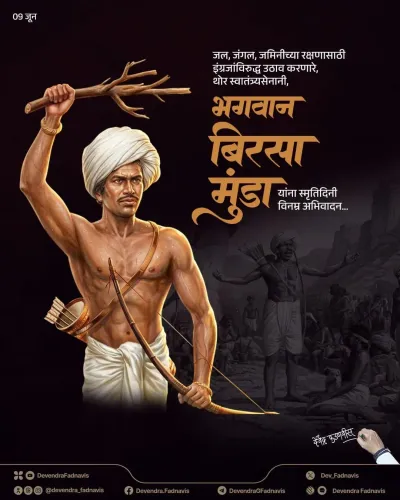
CM Devendra Fadnavis posted tributes in both English and Marathi , calling Birsa Munda a source of inspiration for generations.
Birsa Munda, known as 'Dharti Aaba' (Father of the Earth), died in 1900 aged 25 while in British custody.
Tribal welfare and the jal-jameen-jungle framework remain active policy themes for both the Maharashtra state government and the Centre.
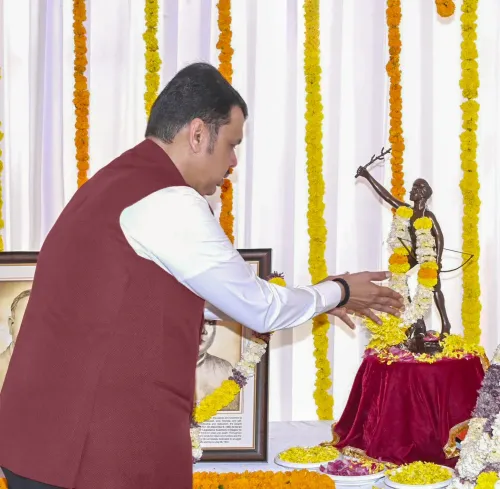
On the birth anniversary of Bhagwan Birsa Munda, Maharashtra's streets and corridors of power paused to remember the man who took on an empire — with a bow, a battle cry, and an unbreakable claim to jal, jameen aur jungle (water, land, and forest). Maharashtra Chief Minister Devendra Fadnavis marked Janjatiya Gaurav Diwas on Sunday, 15 November 2026, with a heartfelt tribute to the iconic tribal leader, calling him a source of inspiration 'for generations.'
Who was 'Dharti Aaba' — and why the title matters
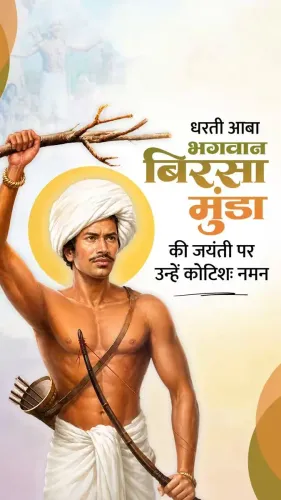
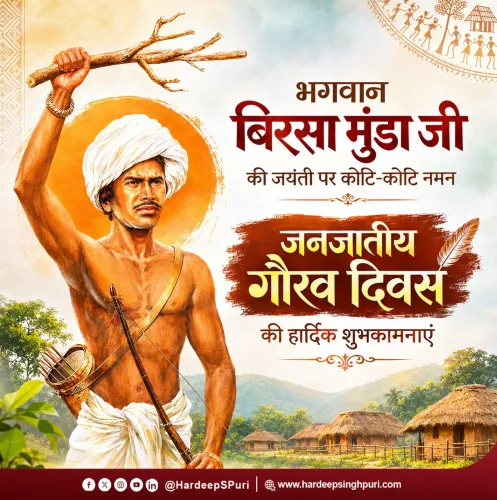
Bhagwan Birsa Munda, reverentially called Dharti Aaba — 'Father of the Earth' — was born on 15 November 1875 in the Munda tribal community of present-day Jharkhand. In the closing years of the 19th century, he led the Ulgulan ('Great Tumult') movement, a fierce uprising that challenged British colonial land policies systematically stripping tribal communities of their ancestral forests and fields. His three-pronged demand — rights over water, land, and forests — resonates just as sharply today as it did under colonial rule.
Fadnavis, posting in both English and Marathi, offered 'koti koti vandan' — crores of salutations — to Birsa Munda, framing his struggle explicitly as one against British rule for the protection of tribal homelands. The hashtags #BhagwanBirsaMunda and #JanjatiyaGauravDiwas anchored the post squarely within the national commemorative moment.
From movement to national observance: how 15 November became Janjatiya Gaurav Diwas
The Government of India formally instituted Janjatiya Gaurav Diwas in 2021, designating 15 November — Birsa Munda's birth anniversary — as the day to honour tribal leaders and their role in India's freedom struggle. The move was designed to place tribal icons firmly inside the country's mainstream commemorative calendar, alongside figures from other strands of the independence movement.
Since then, chief ministers and national leaders across party lines have issued public tributes on this date, reflecting how the observance has taken institutional root. For the BJP, which governs Maharashtra and the Centre, spotlighting Birsa Munda carries particular political weight — tribal welfare and the jal-jameen-jungle framework have become recurring themes in both state and central government messaging.
Maharashtra's tribal communities and the day's wider significance
Maharashtra is home to a substantial Scheduled Tribe population spread across its northern districts, the Sahyadri belt, and the Vidarbha region. Janjatiya Gaurav Diwas serves as an occasion for state governments to spotlight tribal development programmes and reaffirm constitutional commitments to communities whose rights Birsa Munda fought to protect over a century ago.
Fadnavis's public tribute — posted early on a Sunday morning — signals the day's importance on the official calendar. The struggle he described as 'continuing to inspire generations' is not merely historical; the debates over forest rights, land acquisition, and community resource access remain live policy questions in Maharashtra and across India.
Birsa Munda died in 1900, aged just 25, in British custody — but the Ulgulan he ignited never really ended. Every year on 15 November, the nation is asked to remember that.
Point of View
The CM links a 19th-century colonial-era struggle to contemporary debates over forest rights and tribal land, lending the tribute policy relevance beyond ceremonial gesture. For a state with a large Scheduled Tribe population, such public positioning also carries electoral and administrative weight. The durability of Birsa Munda's symbolism across party lines, however, reflects a genuine and deep cultural resonance that transcends any single government's messaging.
NationPress
15 Nov 2026
Frequently Asked Questions
What is Janjatiya Gaurav Diwas and when is it celebrated?
Janjatiya Gaurav Diwas is a national observance held every year on 15 November to mark the birth anniversary of tribal leader Bhagwan Birsa Munda and recognise the contributions of tribal communities to India's history. The Government of India formally instituted it in 2021 .
Who was Bhagwan Birsa Munda?
Bhagwan Birsa Munda was a late 19th-century tribal leader from the Munda community in present-day Jharkhand. He led the Ulgulan ('Great Tumult') uprising against British colonial rule, fighting for tribal rights over water, land, and forests. He is reverentially called Dharti Aaba , meaning 'Father of the Earth,' and died in British custody in 1900 at the age of 25.
What did CM Devendra Fadnavis say on Janjatiya Gaurav Diwas?
Maharashtra CM Devendra Fadnavis offered tributes in English and Marathi on 15 November 2026 , calling Birsa Munda's struggle to protect water, land, and forests an inspiration 'for generations' and offering koti koti vandan (crores of salutations) on his birth anniversary.
Why is Birsa Munda called 'Dharti Aaba'?
Dharti Aaba means 'Father of the Earth' in the Munda language and reflects the deep reverence tribal communities hold for Bhagwan Birsa Munda , who championed their ancestral rights over land, forest, and water against colonial dispossession.
What was the Ulgulan movement?
The Ulgulan , meaning 'Great Tumult,' was an armed tribal uprising led by Bhagwan Birsa Munda in the late 1890s against British colonial policies that stripped tribal communities of their forest and land rights. It is considered one of the significant revolts against colonial rule in Indian history.