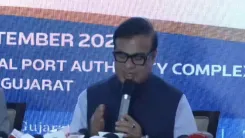
CM Himanta, Gujarat CM Lay Foundation for Rs 1,200 Cr E-Methanol Plant
Synopsis
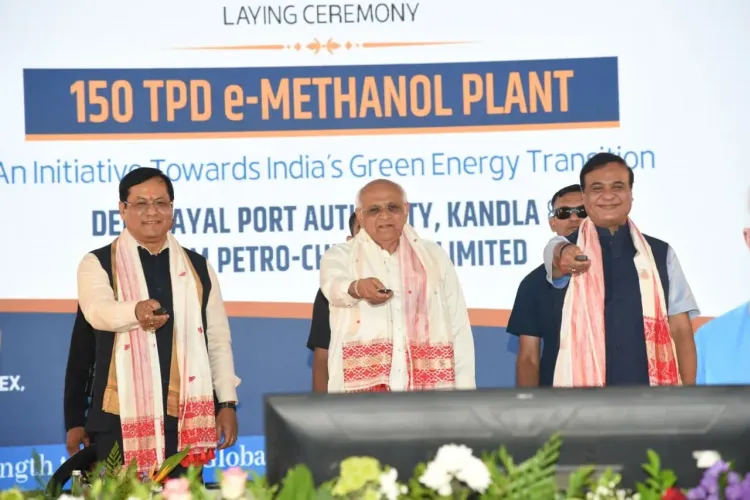
Chief Ministers of Assam and Gujarat, alongside Union Minister Sarbananda Sonowal, laid the foundation stone of a 150 TPD E-Methanol Plant at Kandla on 26 September 2026. The Rs 1,200-crore Phase-I project targets 50,000 tonnes annual output and 3,500-plus jobs, advancing India's maritime green-fuel push.
Key Takeaways
150 TPD E-Methanol Plant foundation stone laid at Kandla, Gujarat on 26 September 2026 .
Phase-I investment exceeds Rs 1,200 crore , with annual full-capacity output of 50,000 tonnes .
Project is expected to generate 3,500+ direct and indirect jobs in the Kandla industrial corridor.
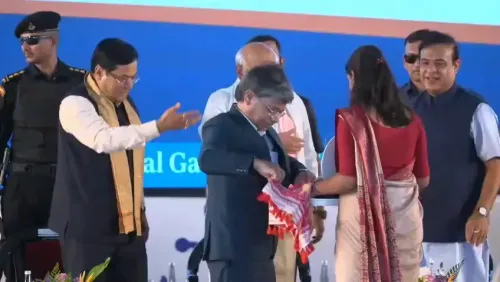
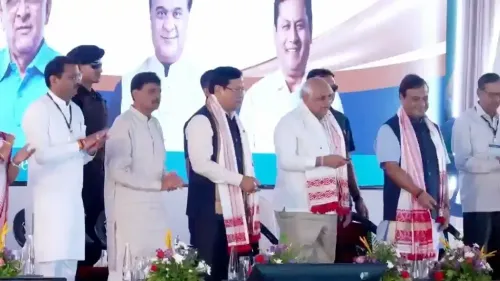
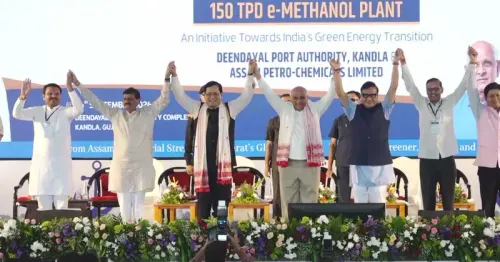
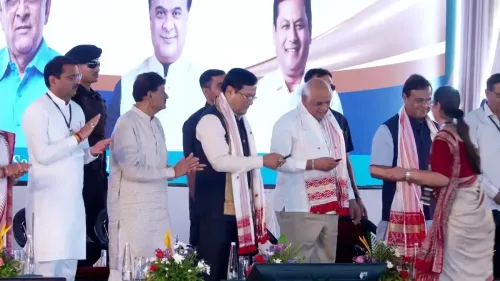
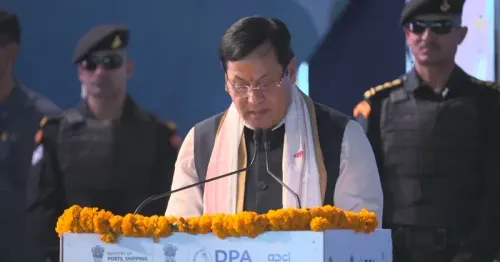
CM Himanta Biswa Sarma , Gujarat CM Bhupendra Patel , and Union Minister Sarbananda Sonowal jointly laid the foundation stone.
The plant targets green methanol as a low-carbon alternative fuel for the maritime sector.
The project aligns with India's National Green Hydrogen Mission (2023) and the country's net-zero by 2070 commitment.
A green-fuel handshake between two states is reshaping India's maritime energy map. Chief Minister Himanta Biswa Sarma of Assam joined Gujarat Chief Minister Bhupendra Patel and Union Minister Sarbananda Sonowal on Saturday, 26 September 2026, to lay the foundation stone of a 150 TPD E-Methanol Plant at Kandla, Gujarat — a facility designed to pump out 50,000 tonnes of green methanol annually at full capacity and help wean the shipping sector off fossil fuel.
Why Kandla, and why methanol?
Kandla is among India's busiest major ports, making it the logical home for a green bunkering hub. Methanol is gaining traction globally as a clean alternative maritime fuel — it burns with significantly lower emissions than conventional bunker oil and can be produced from renewable hydrogen and captured carbon dioxide, a process that puts the 'E' (electro-fuel) in E-Methanol. Locating the plant at the port means fuel can move directly from production to ship, slashing logistics costs and turnaround time.
A Rs 1,200-crore bet on Phase I alone
The project's numbers signal serious industrial intent. Phase I carries an investment of more than Rs 1,200 crore, with the plant rated at 150 tonnes per day of E-Methanol output. Organisers say the facility will create over 3,500 direct and indirect jobs — a significant employment anchor for the Kandla industrial corridor. Full-capacity annual output is pegged at 50,000 tonnes, enough to fuel a meaningful slice of India's coastal and short-sea shipping fleet.
Assam-Gujarat axis and the Green Hydrogen Mission
The inter-state character of the project is itself a signal. Assam's involvement — far from the Gujarat coastline — reflects how India's National Green Hydrogen Mission, launched in 2023, is threading together states with complementary strengths: feedstock potential, industrial capacity, and port infrastructure. Union Minister Sonowal, who holds the Ports, Shipping and Waterways portfolio, has made maritime decarbonisation a centrepiece of his tenure, pushing ports to develop green corridors and alternative-fuel bunkering facilities.
India's 2070 net-zero clock, ticking louder
Shipping accounts for roughly 3 percent of global greenhouse-gas emissions, and the International Maritime Organization has set aggressive timelines for fleet decarbonisation. India, committed to net-zero by 2070, needs domestic green-fuel supply chains to avoid becoming dependent on imports for its own vessels. The Kandla plant, if it scales as projected, could become a reference project for a string of similar facilities along the western coast — and a template for how state governments can co-own the energy transition rather than leave it to the Centre alone.
The foundation stone is in the ground. The harder question — whether green methanol blending mandates, port incentives, and offtake guarantees arrive fast enough to make Phase II inevitable — will define whether Kandla becomes India's green-fuel flagship or a well-intentioned pilot that stalls at Phase I.
Point of View
Where it counts most. The Assam-Gujarat partnership signals that the Centre is actively encouraging cross-state ownership of the energy transition, reducing the risk that green-fuel infrastructure clusters only in industrially dominant states. For Union Minister Sonowal, the project reinforces his ministry's decarbonisation push and raises the stakes for complementary policy tools — blending mandates, port incentives, and long-term offtake frameworks — without which a flagship plant risks remaining a Phase-I pilot. The 2070 net-zero clock makes building that policy scaffolding as urgent as breaking ground.
NationPress
26 Sept 2026
Frequently Asked Questions
What is the E-Methanol Plant at Kandla?
It is a green methanol production facility with a capacity of 150 tonnes per day, capable of producing 50,000 tonnes annually at full capacity. Laid out at Kandla port in Gujarat, the plant is designed to supply low-carbon alternative fuel to India's maritime sector.
How much is being invested in the Kandla E-Methanol Plant?
Phase I of the project involves an investment of more than Rs 1,200 crore. Further phases have not been officially announced yet.
Why is Assam involved in a Gujarat-based energy project?
The project reflects India's inter-state approach under the National Green Hydrogen Mission, where states with complementary capabilities collaborate on green-fuel infrastructure. Assam Chief Minister Himanta Biswa Sarma participated in the foundation-stone ceremony alongside Gujarat CM Bhupendra Patel.
How many jobs will the Kandla E-Methanol Plant create?
The project is expected to generate over 3,500 direct and indirect jobs in the Kandla industrial region, according to the announcement made at the foundation-stone ceremony.
What is E-Methanol and why does shipping need it?
E-Methanol (electro-methanol) is produced using renewable hydrogen and captured CO2, making it a low-carbon marine fuel. Shipping contributes roughly 3 percent of global greenhouse-gas emissions, and green methanol is seen as a practical near-term substitute for conventional bunker fuel as the sector races to decarbonise.