CM Himanta Hails 8 Lakh Pilgrims at Ambubachi Mahayog 2026
Synopsis
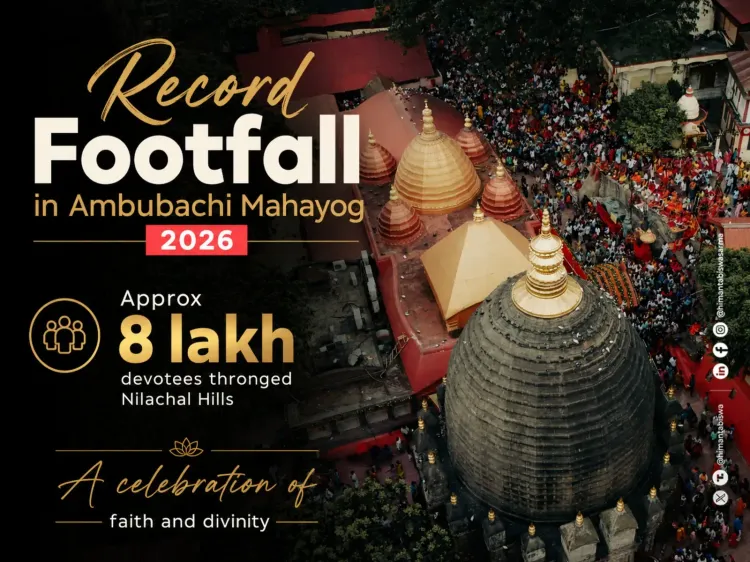
Over 8 lakh devotees gathered at Kamakhya Temple in Guwahati for Ambubachi Mahayog 2026, with Assam CM Himanta Biswa Sarma calling the turnout a living expression of the state's spiritual strength and the Sanatan tradition.
Key Takeaways
Assam CM Himanta Biswa Sarma posted on 27 June 2026 celebrating the Ambubachi Mahayog 2026 festival at Kamakhya Temple .
More than 8 lakh devotees attended the festival, according to CM Sarma's post.
Kamakhya Temple atop Nilachal Hill , Guwahati , is one of India's foremost Shakti Peethas and a major centre of Shakta worship.
The Ambubachi festival annually draws pilgrims, tantric practitioners and ascetics from across India and abroad.
The Sarma government has positioned the Kamakhya corridor as a flagship religious-tourism asset for Assam .
Post-festival focus will be on infrastructure reviews and potential announcements on permanent upgrades to the temple precinct.
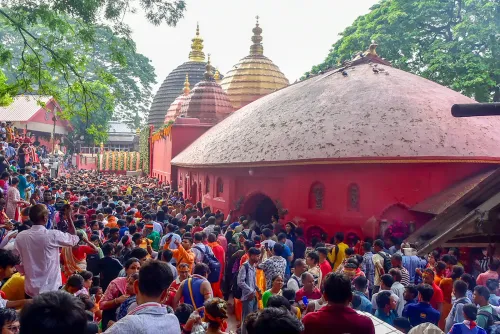
Assam Chief Minister Himanta Biswa Sarma on Saturday, 27 June 2026, celebrated the massive turnout at the Ambubachi Mahayog 2026 festival at Kamakhya Temple in Guwahati, stating that the presence of more than 8 lakh devotees had transformed the sacred shrine into a grand confluence of faith.
Context
Posting on X with the salutation 'Jai Maa Kamakhya' ('Victory to Mother Kamakhya'), CM Sarma wrote that on the auspicious occasion of #AmbubachiMahayog2026, the arrival of more than 8 lakh devotees had turned Maa Kamakhya Dham into a 'Mahasangam of faith' — a great convergence of spiritual belief. He described the outpouring of devotion as 'a living expression of Assam's spiritual strength and the Sanatan tradition.'
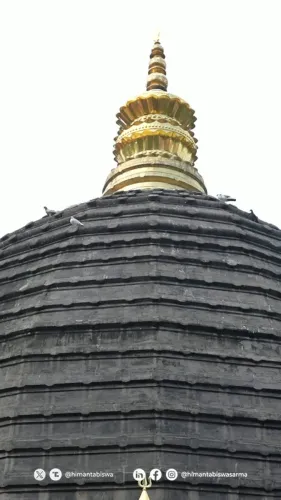
The Ambubachi festival is one of the most significant annual gatherings in eastern India, observed at the Kamakhya Temple atop Nilachal Hill in Guwahati. The festival marks a period associated with the goddess's annual cycle and draws tantric practitioners, ascetics, and pilgrims from across the country and beyond.
Policy Backdrop
Kamakhya Temple is among the most revered Shakti Peethas in India and occupies a central place in Assam's religious-tourism identity. Successive state governments have invested in logistics, security deployment, and civic infrastructure around the Nilachal Hill precinct to manage the large annual inflows that the Ambubachi season brings.
The Sarma-led BJP government has actively positioned the temple corridor as a flagship element of the state's cultural and tourism profile, aligning with a broader national push to develop pilgrimage infrastructure under schemes that link heritage sites with modern amenities. The festival period typically strains local transport and accommodation capacity, prompting advance coordination between the state administration, the temple trust, and district authorities.
Stakeholders and Impact
The immediate beneficiaries of a high-footfall Ambubachi are Guwahati's local traders, hospitality providers, and transport operators, for whom the festival represents a significant seasonal economic activity. Pilgrims travelling from states such as West Bengal, Bihar, Odisha, and Rajasthan contribute substantially to that inflow.
For the state government, a record or near-record attendance figure serves as both a logistical benchmark and a cultural-political signal — reinforcing Assam's standing as a major node of Shakta pilgrimage in the country. Crowd-management outcomes and the safety of pilgrims remain the core operational concern for district and police administrations during this period.
What's Next
Following the conclusion of the Ambubachi Mahayog 2026 gathering, attention will shift to the state government's post-event review of crowd-management measures, temporary infrastructure performance, and any announcements regarding permanent upgrades to the Kamakhya Temple corridor ahead of the next annual cycle.
Observers will also watch for policy follow-through on religious-tourism development projects linked to the Nilachal Hill precinct, including connectivity improvements and pilgrim amenity centres that have been discussed in previous state budget cycles.
Point of View
' Sarma links administrative competence in managing large gatherings to a broader civilisational narrative around the Sanatan tradition. This approach also serves a political economy purpose: high attendance validates state investment in religious-tourism infrastructure and builds a case for further corridor development around Kamakhya. The post signals that temple-linked tourism will remain a priority policy and communications theme for the government heading into the next budget cycle.
NationPress
27 Jun 2026
Frequently Asked Questions
What is Ambubachi Mahayog at Kamakhya Temple?
Ambubachi Mahayog is an annual festival observed at Kamakhya Temple in Guwahati, Assam , marking a period associated with the goddess's annual cycle. It draws tantric practitioners, ascetics, and hundreds of thousands of pilgrims from across India every year.
How many pilgrims attended Ambubachi Mahayog 2026?
According to a post by Assam CM Himanta Biswa Sarma , more than 8 lakh devotees were present at Kamakhya Temple during Ambubachi Mahayog 2026 .
Where is Kamakhya Temple located?
Kamakhya Temple is situated atop Nilachal Hill in Guwahati, Assam . It is one of the most important Shakti Peethas in India and a major centre of Shakta and tantric worship.
What did CM Himanta Biswa Sarma say about Ambubachi 2026?
CM Sarma said the presence of over 8 lakh devotees had transformed Maa Kamakhya Dham into a grand confluence of faith, calling it 'a living expression of Assam's spiritual strength and the Sanatan tradition.'
Why is Ambubachi festival important for Assam?
Ambubachi is central to Assam's religious and cultural identity, attracting pilgrims nationwide and generating significant economic activity for local traders and the hospitality sector in Guwahati . The state government has promoted it as a key pillar of religious tourism.