CM Himanta Hails Bajrangbali Statue in BTR's Khoirabari
Synopsis
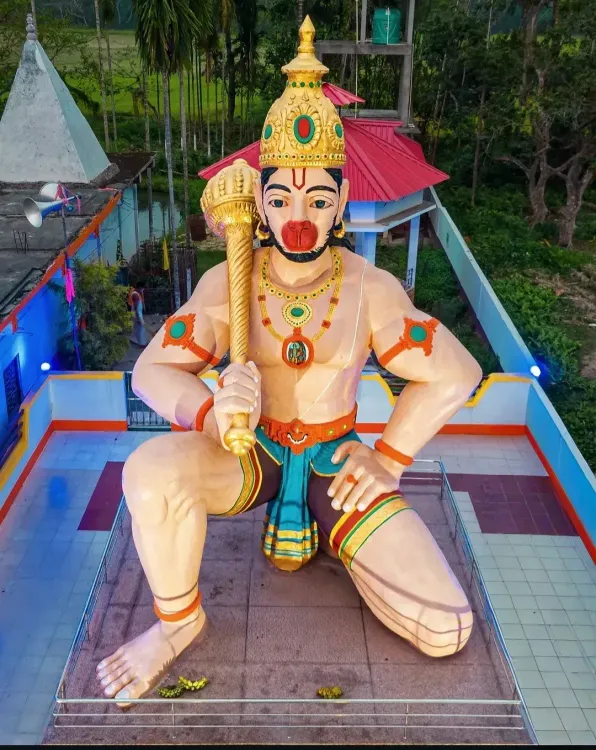
Assam Chief Minister Himanta Biswa Sarma highlighted a grand Bajrangbali statue at Khoirabari in the Bodoland Territorial Region on 7 July 2026, calling it a reflection of Sanatan civilisation's glory across Assam and invoking well-being for all.
Key Takeaways
CM Himanta Biswa Sarma shared the image of a Bajrangbali statue at Khoirabari, BTR on 7 July 2026 .
He described it as a reflection of the dignity of Sanatan civilisation across every province of Assam.
The Bodoland Territorial Region was created under the Bodo Peace Accord of January 2020 to end decades of insurgency.
The BJP-led Assam government has consistently promoted public displays of Hindu cultural symbols alongside its ethnic autonomy commitments in BTR.
CM Sarma also convenes the North East Democratic Alliance (NEDA) , making cultural messaging in the northeast politically significant.
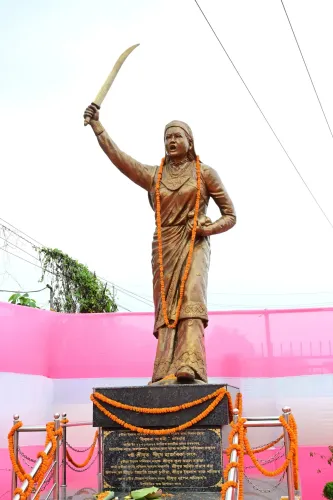
Assam Chief Minister Himanta Biswa Sarma on Tuesday, 7 July 2026 shared an image of a grand Bajrangbali (Lord Hanuman) statue installed at Khoirabari in the Bodoland Territorial Region (BTR), invoking the glory of Sanatan civilisation across every corner of Assam and seeking the well-being of all devotees.
Context
Posting in Hindi, CM Sarma wrote: 'असम के हर प्रांत में सनातन सभ्यता की गरिमा ऐसे ही गौरवशाली रूप में झलकती है' — 'The dignity of Sanatan civilisation reflects in such a glorious form in every province of Assam.' He added that the sight of the magnificent idol of Bajrangbali enshrined at Khoirabari in BTR should bring well-being to all.
The post, accompanied by a photograph of the statue, is consistent with the Chief Minister's regular practice of highlighting Hindu cultural landmarks across the state, framing them as living symbols of a shared civilisational identity.
Policy Backdrop
The Bodoland Territorial Region was established under the landmark Bodo Peace Accord signed in January 2020 between the central government, the Assam government, and Bodo representatives, ending decades of armed insurgency in the area. The accord granted significant self-governance rights to the Bodo community and aimed at mainstreaming the region into the state's development narrative.
Since the accord, BJP-led administrations in Assam have pursued a dual strategy: honouring ethnic autonomy commitments while simultaneously integrating BTR into broader cultural and developmental messaging. Public installations of religious monuments and the promotion of heritage sites in the region form part of this approach.
Stakeholders and Impact
The Bodo community, the largest plains tribal group in Assam, is a key stakeholder in BTR's governance and cultural life. The region's districts — Kokrajhar, Chirang, Baksa, and Udalguri — have seen increased attention from the state government following the peace accord. Hindu devotees across the region also stand as direct participants in the cultural significance of such installations.
For the broader North East Democratic Alliance (NEDA), which CM Sarma convenes, messaging that blends regional identity with Sanatan heritage serves to consolidate support across the diverse northeastern states where the BJP and its allies govern.
What's Next
Political observers will watch for further cultural site inaugurations, heritage conservation schemes, or infrastructure announcements tied to religious and cultural landmarks in BTR districts in the coming months. Any linked announcements during the Assam state assembly sessions would signal whether such cultural outreach is being formalised into policy or budgetary commitments.
Point of View
The Chief Minister signals that Sanatan heritage is not confined to the Brahmaputra valley but extends into the state's autonomous tribal belts. This serves a dual purpose: reinforcing the BJP's cultural identity politics while demonstrating that peace dividends in BTR include cultural flourishing, not just administrative autonomy. As NEDA convenor, Sarma's messaging carries weight beyond Assam, setting a template for cultural outreach across BJP-aligned northeastern governments.
NationPress
7 Jul 2026
Frequently Asked Questions
Where is the Bajrangbali statue CM Himanta posted about?
The statue is located at Khoirabari in the Bodoland Territorial Region (BTR) of Assam.
What is the Bodoland Territorial Region (BTR)?
The Bodoland Territorial Region is an autonomous self-governing area in Assam created under the Bodo Peace Accord signed in January 2020 to grant self-governance to the Bodo community and end decades of armed insurgency.
What did CM Himanta Biswa Sarma say about the statue?
CM Sarma said the statue reflects the dignity of Sanatan civilisation in every province of Assam and expressed hope that the sight of the grand Bajrangbali idol would bring well-being to all.
Why is CM Himanta highlighting cultural sites in BTR?
The BJP-led Assam government has pursued a strategy of integrating BTR into the state's broader cultural narrative following the 2020 Bodo Accord, using public religious monuments to signal shared civilisational identity alongside ethnic autonomy.
What is NEDA and what is CM Himanta's role in it?
The North East Democratic Alliance (NEDA) is a BJP-led political alliance of parties governing northeastern states. CM Himanta Biswa Sarma serves as its convenor, giving his cultural messaging significance across the entire region.