CM Himanta highlights Assam's rural road connectivity gains
Synopsis
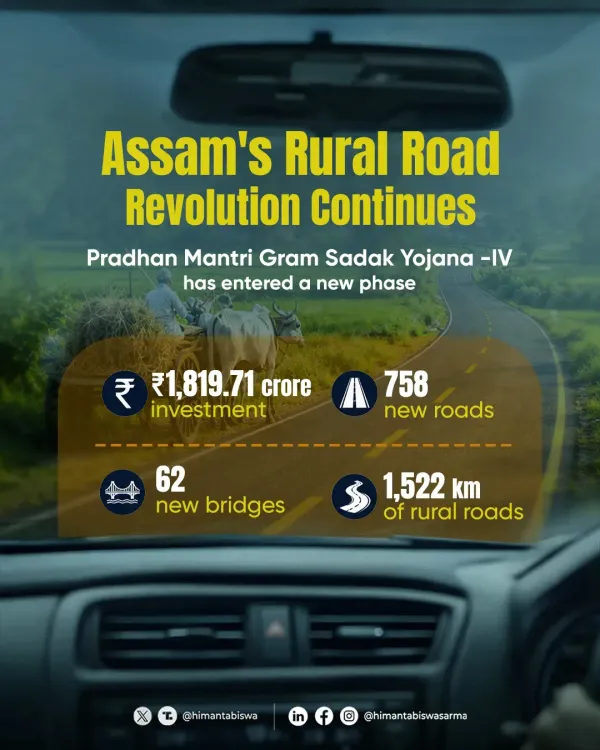
Assam Chief Minister Himanta Biswa Sarma on 1 July 2026 shared rural road connectivity figures for the state on X, saying 'the numbers speak for itself' under #RoadsOfAssam. The post underscores the BJP-led government's focus on rural infrastructure as a core governance metric in Assam.
Key Takeaways
Assam CM Himanta Biswa Sarma posted rural road connectivity data on X on 1 July 2026 under the hashtag #RoadsOfAssam .
PMGSY , the central rural roads scheme launched in 2000 , is the primary funding vehicle for rural connectivity in Assam across multiple phases.
Bharatmala Pariyojana (approved 2015 ) provides an additional layer of inter-state and rural connectivity investment for the Northeast.
Rural residents and farmers are the primary beneficiaries, gaining faster market access and lower logistical costs through all-weather roads.
The Assam Public Works Department is expected to release detailed district-level completion data that would substantiate the figures referenced by the Chief Minister.
CM Sarma as NEDA convenor has a regional interest in positioning Assam as a model for Northeast infrastructure delivery.
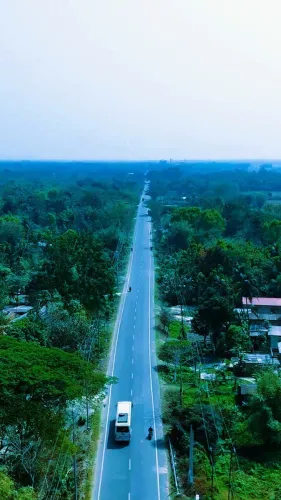
Assam Chief Minister Himanta Biswa Sarma on Wednesday, 1 July 2026, pointed to rural road connectivity data for the state, sharing an image on X under the hashtag #RoadsOfAssam and stating that 'the numbers speak for itself.'
Context
Assam has historically struggled with rural connectivity owing to its flood-prone terrain, riverine geography, and hilly districts. Poor road access has long translated into higher logistical costs for farmers and restricted market reach for rural communities across the state.
Chief Minister Sarma, who took office in May 2021, has repeatedly cited infrastructure development — particularly road construction — as a flagship priority of his administration, framing it as foundational to Assam's broader economic integration with the rest of India.
Policy Backdrop
The central government's Pradhan Mantri Gram Sadak Yojana (PMGSY), launched in 2000, remains the primary instrument for delivering all-weather road connectivity to unconnected rural habitations. Assam has been a significant beneficiary across multiple phases of the scheme, with PMGSY-III currently under implementation.
The Bharatmala Pariyojana, approved in 2015, added a further layer of inter-state and rural connectivity investment relevant to the Northeast. Since 2014, successive central and state governments have treated Northeast road infrastructure as a strategic priority — both for economic development and for reducing the region's logistical isolation from mainland India.
The Assam Public Works Department is the nodal state agency responsible for executing and reporting on rural road projects, with fund utilisation under PMGSY closely tracked by the central government.
Stakeholders and Impact
Rural residents and farming communities stand to gain most directly from improved road networks. All-weather connectivity reduces post-harvest losses by enabling faster movement of agricultural produce to mandis, and lowers input costs by making supply chains more reliable.
For the BJP-led state government, rural road completion figures also carry political weight — they serve as a tangible, visible metric of governance delivery ahead of future electoral cycles in Assam. Chief Minister Sarma, as convenor of the North-East Democratic Alliance (NEDA), has a broader regional interest in showcasing Assam as a model for Northeast development.
What's Next
Attention will now turn to the formal release of updated rural road completion statistics by the Assam Public Works Department, which would provide the granular district-level data implied by the Chief Minister's post. Scrutiny of PMGSY-III fund utilisation figures is also expected, as these determine how much of the sanctioned network has been physically completed and made operational.
If the data shared by CM Sarma is accompanied by an official departmental report, it could shape the state's pitch for enhanced central allocations in the next planning cycle — reinforcing Assam's position as a high-priority destination for Northeast infrastructure investment.
Point of View
The BJP-led administration is building an infrastructure performance record ahead of future electoral tests in Assam. The post also fits into a wider Northeast development arc in which road connectivity is treated as the precondition for every other economic ambition, from agricultural market integration to tourism. Scrutiny will inevitably follow: the credibility of the claim rests entirely on how transparently the underlying data is released and independently verified.
NationPress
1 Jul 2026
Frequently Asked Questions
What is the current status of rural road connectivity in Assam?
Assam Chief Minister Himanta Biswa Sarma highlighted rural road connectivity progress on 1 July 2026, sharing data under #RoadsOfAssam, though granular district-level figures are expected to be formally released by the Assam Public Works Department.
What is PMGSY and how does it benefit Assam?
Pradhan Mantri Gram Sadak Yojana (PMGSY) is a central government scheme launched in 2000 to provide all-weather road connectivity to unconnected rural habitations. Assam has been a significant beneficiary across multiple phases, with PMGSY-III currently under implementation.
What has Himanta Biswa Sarma done for roads in Assam?
Since becoming Chief Minister in May 2021, Himanta Biswa Sarma has prioritised road infrastructure as a flagship governance deliverable, leveraging both PMGSY central funds and state resources to expand rural connectivity across Assam's flood-prone and hilly districts.
What is Bharatmala Pariyojana and does it cover Assam?
Bharatmala Pariyojana, approved in 2015, is a central highway and connectivity programme that includes inter-state and rural road components relevant to Assam and the broader Northeast region.
Why is rural road connectivity important for Assam farmers?
All-weather rural roads reduce post-harvest losses by enabling faster movement of produce to markets, lower input costs by improving supply chains, and help integrate Assam's farming communities into wider economic networks.