CM Himanta Highlights Wage Scheme for Assam's Tea Garden Mothers
Synopsis
Assam Chief Minister Himanta Biswa Sarma used Navratri's fifth day, dedicated to Maa Skandamata, to spotlight the Wage Compensation Scheme for Pregnant Women of Tea Garden Areas — a ₹15,000 four-instalment programme that has reached over 1.3 lakh women and is linked to falling maternal and child deaths in Dibrugarh.
Key Takeaways
Assam CM Himanta Biswa Sarma highlighted the Wage Compensation Scheme for Pregnant Women of Tea Garden Areas on October 15, 2026 , the fifth day of Navratri.
The scheme provides eligible expectant mothers with ₹15,000 in four instalments , beginning at first-trimester registration and ending six weeks after an institutional delivery.
Over 1.3 lakh women in Assam's tea garden communities have reportedly benefited from the programme.
Dibrugarh , a major tea-producing district in upper Assam, is cited as seeing declines in maternal and child deaths in estate communities.
The scheme supplements the national Pradhan Mantri Matru Vandana Yojana (2017), targeting tea-tribe workers not fully reached by the central programme.
CM Sarma framed the initiative as a moral obligation, connecting the welfare of tea garden mothers to the goddess Skandamata's symbolism of protective motherhood.
On the fifth day of Navratri — dedicated to Maa Skandamata, the divine mother — Assam Chief Minister Himanta Biswa Sarma drew a deliberate parallel between the goddess's protective embrace and a state scheme that has quietly rewritten the birth story for women in Assam's tea gardens. The Wage Compensation Scheme for Pregnant Women of Tea Garden Areas is the policy at the centre of his October 15, 2026 post, and the numbers he cites carry serious weight.
The impossible choice tea garden workers once faced
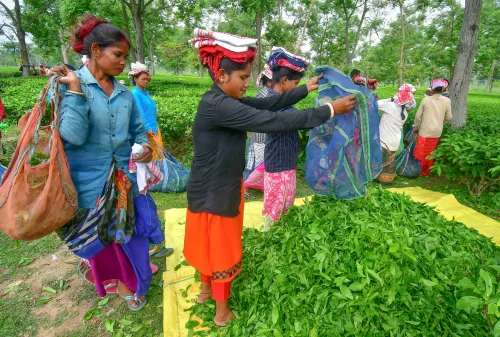
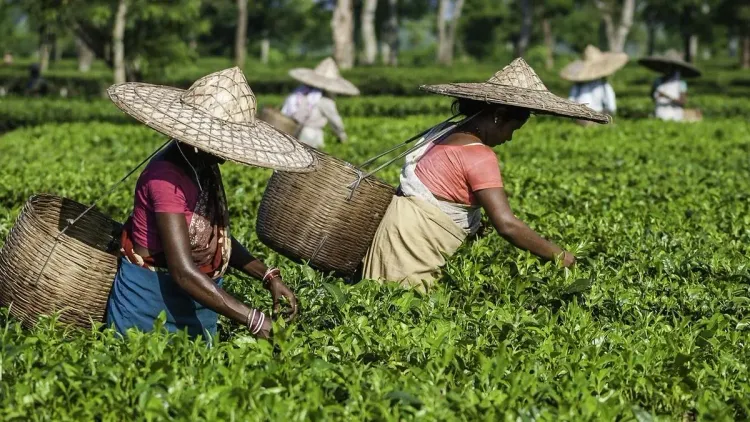
For generations, the calculus was brutal: skip work during pregnancy and lose pay the family could not afford to lose, or keep going until the contractions started. Women in Assam's tea estates — among the state's most economically marginalised communities — routinely worked through their pregnancies right up to delivery. Rest was a luxury the wage structure made impossible.
That arithmetic is what the scheme targets. Every eligible expectant mother receives ₹15,000 spread across four instalments — the first triggered at registration in the first trimester, the last at six weeks after an institutional delivery. The design is deliberate: it incentivises early registration, ties the final payment to a facility birth, and bridges the income gap at every vulnerable stage in between.
Over 1.3 lakh beneficiaries — and falling mortality in Dibrugarh
CM Sarma states that over 1.3 lakh women have already benefited from the scheme. More concretely, he points to Dibrugarh — one of upper Assam's largest and most storied tea-producing districts — where maternal and child deaths in estate communities are reported to be coming down. These are early outcome signals, not final verdicts, but in a population that has historically had limited access to institutional healthcare, any downward movement in those numbers matters.
The scheme fits within a broader architecture of maternal welfare that includes the central government's Pradhan Mantri Matru Vandana Yojana (launched 2017), which introduced conditional cash transfers for pregnant women nationally. Assam's tea-garden version is a state-level supplement designed for a workforce the national scheme could not fully reach.
Navratri's fifth day as a welfare platform
The framing is deliberate politics and genuine sentiment at once. Skandamata — seated on a lion, infant Kartikeya in her lap — is the Navratri form that most directly embodies motherhood: protective, tender and without fear. Invoking her on the same day as a scheme explicitly designed to protect pregnant workers is a piece of political communication that would be difficult to misread. The Chief Minister is converting a religious moment into a policy statement, and the policy statement back into a moral one: 'Honouring their motherhood is our sacred duty.'
The women of Assam's tea gardens are not a footnote in the state's story — they are, as the post puts it, the people who 'gave Assam its identity before the world.' The global reputation of Assam tea was built on their labour. The scheme, in that framing, is not charity. It is a debt being repaid.
With maternal mortality data for tea-garden blocks still being compiled and potential expansion of scheme coverage on the horizon, whether the Dibrugarh trend holds — and whether it spreads — will be the real measure of what this programme is worth.
Point of View
The BJP government in Assam converts a sectoral welfare measure into a statement of civilisational values, a framing that speaks directly to both tea-tribe voters and the broader Hindu cultural majority. The focus on Dibrugarh as an outcome indicator is strategically chosen: the district is a BJP stronghold and a symbolic heartland of Assam's tea economy, making positive health data there politically as well as administratively significant. The broader arc here is the party's sustained effort since 2016 to move tea-tribe communities — historically Congress-leaning — into its electoral column through visible welfare delivery.
NationPress
15 Oct 2026
Frequently Asked Questions
What is the Wage Compensation Scheme for Pregnant Women of Tea Garden Areas in Assam?
It is an Assam government programme that provides eligible pregnant women in tea estate communities with ₹15,000 in four instalments — from first-trimester registration through to six weeks after an institutional delivery — to compensate for wages lost during rest and recovery.
How many women have benefited from Assam's tea garden pregnancy wage scheme?
Assam Chief Minister Himanta Biswa Sarma has stated that over 1.3 lakh women have already benefited from the scheme, though this figure has not been independently verified from official records.
What is the connection between Navratri's fifth day and CM Himanta's welfare announcement?
The fifth day of Navratri is dedicated to Maa Skandamata, the goddess of motherhood. CM Sarma used the occasion to draw a parallel between her protective symbolism and the state scheme designed to safeguard pregnant women in Assam's tea gardens.
Why has Dibrugarh been highlighted in the tea garden maternal health scheme?
Dibrugarh is one of Assam's largest tea-producing districts and CM Sarma cited it as an example where maternal and child deaths in tea estate communities are reported to be declining, suggesting early positive outcomes from the scheme.
How does Assam's tea garden pregnancy scheme differ from the central government's Pradhan Mantri Matru Vandana Yojana?
The national Pradhan Mantri Matru Vandana Yojana, launched in 2017, offers conditional cash transfers to pregnant women across India. Assam's scheme is a state-level supplement specifically designed for tea-tribe workers in estates, a workforce with distinct economic vulnerabilities not fully addressed by the central programme.