CM Himanta Inaugurates Solar Project at Assam Tea Estate
Synopsis
Assam CM Himanta Biswa Sarma spent the night at Koomber Tea Estate in Barak Valley and inaugurated a solar power project on October 1, 2026, advancing a state push to make tea gardens energy self-sufficient and positioning them as tourism destinations.
Key Takeaways
Himanta Biswa Sarma inaugurated a solar power project at Koomber Tea Estate in Barak Valley, Assam on October 1, 2026 .
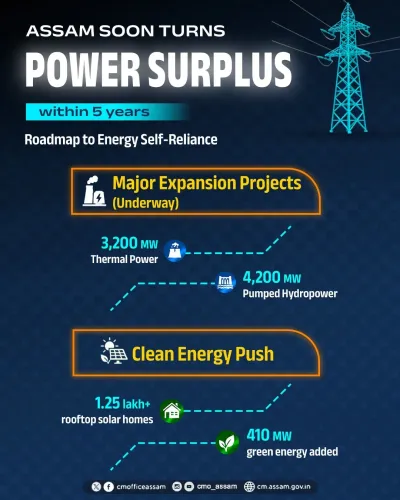
The initiative aims to make Assam's tea estates energy self-sufficient by solarising their power supply.
Sarma spent the night at the estate, underscoring a parallel push to develop tea estate tourism across Assam.
The project targets the tea industry's heavy dependence on conventional grid power during energy-intensive processing seasons.
Barak Valley's tea belt is being brought into the state's mainstream development spotlight alongside the Brahmaputra Valley estates.
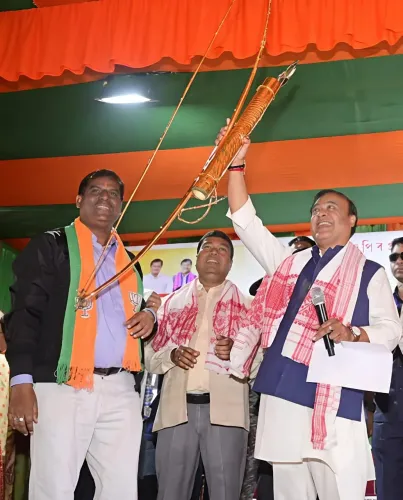
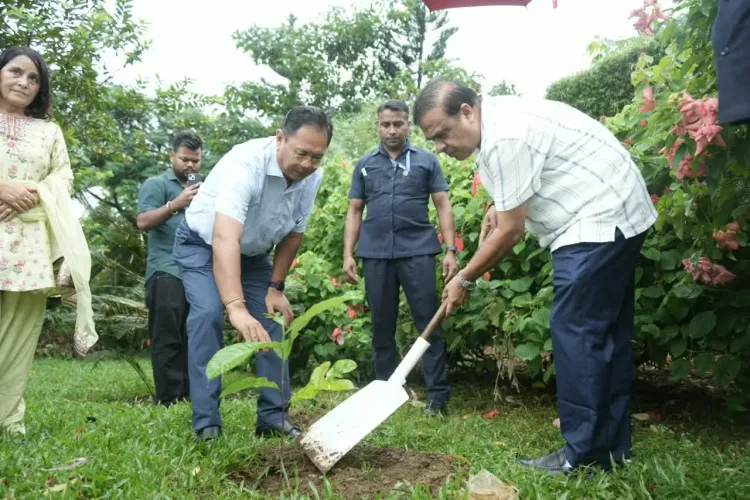
Assam's tea gardens have long been the soul of the state — and now Assam Chief Minister Himanta Biswa Sarma wants them to power themselves. On Thursday, October 1, 2026, Sarma spent the night at Koomber Tea Estate in the Barak Valley and inaugurated a solar power project there, part of a broader push to make Assam's tea estates energy self-sufficient.
A night at Koomber — and a solar switch-on
Sarma described his stay at Koomber Tea Estate as more than a policy visit. 'Assam's tea gardens are more than our identity. They're also known for their warm hospitality,' he wrote, framing the overnight stay as a deliberate signal about the tourism potential of estate life. The inauguration of the solar project the following morning gave the visit a concrete policy stamp.
The initiative aims to reduce the tea industry's dependence on conventional grid power — a persistent operational challenge for estates that run machinery around the clock during harvest seasons. Solar solarisation, Sarma indicated, would help estates 'sustain their operations for years to come.'
Barak Valley's tea belt enters the green-energy frame
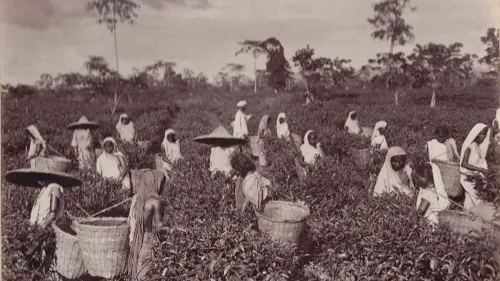
The Barak Valley, in southern Assam, is distinct from the more globally recognised Brahmaputra Valley tea belt but hosts its own network of estates with deep colonial-era roots. By choosing Koomber for this inauguration, the Chief Minister is explicitly putting Barak Valley tea country on the state's development map alongside its more prominent northern counterpart.
Renewable energy adoption in the tea sector carries real stakes. Tea processing — withering, rolling, drying — is energy-intensive, and fluctuating power costs eat directly into margins for estates that already operate on thin profits. A functioning solar infrastructure could materially change the economics of smaller and mid-sized gardens.
Tourism as a second harvest
Beyond energy, Sarma's post signals a parallel ambition: turning tea estates into tourism destinations. The idea of 'tea estate tourism' — where visitors stay on working gardens, witness the plucking and processing cycle, and experience plantation hospitality — has taken root in parts of Sri Lanka and Darjeeling. Assam's Chief Minister is now making an explicit case for replicating that model across the state's vast garden landscape.
The overnight stay at Koomber is itself a small demonstration: a sitting Chief Minister choosing a tea estate bungalow over a government guest house is the kind of image that travels. It positions Assam's gardens not just as commodity producers, but as living, visitable heritage.
If the solar model scales and the tourism pitch lands, Assam's tea gardens may soon be exporting something beyond a cup of tea — they could be exporting an experience, and generating their own electricity to do it.
Point of View
A tactic that has become characteristic of his governance communication style. By anchoring a renewable energy inauguration inside a tea estate stay, he signals that Assam's plantation economy is being repositioned from a legacy sector in need of rescue to a forward-looking industry with both energy autonomy and tourism upside. The Barak Valley choice is also quietly significant: it is a region with a large Bengali-speaking population that has historically felt peripheral to Guwahati-centric development, and high-visibility visits by the CM carry political as well as administrative weight. If the solar solarisation model delivers measurable results on energy costs, it could become a replicable template for Assam's roughly 800-plus tea gardens.
NationPress
1 Oct 2026
Frequently Asked Questions
What did CM Himanta Biswa Sarma inaugurate at Koomber Tea Estate?
CM Himanta Biswa Sarma inaugurated a solar power project at Koomber Tea Estate in Barak Valley, Assam, on October 1, 2026, aimed at making the estate energy self-sufficient.
Where is Koomber Tea Estate located?
Koomber Tea Estate is located in the Barak Valley region of Assam, in southern Assam, distinct from the more widely known Brahmaputra Valley tea belt.
What is tea estate tourism in Assam?
Tea estate tourism refers to visitors staying and experiencing life on working tea gardens — witnessing plucking and processing cycles and enjoying plantation hospitality. Assam CM Sarma is actively promoting this model for the state's tea gardens.
Why is solarising tea estates important for Assam?
Tea processing is highly energy-intensive, and fluctuating grid power costs pressure estate margins. Solar energy can reduce dependence on conventional power, lowering operating costs and helping estates sustain production long-term.
Which valley in Assam is Barak Valley?
Barak Valley is a river valley in southern Assam, named after the Barak River. It is home to a significant Bengali-speaking population and has its own network of tea estates, separate from the Brahmaputra Valley tea gardens in northern Assam.