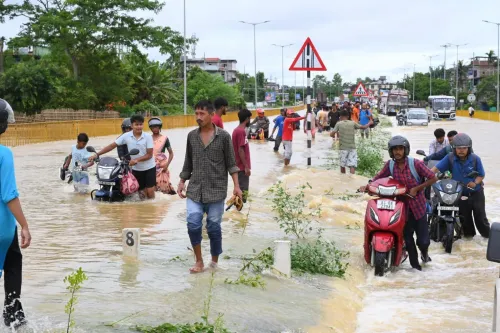
CM Himanta Issues Assam Floods Update for July 21
Synopsis
Assam Chief Minister Himanta Biswa Sarma posted a flood situation update on July 22, 2026, covering conditions as of July 21. The update is part of the state's routine disaster communication during the annual Brahmaputra-driven monsoon flood season.
Key Takeaways
Chief Minister Himanta Biswa Sarma shared an official flood situation update on July 22, 2026 , covering conditions as of July 21, 2026 .
Assam faces annual monsoon flooding caused primarily by the overflowing Brahmaputra river and its tributaries.
The state's flood response framework operates under the Disaster Management Act, 2005 , with the Assam SDMA issuing regular situation bulletins.
Key stakeholders include flood-affected residents, Assam's farming communities , and relief agencies such as the NDRF and SDRF .
Attention will remain on water levels in the Brahmaputra and any announcements of central assistance or embankment works for the 2026 monsoon season .
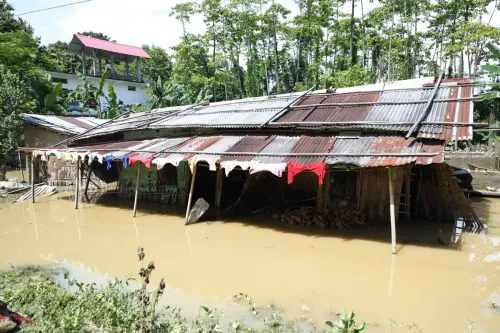
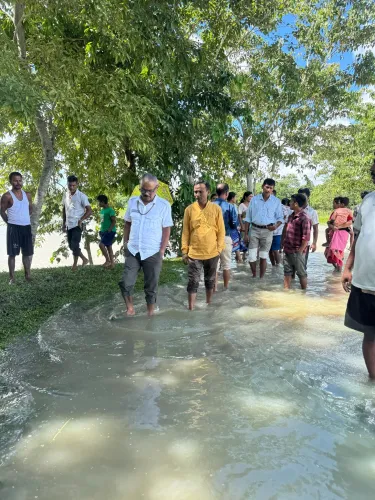
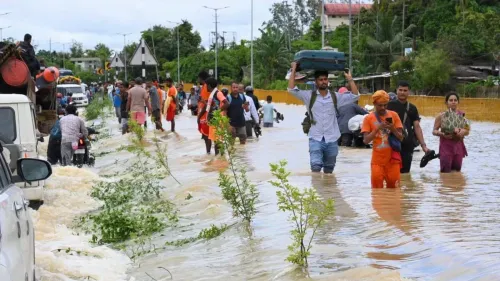
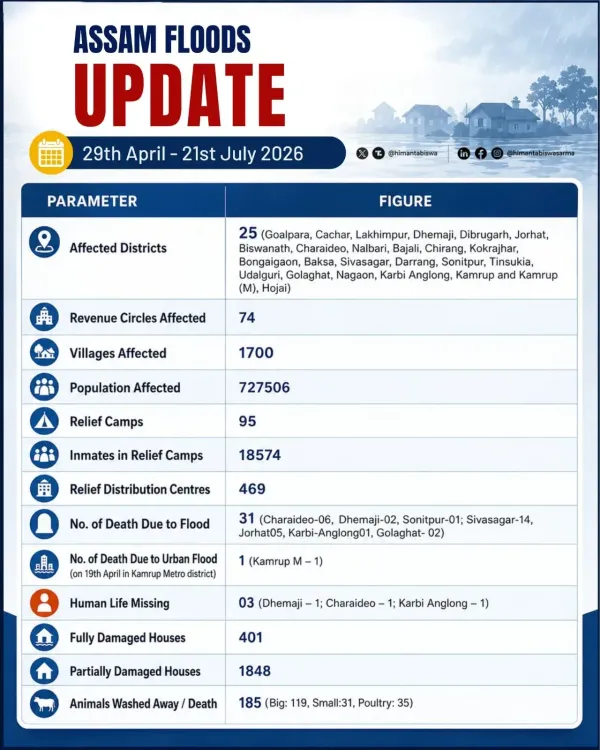
Assam Chief Minister Himanta Biswa Sarma posted a flood situation update on Wednesday, July 22, 2026, sharing the latest ground-level assessment of the ongoing monsoon flooding across the state as of July 21, 2026. The update, shared on his official X account alongside an image, is part of the state government's regular public communication during the annual flood season.
Context
Assam endures monsoon flooding every year, driven primarily by the overflowing of the Brahmaputra river and its tributaries. The floods typically begin in June and persist through September, inundating agricultural land, displacing communities and damaging roads and embankments across dozens of districts. Chief Minister Sarma has made it a practice to post real-time situation reports on social media to keep citizens and relief agencies informed.
The July 21 update falls in the heart of the monsoon window, a period when water levels in the Brahmaputra system are often at or near their seasonal peak. Situation reports at this stage are critical for coordinating relief logistics and directing resources to the worst-affected pockets of the state.
Policy Backdrop
India's institutional framework for flood response is anchored in the Disaster Management Act, 2005, which empowers state governments to activate and coordinate relief through their respective State Disaster Management Authorities (SDMA). Assam's SDMA issues daily bulletins during the flood season, tracking the number of affected districts, displaced persons, livestock losses and crop damage across the state.
Successive Assam governments have grappled with the structural challenge of protecting embankments along the Brahmaputra, many of which were built decades ago and are prone to breaches. Long-term solutions including river-training works and embankment reinforcement have been part of state and central government discussions for years, though the annual cycle of damage and repair continues.
Stakeholders and Impact
The communities most directly affected by the annual floods are Assam's farmers, whose standing kharif (autumn harvest) crops are submerged during peak inundation, resulting in significant income losses. Residents of low-lying riverine villages face displacement to relief camps, often for weeks at a stretch, with access to clean water and healthcare becoming acute concerns.
Relief and rescue operations involve the National Disaster Response Force (NDRF), the State Disaster Response Force (SDRF), district administrations and the Indian Army in severe cases. Regular updates from the Chief Minister's office help ensure that public awareness and administrative accountability remain high through the season.
What's Next
Daily flood situation reports from the Assam SDMA are expected to continue as the monsoon progresses. Observers will watch for any announcements regarding central assistance from the National Disaster Relief Fund (NDRF) or fresh embankment-strengthening works ordered for the remainder of the 2026 monsoon season. The trajectory of water levels in the Brahmaputra over the coming days will determine whether the situation stabilises or escalates further.
Point of View
Bypassing traditional administrative channels. For a state like Assam, where annual flooding is a near-certain event, such updates serve both an administrative coordination function and a political signalling role — demonstrating executive attentiveness. The 2026 monsoon season arrives amid continued concerns about the structural integrity of Brahmaputra embankments and the adequacy of central funding for long-term flood mitigation. How the state translates these situation reports into durable infrastructure investment will be the more consequential measure of its disaster governance.
NationPress
22 Jul 2026
Frequently Asked Questions
What is the latest update on Assam floods in July 2026?
Assam Chief Minister Himanta Biswa Sarma posted a flood situation update on July 22, 2026, covering ground conditions across the state as of July 21, 2026.
Why does Assam flood every year?
Assam floods annually due to heavy monsoon rainfall and the overflowing of the Brahmaputra river and its tributaries, which drain a vast catchment area spanning India, China and Bhutan.
Who handles flood relief in Assam?
Flood relief in Assam is coordinated by the State Disaster Management Authority (SDMA), with support from the NDRF, SDRF, district administrations and, in severe cases, the Indian Army.
What law governs disaster management in India?
The Disaster Management Act, 2005 provides the legal framework for disaster preparedness and response in India, empowering both central and state authorities to coordinate relief operations.
How can I check the Assam flood situation report?
The Assam SDMA publishes daily flood bulletins during the monsoon season, and Chief Minister Himanta Biswa Sarma also posts regular updates on his official X account.