CM Himanta Launches ₹472-Crore Drug Destruction Drive in Assam
Synopsis
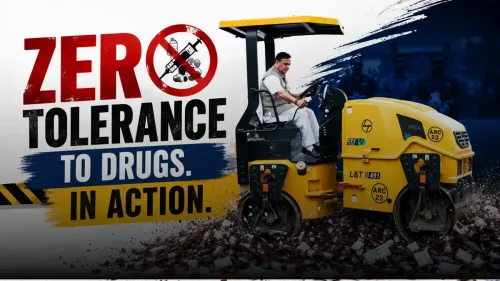
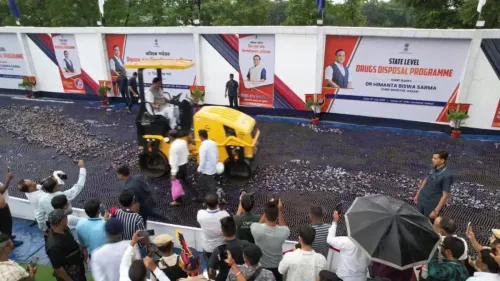
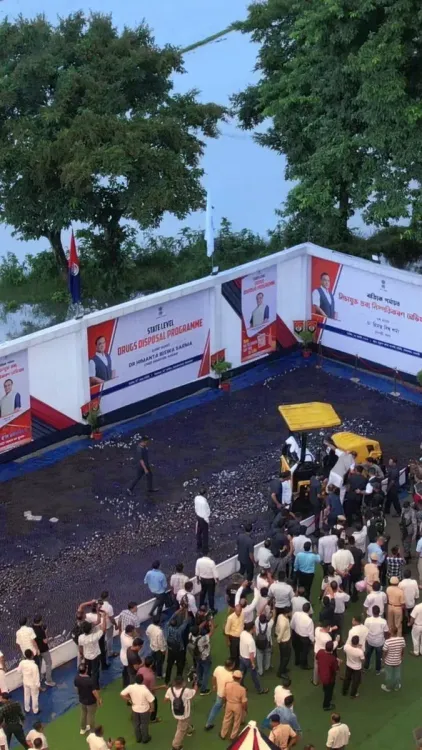
Chief Minister Himanta Biswa Sarma launched a state-wide narcotics destruction drive at Nalbari's 14th APBN campus on 13 July 2026, ordering the destruction of drugs worth ₹472.51 crore — including heroin, cocaine, and opium — over 10 days, with simultaneous drives across all Assam districts.
Key Takeaways
Himanta Biswa Sarma launched the drive at the 14th APBN campus, Daulashal, Nalbari on 13 July 2026 .
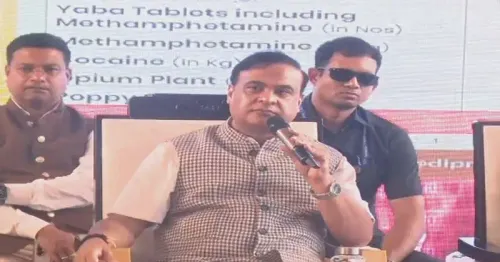
Drugs worth ₹472.51 crore — including heroin, ganja, cough syrup, opium, morphine, and cocaine — will be destroyed over 10 days .
A new secure drug-destruction facility was inaugurated at the same campus with Central Government support .
Destruction drives are running simultaneously across every district of Assam.
Assam Police is the executing agency, operating under the NDPS Act framework.
Assam's borders with Myanmar and Bangladesh make it a key transit zone for narcotics in Northeast India.
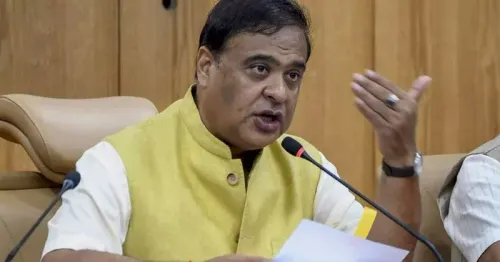
The Chief Minister's Office of Assam announced on Sunday, 13 July 2026 that Chief Minister Dr. Himanta Biswa Sarma launched a state-wide narcotics destruction drive at the 14th APBN campus, Daulashal, Nalbari, marking one of the largest such operations in the state's history.
What Was Announced
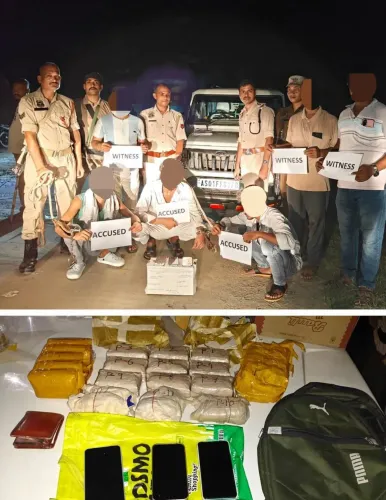
Drugs worth ₹472.51 crore — including heroin, ganja, cough syrup, opium, morphine, and cocaine — seized by Assam Police are scheduled for destruction over the next 10 days. Simultaneous destruction drives have been ordered across every district of the state, making this a coordinated, state-wide enforcement signal.
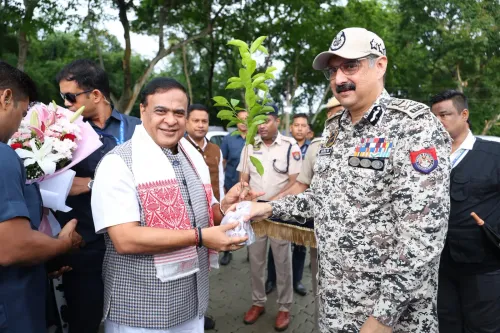
Dr. Sarma also inaugurated a new secure drug-destruction facility at the same campus, established with financial and technical support from the Central Government of India. The facility is intended to provide a permanent, institutionalised infrastructure for disposing of seized contraband, moving beyond ad-hoc destruction events.
Context
Assam occupies a strategic and vulnerable position in India's narcotics map. Sharing borders with Myanmar and Bangladesh, the state has long served as a transit corridor for heroin, synthetic drugs, and pharmaceutical opioids. The Nalbari district, where the state-level launch was held, sits in the Brahmaputra valley — a region where drug trafficking networks have historically operated.
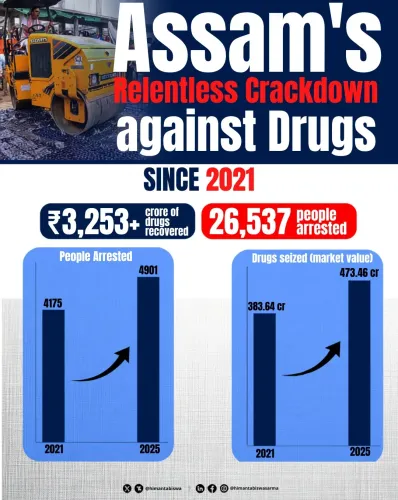
Since Dr. Sarma assumed office in May 2021, the state administration has placed anti-narcotics enforcement at the centre of its law-and-order agenda. Assam Police has conducted intensified seizure operations under the Narcotic Drugs and Psychotropic Substances (NDPS) Act, and periodic public destruction drives have been used to demonstrate accountability in the handling of seized contraband.
Policy Backdrop
Northeast India has run drug-destruction drives since the mid-2010s, often in coordination with central agencies such as the Narcotics Control Bureau (NCB). The inauguration of a dedicated, secure facility at the 14th APBN campus represents an upgrade from temporary destruction arrangements — a move consistent with the national government's broader push to fund state-level narcotics infrastructure.
The NDPS Act mandates court-ordered destruction of seized drugs after sampling and documentation. Large-scale public destruction events serve both a legal and communicative function: they confirm disposal of evidence post-adjudication and project enforcement credibility to communities affected by drug abuse.
Stakeholders and Impact
Assam Police is the primary executing agency, coordinating district-level drives in parallel with the state-level launch. Drug-affected communities — particularly in border districts — stand to benefit most directly from sustained enforcement. Civil society groups working on rehabilitation have previously called for destruction drives to be paired with demand-reduction programmes.
The Central Government's role in funding the new facility signals continued federal investment in Northeast India's counter-narcotics capacity, a priority that has grown alongside concerns about the Myanmar drug pipeline following political instability in that country.
What's Next
District-level destruction reports are expected to emerge over the stated 10-day window, which will indicate the geographic scale and logistical reach of the operation. Assam Police is also likely to release updated annual seizure statistics that will contextualise the ₹472.51 crore figure within the state's longer enforcement trend. The permanent facility at Nalbari will be watched as a model for whether other northeastern states adopt similar infrastructure with central support.
Point of View
Reinforcing Dr. Sarma's 'zero tolerance' brand ahead of what remains a high-stakes law-and-order narrative in Assam. The inauguration of a permanent, centrally-funded facility at Nalbari is the more structurally significant development: it institutionalises destruction capacity rather than relying on episodic events. Assam's proximity to the Myanmar drug pipeline gives these drives national security resonance, which helps attract central funding and federal attention. Whether the drive translates into measurable demand-side reduction — rather than supply-side symbolism — will be the harder question for analysts to answer over the coming months.
NationPress
12 Jul 2026
Frequently Asked Questions
What drugs are being destroyed in Assam's narcotics drive?
The drive targets heroin, ganja, cough syrup, opium, morphine, and cocaine seized by Assam Police, with a combined estimated value of ₹472.51 crore.
Where was Assam's drug destruction drive launched?
The state-level launch took place at the 14th APBN campus in Daulashal, Nalbari district, on 13 July 2026.
Who inaugurated the new drug-destruction facility in Assam?
Chief Minister Dr. Himanta Biswa Sarma inaugurated the secure drug-destruction facility, which was established with support from the Central Government of India.
How long will Assam's narcotics destruction drive last?
The destruction of seized drugs is scheduled to take place over 10 days, with simultaneous drives running across every district of Assam.
Why is Assam a major transit point for drugs in India?
Assam shares borders with Myanmar and Bangladesh, making it a corridor for heroin, synthetic drugs, and pharmaceutical opioids trafficked into India from Southeast Asia.