CM Himanta Monitors Assam Flood Relief, Rehab on Ground

Synopsis
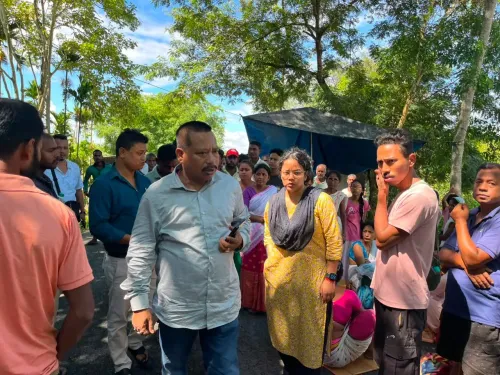
Assam Chief Minister Himanta Biswa Sarma met flood-affected families on August 4, 2026, and announced continuous monitoring of relief, compensation, and rehabilitation processes, with water-drainage operations also being expedited across inundated areas.
Key Takeaways
Assam CM Himanta Biswa Sarma conducted a field visit to meet flood-affected families on August 4, 2026 .
The state is simultaneously tracking three recovery pillars: relief, compensation, and rehabilitation .
Water-drainage operations from flood-hit areas are being accelerated alongside the relief effort.
The CM stated his team is engaged in 'continuous monitoring' of the entire recovery process.
The intervention was flagged publicly under the hashtag #AssamFloodResponse , signalling coordinated state-level communication.
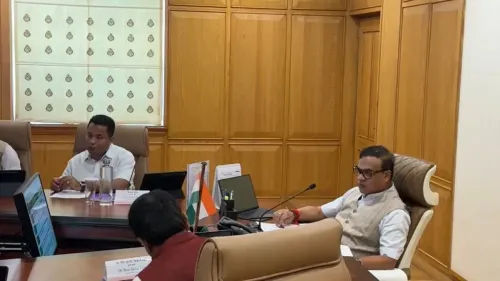
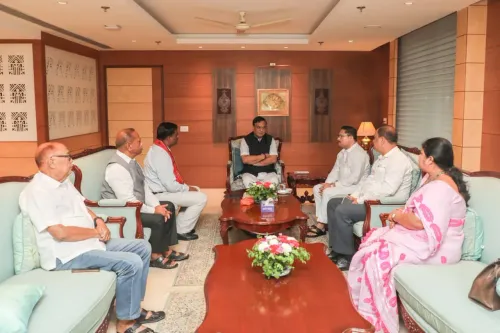
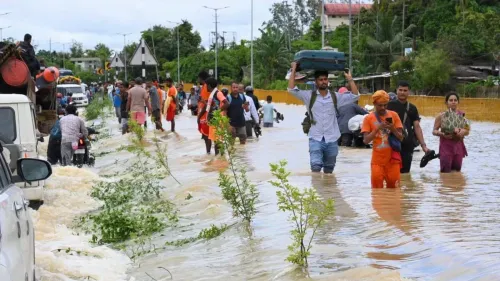
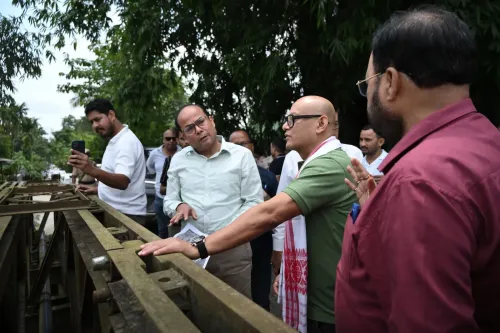
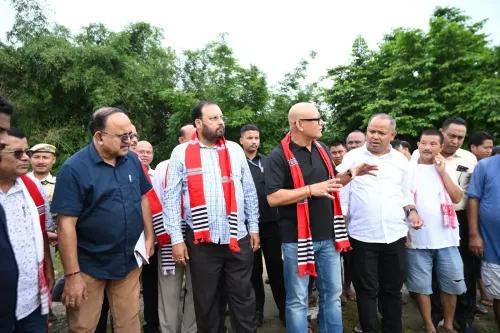
On the ground with flood-hit families, Assam Chief Minister Himanta Biswa Sarma on Tuesday, August 4, 2026, signalled that the state machinery is in active overdrive — tracking relief distribution, compensation payouts, and rehabilitation efforts across inundated districts, even as water-drainage operations accelerate across affected zones.
Posting under the hashtag #AssamFloodResponse, the Chief Minister wrote: 'After meeting flood-affected families, my team and I are continuously monitoring the process of relief, compensation, and rehabilitation. Simultaneously, the work of draining water from flood-hit areas is also progressing rapidly.'
On the Ground: What the CM's Visit Signals
A Chief Minister personally meeting flood victims is not routine optics — it is a signal to the district administration that accountability runs to the top. Sarma's framing of 'continuous monitoring' alongside drainage acceleration suggests the state has moved past the emergency-rescue phase and into the harder, slower work of recovery: tallying losses, cutting compensation cheques, and planning resettlement for the most vulnerable households.
Assam's Recurring Flood Crisis
Assam is one of India's most flood-prone states, with the Brahmaputra and its tributaries breaching banks almost every monsoon season. Annual flooding displaces hundreds of thousands of people across the state's 27-plus districts, devastating crops, livestock, and homes. The scale of the 2026 flood season has not been independently detailed in available data, but the Chief Minister's direct field engagement points to a situation serious enough to demand top-level oversight.
Relief, Compensation, Rehabilitation — Three Distinct Battles
The three pillars Sarma named are not interchangeable. Relief covers immediate needs — food, drinking water, medicine, shelter. Compensation requires damage assessment by revenue officials and direct cash transfers to affected households. Rehabilitation is the longest arc — rebuilding homes, restoring livelihoods, and in some cases relocating communities away from erosion-prone riverbanks. Monitoring all three simultaneously while drainage work continues is the operational challenge the CM is publicly owning.
The speed of water drainage will determine how quickly damage assessment teams can reach the worst-hit pockets — and how soon the compensation pipeline begins flowing. Every day of standing water is a day of delayed recovery for families who have already lost the most.
Point of View
Compensation, rehabilitation — reflects a calculated effort to project administrative control during a crisis that recurs with damaging regularity in Assam. By personally owning the monitoring process on social media, he is setting a visible accountability benchmark that district officials will be measured against. For a BJP government that has staked significant political capital on governance efficiency in the Northeast, the optics of a hands-on Chief Minister matter as much as the ground reality. The real test, as always in Assam's flood cycle, will be the speed and reach of compensation disbursements once the water recedes.
NationPress
4 Aug 2026
Frequently Asked Questions
What is the current flood situation in Assam in 2026?
As of August 4, 2026, Assam is dealing with active flooding across multiple districts, with Chief Minister Himanta Biswa Sarma personally monitoring relief, compensation, and rehabilitation operations while drainage work is being expedited.
What steps is the Assam government taking for flood victims?
The Assam government is running a three-pronged response: immediate relief distribution, compensation assessment and payouts to affected families, and longer-term rehabilitation planning, all under direct monitoring by CM Himanta Biswa Sarma.
Did CM Himanta Biswa Sarma visit flood-affected areas?
Yes. On August 4, 2026, CM Himanta Biswa Sarma met flood-affected families directly and announced that his team is continuously overseeing the recovery process.
How often does Assam face floods?
Assam faces flooding almost every monsoon season due to the Brahmaputra river and its tributaries overflowing, affecting dozens of districts and displacing large numbers of people annually.
What does flood rehabilitation in Assam involve?
Flood rehabilitation in Assam covers rebuilding damaged homes, restoring agricultural livelihoods, and in severe cases, relocating communities from erosion-prone riverbank areas — a process that typically extends well beyond the monsoon season.