CM Himanta Monitors Flood Situation Across Assam Constituencies

Synopsis
Assam Chief Minister Himanta Biswa Sarma on 20 July 2026 said he is personally overseeing flood conditions in Titabor and every flood-affected constituency, with elected representatives stationed alongside residents. He called collective effort the key to tackling the crisis.
Key Takeaways
CM Himanta Biswa Sarma announced on 20 July 2026 that he is personally monitoring flood conditions across all affected constituencies in Assam .
Titabor constituency in Jorhat district was specifically named as one of the flood-hit areas under watch.
Elected representatives (MLAs) have been directed to be physically present on the ground with affected residents.
The Chief Minister described 'collective effort' as the primary means of tackling the flood situation.
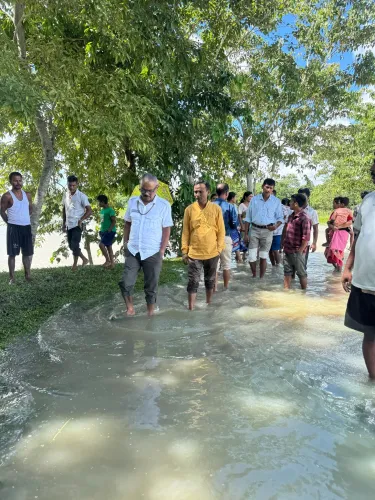
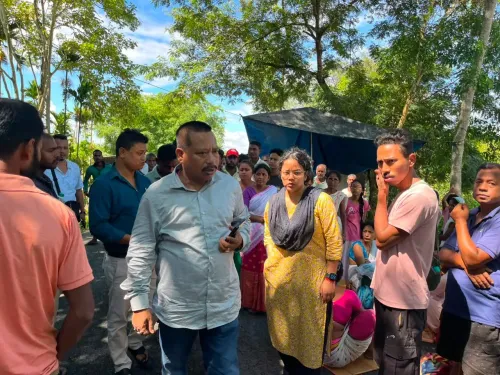
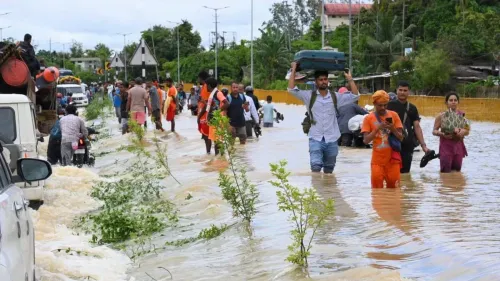
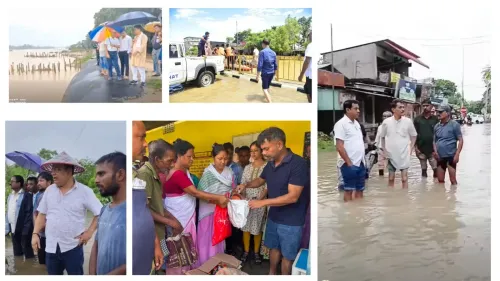
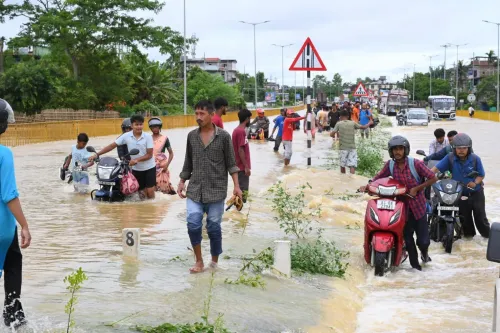
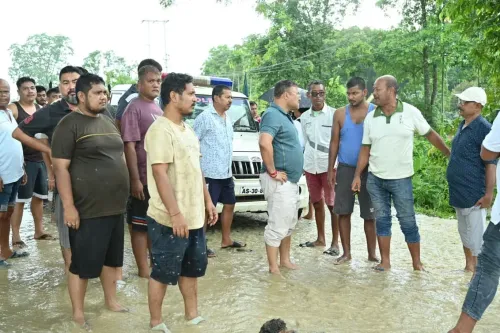
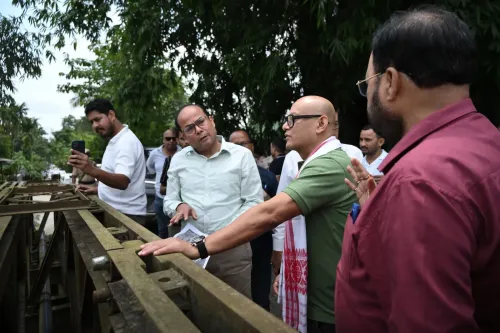
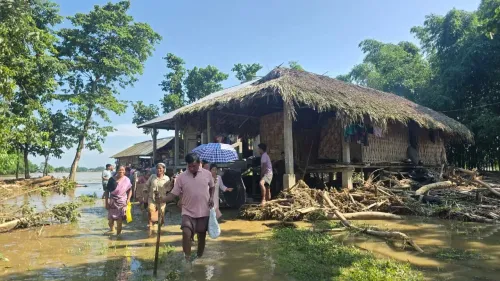
The post was accompanied by four images , indicating on-ground documentation of the flood response.
The Brahmaputra Board , established in 1980 , remains the nodal body for long-term flood and river management in the region.
Assam Chief Minister Himanta Biswa Sarma on Monday, 20 July 2026, said he is personally monitoring the flood situation in Titabor and every other flood-affected constituency in the state, adding that elected representatives are present on the ground alongside affected residents.
Posting in Assamese, the Chief Minister wrote: 'তিতাবৰ সমষ্টিৰ লগতে প্ৰতিটো বান অধ্যুষিত সমষ্টিৰ স্থিতি ব্যক্তিগতভাৱে নিৰীক্ষণ কৰি আছোঁ' — 'I am personally monitoring the situation in Titabor constituency and every flood-affected constituency.' He added that legislators are themselves present and standing beside the people, and that 'collective effort is the key driver in tackling this situation.'
Context
Titabor is an assembly constituency in Jorhat district, one of the stretches of the Brahmaputra valley that faces recurring inundation during the monsoon season. Assam endures annual flooding driven by the Brahmaputra and its tributaries, which swell sharply between June and September, displacing large populations and damaging roads, embankments, and agricultural land.
The 20 July 2026 post, accompanied by four images, reflects the state government's on-ground communication posture during peak flood periods — with the Chief Minister signalling direct, personal oversight rather than delegating monitoring to bureaucratic channels alone.
Policy Backdrop
Flood management in the Brahmaputra valley has a long institutional history. The Brahmaputra Board, established in 1980, was set up to coordinate flood control and river management across the region. Despite decades of embankment construction and early-warning investments, the annual flood cycle continues to be one of Assam's most persistent governance challenges.
Successive state administrations have combined immediate relief operations — including food, shelter, and evacuation support — with medium-term embankment repair and long-term river-management proposals. CM Sarma, who has been in office since 2021, has regularly made on-ground visits and social-media updates a visible part of the state's flood-response communication.
Stakeholders and Impact
The primary stakeholders are the flood-affected residents of constituencies across Assam, who depend on timely relief materials, evacuation assistance, and restoration of damaged infrastructure. Local MLAs play a critical role as the first point of contact between the administration and affected communities.
The Chief Minister's emphasis on elected representatives being physically present — rather than directing relief remotely — signals an accountability expectation that extends to the entire ruling party's legislative membership in the state. This on-ground presence also serves as a check on relief distribution bottlenecks at the constituency level.
What's Next
Attention will now turn to the distribution of relief materials, the pace of embankment repairs, and whether the state government makes a formal request to the Centre for additional disaster-relief funds. Updates on the status of early-warning systems and any long-term river-management announcements from Dispur will be closely watched.
As the monsoon season typically peaks through August, the frequency of such monitoring updates from the Chief Minister's office is expected to continue, with the broader question of durable flood-control infrastructure remaining on the policy agenda for Assam.
Point of View
Tying their local credibility to visible flood-response performance. In the broader context of Assam's perennial flood vulnerability, the post also serves as a signal to the Centre about the scale of the crisis without making a formal assistance request — a soft form of fiscal diplomacy. Whether the stated collective effort translates into measurable relief outcomes will determine the political dividend of this communication.
NationPress
21 Jul 2026
Frequently Asked Questions
Which areas in Assam are flood-affected in July 2026?
CM Himanta Biswa Sarma has stated that Titabor constituency in Jorhat district and multiple other constituencies across Assam are flood-affected, with the state government personally monitoring all of them.
What is CM Himanta doing about the Assam floods?
CM Himanta Biswa Sarma said on 20 July 2026 that he is personally monitoring the flood situation in every affected constituency and that elected representatives are stationed on the ground with residents.
What is Titabor and why is it significant in Assam floods?
Titabor is an assembly constituency in Jorhat district, Assam, and is one of the areas in the Brahmaputra valley that experiences recurring inundation during the monsoon season each year.
Who is responsible for flood control in Assam?
The Brahmaputra Board, established in 1980, is the central body for coordinating flood control and river management in the Brahmaputra valley, while the Assam state government manages immediate relief operations.
Are Assam MLAs involved in flood relief?
Yes, CM Himanta Biswa Sarma stated on 20 July 2026 that elected representatives are personally present on the ground alongside flood-affected residents across Assam's flood-hit constituencies.