CM Himanta Shifts Assam Flood Response to Recovery Phase
Synopsis
As floodwaters recede across Assam, Chief Minister Himanta Biswa Sarma has announced a shift to recovery operations — debris clearance, doorstep healthcare, carcass disposal, disinfection and power restoration — while formulating new policies to directly benefit flood-affected residents.
Key Takeaways
Assam CM Himanta Biswa Sarma announced on July 31, 2026 that flood relief operations have shifted from rescue to recovery as waters recede.
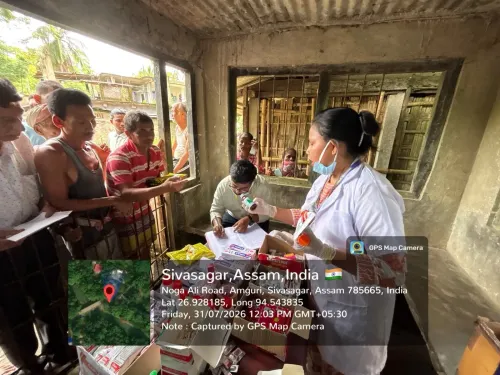
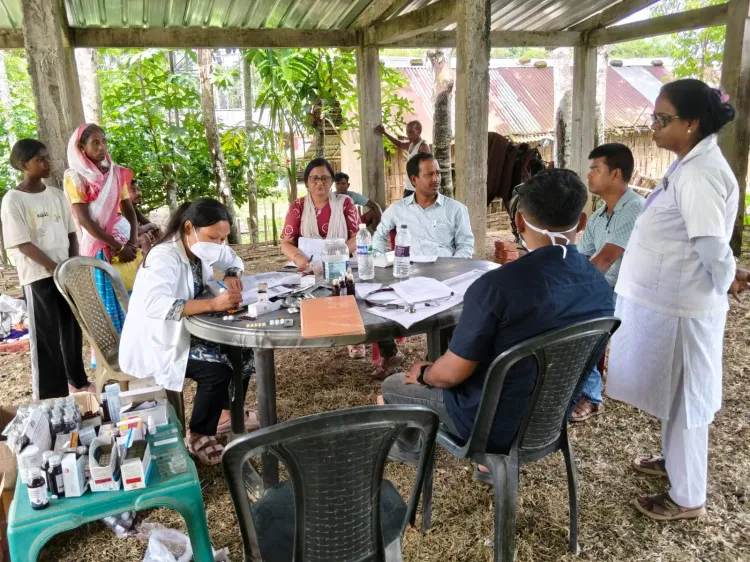
Active operations now include debris clearance, doorstep healthcare delivery, animal carcass disposal, disinfection drives and power restoration.
State teams are working 24x7 across affected areas in the post-flood phase.
The government is simultaneously formulating policies aimed at directly benefiting flood-affected residents, with specifics yet to be announced.
Assam faces recurring annual flooding from the Brahmaputra and its tributaries, making robust rehabilitation frameworks a persistent governance challenge.
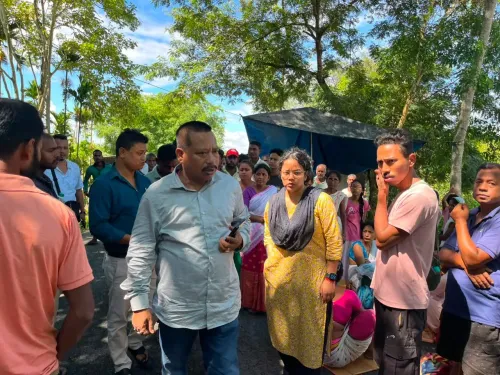
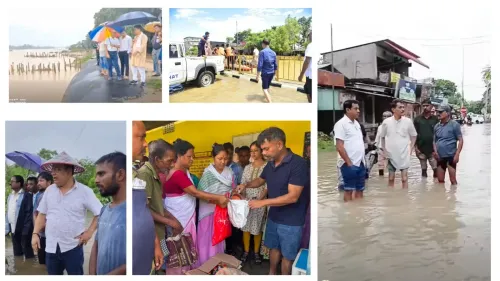
The worst of the floodwaters may be pulling back, but for thousands of Assam residents, the harder work is only beginning. Assam Chief Minister Himanta Biswa Sarma on Friday, July 31, 2026, signalled a decisive shift in the state's disaster response — from rescue to rehabilitation — outlining a multi-front operation now running around the clock.
Sarma stated that with the receding of floodwaters, relief efforts have diversified to cover 'debris clearance, doorstep healthcare, disposal of animal carcasses, disinfection, power restoration and much more,' with teams working 24x7. He added that the government is simultaneously formulating policies to 'directly benefit the affected.'
From Rescue Boats to Disinfection Crews
The shift in operational focus tells its own story. Debris clearance and disinfection are the unglamorous, essential second chapter of every flood response — the phase where standing water gives way to waterlogged homes, damaged roads, and the very real threat of disease outbreaks. Doorstep healthcare delivery is particularly critical in this window: communities cut off or weakened by weeks of flooding are acutely vulnerable to waterborne illnesses and infections. The disposal of animal carcasses — a detail that rarely makes headlines but carries serious public health implications — signals that livestock losses have been significant. For farming communities in Assam, the death of cattle and poultry compounds an already devastating blow to livelihoods.Assam's Annual Flood Cycle and the Rehabilitation Gap
Assam's relationship with monsoon flooding is as old as the Brahmaputra itself. Every year, the river and its tributaries spill across the state's plains, displacing large populations, destroying crops, and battering infrastructure. The Assam State Disaster Management Authority and the National Disaster Response Force are typically deployed in force during the acute phase — but the rehabilitation window, stretching weeks and months after the waters retreat, has historically been where the system strains. Sarma's reference to policies 'under formulation' suggests the government is attempting to close that gap — moving beyond ad hoc relief toward structured, longer-term support for affected residents. The specifics remain to be announced.What Comes Next for Flood-Hit Communities
The real test arrives in the coming weeks: whether the policy framework Sarma's administration is building translates into tangible support — compensation, crop insurance, housing assistance, or utility restoration timelines — for the families who have lost the most. The ground operations are visibly in motion. The policy architecture is the piece still being assembled. For Assam's flood-affected residents, the receding waterline is not the end of the crisis. It is the beginning of a longer, quieter emergency — and the state has put its machinery on notice.Point of View
Helicopters, evacuation footage — into the operationally complex and politically less visible phase of rehabilitation. The explicit mention of policy formulation alongside ground operations suggests an attempt to address a long-standing criticism of Assam's flood governance: that relief is reactive and short-lived, with little structural follow-through. For a CM who has staked significant political capital on administrative efficiency in the Northeast, how quickly and concretely those policies materialise will matter as much as the current ground operations. The NEDA convener role also means Sarma's handling of this crisis is watched as a template across the region.
NationPress
15 Sept 2026
Frequently Asked Questions
What is the current status of Assam flood relief operations in 2026?
As of July 31, 2026, Assam's flood relief has moved into the recovery phase, with state teams conducting debris clearance, doorstep healthcare, disinfection, animal carcass disposal and power restoration as floodwaters recede.
What policies is CM Himanta Biswa Sarma formulating for flood victims?
CM Sarma stated that his government is formulating policies to 'directly benefit' flood-affected residents, but specific details of these measures have not yet been announced.
Why is animal carcass disposal important after Assam floods?
Decomposing animal carcasses pose serious public health risks, including the spread of waterborne and infectious diseases. Their timely disposal is a standard post-flood protocol to prevent outbreaks in already-vulnerable communities.
Which agencies handle flood relief in Assam?
The Assam State Disaster Management Authority coordinates state-level disaster response, while the National Disaster Response Force is routinely deployed for rescue, evacuation and relief operations during Assam floods.
Why does Assam flood every year?
Assam experiences severe annual flooding primarily because the Brahmaputra River and its numerous tributaries overflow during the monsoon season, inundating low-lying plains and displacing large populations across the state.