CM Himanta on Assam Floods: 9 Lakh Hit, 41 Dead

Synopsis
Assam CM Himanta Biswa Sarma on 23 July 2026 reported that floods have devastated 9 lakh people across 25 districts, killing 41, with rainfall 436% above normal. Over 148 relief camps shelter 30,000 displaced persons as IAF, NDRF and state agencies conduct rescue operations. A long-term rehabilitation package and inter-state flood coordination talks are promised.
Key Takeaways
Over 9 lakh people across 1,800-plus villages in 25 districts of Assam have been impacted by the 2026 monsoon floods as of 23 July 2026 .
41 lives have been lost and thousands of livestock washed away; rainfall has been recorded at 436 per cent above normal .
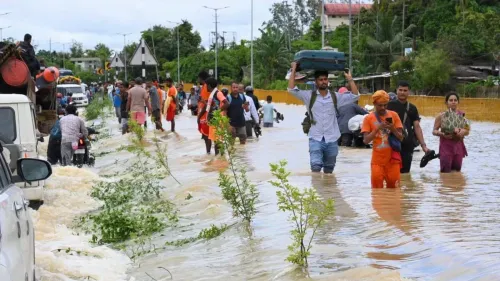
The Indian Air Force , NDRF , CRPF and state machinery are conducting round-the-clock rescue and evacuation operations by air and boat.
More than 148 relief camps are sheltering close to 30,000 displaced persons , with over 3,00,000 kg of rice already distributed in the worst-hit districts.
CM Sarma has committed to a comprehensive long-term rehabilitation package in coordination with the Government of India .
A structured inter-state dialogue on upstream flood coordination will be initiated once the immediate crisis subsides.
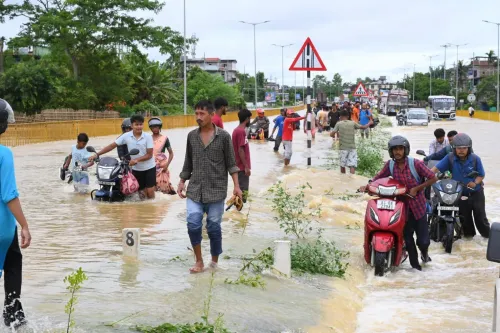
Assam Chief Minister Himanta Biswa Sarma on Thursday, 23 July 2026, described the ongoing flood crisis in the state as being of 'an unimaginable scale,' disclosing that over 9 lakh people across 1,800-plus villages in 25 districts have been affected and that 41 lives have been lost so far.
Context
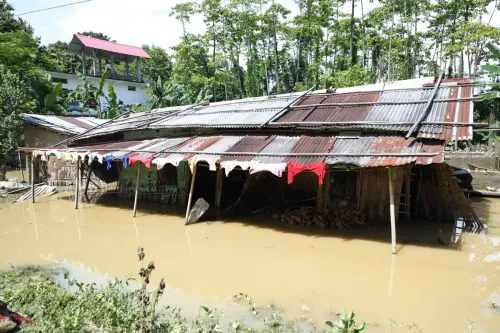
Posting a detailed situation update on X, CM Sarma attributed the catastrophic inundation to cloudbursts upstream coupled with localised heavy rainfall recorded at 436 per cent above normal. He noted that villages which have not witnessed such devastation 'in recent history' have been submerged, underscoring the exceptional nature of this year's flooding. Thousands of livestock have also been washed away, compounding losses for rural households.
Assam is perennially among India's most flood-prone states, with the Brahmaputra and its tributaries inundating large swathes of the Brahmaputra valley every monsoon. This season's event, however, appears to be of a markedly higher magnitude, driven in part by extreme rainfall events in neighbouring hill states upstream.
Policy Backdrop
The state government has activated what CM Sarma called a 'whole-of-government approach,' deploying multiple agencies simultaneously. The Indian Air Force (IAF), the National Disaster Response Force (NDRF) — constituted in 2006 as India's dedicated disaster-response paramilitary unit — and state machinery are conducting round-the-clock rescue and evacuation operations by air and boat.
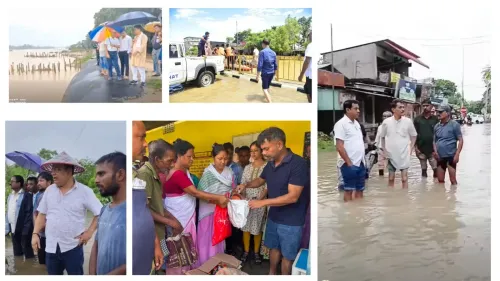
More than 148 relief camps have been established, currently sheltering close to 30,000 people. In the worst-affected districts alone, over 3,00,000 kg of rice and other essential relief materials have already been distributed, with further supplies in transit. The Central Reserve Police Force (CRPF) is also among the agencies tagged in the response effort.
Stakeholders and Impact
The immediate burden falls on flood-affected families spread across 25 districts, many of whom have been displaced from homes and cut off from livelihoods. Agricultural communities face the dual blow of crop damage and loss of livestock, while access to safe drinking water remains a pressing concern in inundated areas.
CM Sarma stated that the state is working closely with various departments and the Government of India to prepare a 'comprehensive long-term rehabilitation package for every affected family.' Successive Assam governments have sought central assistance and inter-state coordination for Brahmaputra flood mitigation in past decades, making the current push for a rehabilitation framework consistent with a long-standing governance pattern in the region.
What's Next
CM Sarma outlined a fifth and forward-looking commitment: once the immediate crisis subsides, the state will initiate 'a structured dialogue with neighbouring States to establish a stronger coordination mechanism' to better protect communities from the impact of upstream cloudbursts and similar future calamities. This signals a diplomatic and administrative effort that extends beyond relief, targeting the structural vulnerability that makes Assam susceptible to rainfall events originating outside its borders.
The rollout of the promised rehabilitation package and the timeline for formal inter-state talks will be closely watched by affected communities, civil-society groups, and policymakers focused on Northeast India's long-term flood resilience. The scale of this year's disaster makes both commitments politically and administratively consequential for the Sarma government.
Point of View
41 dead, 436% rainfall deviation, 3 lakh kg of rice delivered — he pre-empts criticism of administrative inaction while simultaneously building a public record of state capacity. The pledge to initiate inter-state dialogue on upstream cloudbursts is politically significant; it frames a recurring structural problem as one requiring regional diplomacy, potentially elevating Sarma's role as NEDA convenor into a platform for Northeast-wide disaster governance. The explicit tagging of central agencies signals active federal coordination, which is crucial ahead of any request for enhanced central disaster relief funds. If the promised rehabilitation package and inter-state talks materialise with specificity, this post could mark a shift from reactive flood relief toward a more institutionalised resilience framework for the region.
NationPress
23 Jul 2026
Frequently Asked Questions
How many people have been affected by Assam floods in 2026?
According to CM Himanta Biswa Sarma , over 9 lakh people across more than 1,800 villages in 25 districts have been impacted by the 2026 Assam floods as of 23 July 2026 .
How many deaths have been reported in the Assam floods 2026?
CM Sarma stated that 41 precious lives have been lost to the floods as of his update on 23 July 2026 .
What relief operations are underway in flood-hit Assam?
The Indian Air Force , NDRF , CRPF and Assam state machinery are conducting aerial and boat-based rescue operations. Over 148 relief camps sheltering nearly 30,000 people have been set up, and more than 3,00,000 kg of rice and essentials have been delivered in the worst-affected districts.
Why are the Assam floods 2026 so severe?
CM Sarma cited cloudbursts upstream combined with localised heavy rainfall recorded at 436 per cent above normal as the cause, inundating villages that have not seen such devastation in recent history.
What long-term measures is the Assam government planning after the floods?
The Sarma government has committed to a comprehensive rehabilitation package for every affected family in coordination with the Government of India , and plans structured dialogue with neighbouring states to establish a stronger coordination mechanism against upstream cloudbursts.