CM Himanta opens 118 Model High Schools in Assam tea belt
Synopsis
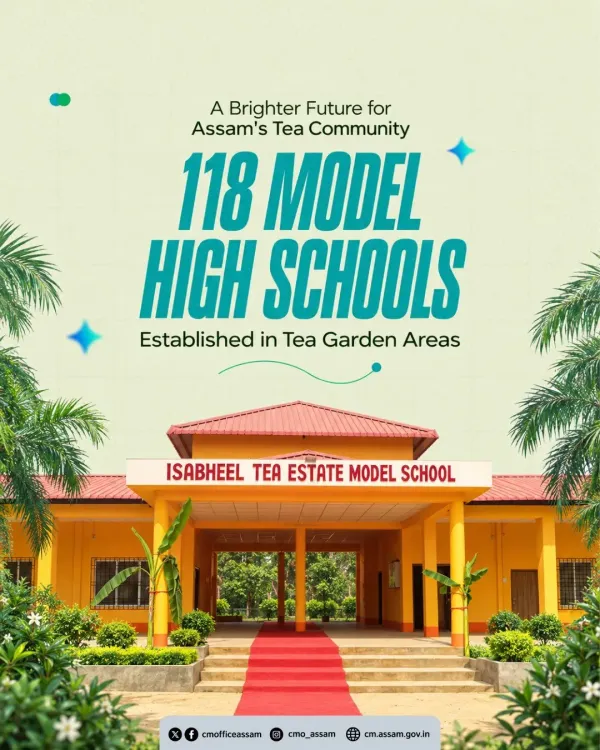
The Chief Minister's Office of Assam announced 118 Model High Schools opening across tea garden areas under CM Dr. Himanta Biswa Sarma, aiming to expand quality secondary education access for the state's historically underserved tea tribe communities.
Key Takeaways
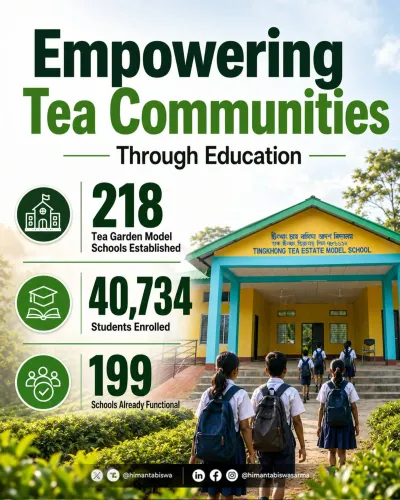
118 Model High Schools are being opened in Assam's tea garden areas under the current state government.
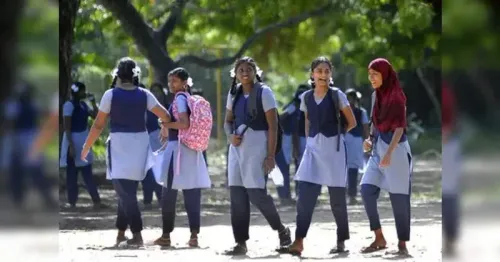
The initiative targets the Tea Community — descendants of colonial-era plantation labourers — who have long faced limited access to secondary education.
Himanta Biswa Sarma , in office since May 2021 , has positioned tea tribe welfare as a core social-equity priority.
Assam's Tea Tribes Welfare Department has maintained dedicated education budget provisions since at least the early 2000s, making this the latest — and numerically largest — iteration of that policy lineage.
Key metrics to watch include school operational status, enrolment figures, and board examination outcomes from tea garden blocks.
For generations, children growing up in Assam's tea garden belts have watched opportunity pass them by — too far from a decent school, too early into the workforce. That distance is now being measured in a different unit: 118 Model High Schools, announced by the Chief Minister's Office of Assam on Sunday, 18 October 2026, as newly opening across the state's tea estate regions under the leadership of Chief Minister Dr. Himanta Biswa Sarma.
Why tea garden schooling has always been an uphill climb
Assam's tea communities — often called tea tribes or Adivasis — are descendants of labourers brought to the Brahmaputra valley's vast plantations during the colonial era. Generations later, many families remain tethered to the estate economy, with limited access to quality secondary education. The Tea Tribes Welfare Department has carried a dedicated education mandate in the state budget since at least the early 2000s, but physical infrastructure in remote garden blocks has lagged stubbornly behind.
Secondary schooling is the critical hinge: it is the point at which students either gain the qualifications to move into higher education and formal employment, or cycle back into plantation labour. Bridging that gap has been a declared priority for successive Assam governments — and the current administration's model-school push is the most numerically ambitious iteration yet.
118 schools, one community's window to move up
The CMO's announcement frames the Model High Schools as state-supported institutions designed specifically to raise the quality bar in underserved rural pockets. By concentrating 118 such schools inside tea garden areas — rather than distributing them across the general school network — the government is making a targeted bet: that community-specific infrastructure, placed where the students actually live, will shift enrolment and board-examination outcomes in a population that has historically been left behind by generic schemes.
Dr. Himanta Biswa Sarma, who has served as Chief Minister since May 2021, has repeatedly positioned tea tribe welfare as a social-equity priority of his administration. The Model High Schools initiative fits into that broader arc, sitting alongside nutrition, health, and livelihood programmes aimed at the same communities.
What comes next for tea garden students
The proof will be in the numbers that follow: actual operational status of each campus, enrolment figures once schools are running at full capacity, and — eventually — Class X and XII pass rates from tea garden blocks. Those data points will determine whether this initiative is a structural shift or a headline. For now, 118 communities across Assam's green hills are watching doors open that, for most of living memory, stayed shut.
Point of View
Which has cultivated visible outreach to tea tribe voters, the announcement also carries electoral currency in a politically significant demographic. The real test, however, is whether the model-school tag translates into measurably better outcomes — staffing, facilities, and retention — or remains aspirational branding. Sustained enrolment and board-result data from tea garden blocks over the next two to three academic years will be the most honest verdict.
NationPress
18 Oct 2026
Frequently Asked Questions
What are Model High Schools in Assam's tea garden areas?
Model High Schools are state-supported secondary schools set up in Assam's tea estate regions to provide quality education to tea tribe students who have historically had limited access to good secondary schooling.
How many Model High Schools are being opened in Assam's tea belt?
The Chief Minister's Office of Assam announced 118 Model High Schools opening across tea garden areas in the state.
Who are the tea tribes or tea community in Assam?
The tea community, also called tea tribes or Adivasis, are descendants of labourers brought to Assam's tea plantations during the colonial era. They form a significant population in the state's garden belts and have long faced socio-economic and educational disadvantages.
What is Assam's policy history on tea tribe education?
Assam has maintained a dedicated Tea Tribes Welfare Department with education and infrastructure budget provisions since at least the early 2000s. The current Model High Schools push is the most numerically ambitious iteration of that policy lineage.
What should we watch for after the Model High Schools launch?
Key indicators include the actual operational status of all 118 campuses, student enrolment figures once schools are running, and Class X and XII board examination outcomes from tea garden blocks over the coming academic years.