CM Himanta Orders Speed Limiters on All Assam Commercial Vehicles
Synopsis
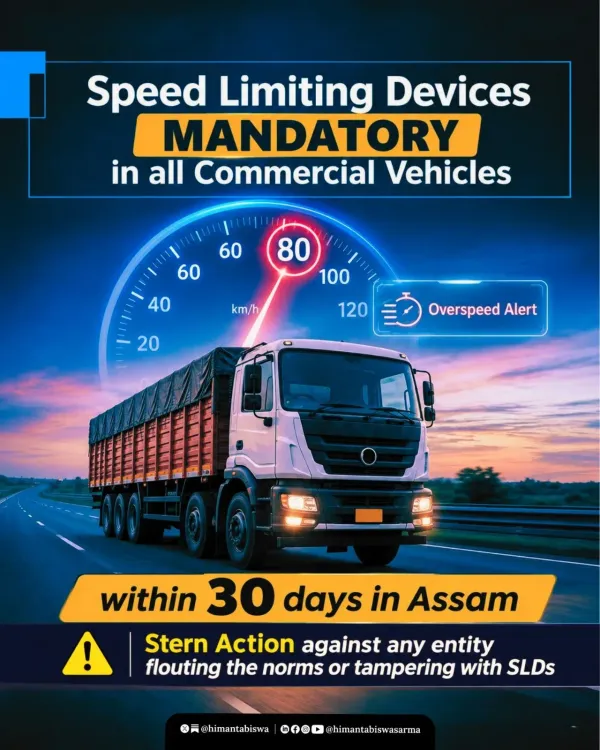
Assam Chief Minister Himanta Biswa Sarma has issued a non-negotiable one-month deadline for all commercial vehicles in the state to install Speed Limiting Devices, pledging personal monitoring of compliance — a sharp enforcement push on a long-standing central road-safety mandate.
Key Takeaways
Assam CM Himanta Biswa Sarma has directed every commercial vehicle in the state to install a Speed Limiting Device within one month .
The CM described the order as 'non-negotiable' and committed to personally monitoring execution.
Speed Limiting Devices electronically cap the maximum speed a vehicle can reach, reducing overspeeding-related crashes.
The Ministry of Road Transport and Highways mandated speed governors on transport vehicles via Central Motor Vehicles Rules amendments around 2019 .
Assam's transport authorities and commercial fleet operators now face a hard compliance deadline from November 17, 2026 .
Enforcement actions and compliance reports are expected as the one-month window closes.
A hard deadline, a personal guarantee, and zero room for negotiation — Assam Chief Minister Himanta Biswa Sarma has issued a sweeping directive requiring every commercial vehicle in the state to install a Speed Limiting Device (SLD) within one month, and he has staked his own oversight on its execution.
The order and what it demands
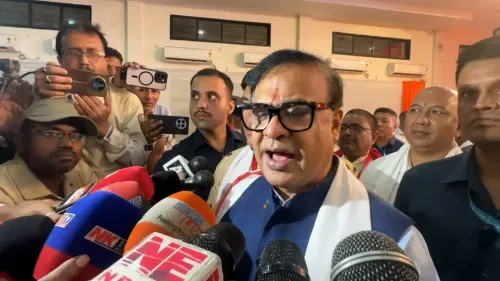
In an unambiguous post on X on Tuesday, November 17, 2026, CM Sarma wrote: 'Every commercial vehicle in Assam must install a Speed Limiting Device within one month. This is non-negotiable and I will personally monitor that this drive is executed to the T.' The language is deliberate — no qualifier, no grace period beyond the stated window, no bureaucratic cushion. When a Chief Minister says 'I will personally monitor,' the signal to transport authorities is unmistakable: compliance is expected, not hoped for.
What a Speed Limiting Device actually does — and why it matters
An SLD is an electronic unit fitted to a commercial vehicle's engine control system to electronically cap the maximum speed the vehicle can reach. The Ministry of Road Transport and Highways mandated speed governors on transport vehicles through amendments to the Central Motor Vehicles Rules around 2019, making this a national requirement that states are obliged to enforce. The technology is straightforward; the gap has always been follow-through.
India's roads carry a grim statistical burden. Overspeeding is consistently among the leading causes of road fatalities nationwide, and commercial vehicles — trucks, buses, tempos, goods carriers — are disproportionately represented in high-fatality crashes. Fitting an SLD does not make a driver careful, but it does make it physically impossible to exceed a set threshold. That is the point.
Assam's enforcement push in a national context
Indian states have periodically moved to enforce the central SLD mandate, but the gap between rule and reality has been wide. Vehicle operators have resisted on grounds of operational flexibility and cost; enforcement agencies have often lacked the capacity — or the political backing — to follow through. What is different here is the explicit, public, personal commitment from the state's top executive. Assam's transport authorities now have both a mandate and a spotlight on them: within a month, compliance reports will be expected, and enforcement actions against defaulters will be the measure of success.
For commercial vehicle operators across Assam — truckers, fleet owners, bus operators — the clock started on November 17. The directive leaves no interpretive room: install the device, or face the consequences of a personally-monitored crackdown.
Road safety enforcement in India has historically moved in bursts — a fatality cluster triggers a drive, attention fades, the cycle repeats. CM Sarma's directive is a test of whether a Chief Minister's personal stake in a deadline can break that cycle in one state, and potentially set a template for others.
Point of View
Personal accountability to close the implementation gap on a central mandate that has existed since 2019 but remained patchily enforced. By framing the order as 'non-negotiable' and pledging personal monitoring, he converts a routine administrative instruction into a political commitment — one that is now measurable against a hard deadline. This fits a broader pattern of Sarma using visible, top-down enforcement drives to signal administrative seriousness in Assam. The real test is not the announcement but what happens on day thirty-one — compliance numbers, penalties issued, and whether the drive outlasts the news cycle will determine whether this becomes a model or a footnote.
NationPress
17 Nov 2026
Frequently Asked Questions
What is a Speed Limiting Device and why is Assam making it mandatory?
A Speed Limiting Device (SLD) is an electronic unit fitted to a commercial vehicle that caps the maximum speed it can reach, preventing overspeeding. Assam CM Himanta Biswa Sarma has ordered all commercial vehicles in the state to install one within one month as part of a road-safety enforcement drive backed by central motor vehicle rules.
What is the deadline for commercial vehicles in Assam to install Speed Limiting Devices?
CM Sarma's directive issued on November 17, 2026 gives all commercial vehicle operators in Assam one month to fit a Speed Limiting Device — placing the compliance deadline in mid-December 2026.
Is Speed Limiting Device mandatory under Indian law?
Yes. The Ministry of Road Transport and Highways amended the Central Motor Vehicles Rules around 2019 to mandate speed governors on transport vehicles. Assam's directive is a state-level enforcement push on this existing national requirement.
What happens if commercial vehicles in Assam do not comply?
CM Sarma stated the order is 'non-negotiable' and that he will personally monitor enforcement. While specific penalties were not detailed in the directive, non-compliance is expected to attract enforcement action from Assam transport authorities after the one-month deadline.
Which vehicles are covered by Assam's Speed Limiting Device order?
CM Sarma's directive covers every commercial vehicle in Assam — including trucks, buses, goods carriers, and other transport vehicles that fall under central motor vehicle regulations governing speed governors.