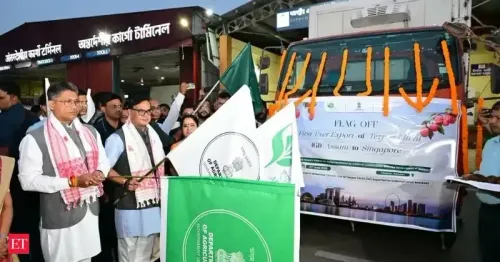
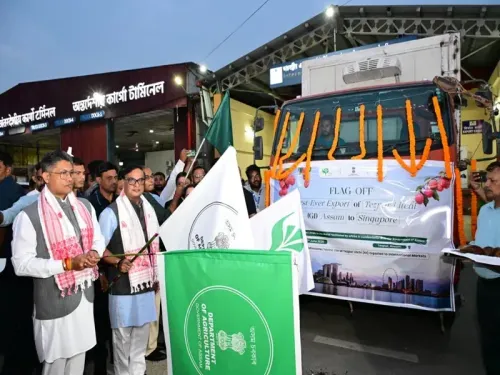
CM Himanta Flags Off Tezpur Litchi Export to Singapore

Synopsis
Assam Chief Minister Himanta Biswa Sarma flagged off a Tezpur Litchi consignment to Singapore on June 12, 2026, highlighting the state's push to tap global demand for its premium horticultural produce including ginger, lemons and litchis.
Key Takeaways
CM Himanta Biswa Sarma flagged off an export consignment of Tezpur Litchis to Singapore on June 12, 2026 .
Tezpur Litchi is a distinctive Assam variety with established domestic recognition and growing international interest.
CM Sarma identified ginger, lemons and litchis as Assam agricultural products with 'immense potential' in global markets.
The export aligns with India's Act East Policy aimed at deeper trade integration with ASEAN nations including Singapore.
APEDA plays a central role in enabling and certifying Indian horticultural exports to international markets.
Improved cold-chain logistics and air cargo connectivity at Tezpur and Guwahati airports are key to scaling such exports.
Assam Chief Minister Himanta Biswa Sarma on Friday, June 12, 2026, flagged off an export consignment of Tezpur Litchis to Singapore, marking a fresh push to take the state's premium horticultural produce to global markets. The dispatch underscores Assam's growing ambition to position itself as a significant supplier of high-value agricultural products beyond its traditional exports of tea and petroleum.
Context
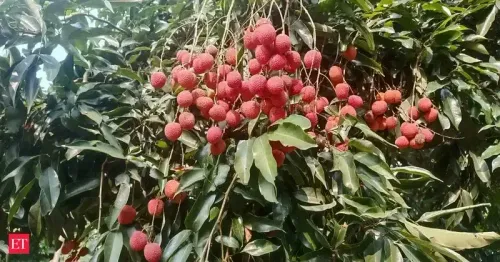
Posting on X, CM Sarma wrote that Assam's agricultural products — from ginger and lemons to litchis — 'have immense potential and high demand in the global markets.' He described the Tezpur Litchi as 'certain to hit the taste buds with its unique flavour,' signalling confidence in the variety's commercial appeal abroad. The consignment to Singapore, a key ASEAN trading hub, is among the more visible export moves from the state in recent years.
Policy Backdrop
The export push sits squarely within India's Act East Policy, upgraded from the earlier Look East framework in 2014, which seeks deeper economic and trade integration with ASEAN nations including Singapore. The Agricultural and Processed Food Products Export Development Authority (APEDA), established in 1985, has long supported promotion of Indian horticultural exports — including litchis — to international buyers, and its infrastructure and certification support is central to enabling such consignments from landlocked northeastern states.
Assam's current focus on fruit exports is part of a sustained state and central effort to diversify the Northeast's economic base toward high-value horticulture. Improved cold-chain logistics and air cargo connectivity — particularly through airports at Tezpur and Guwahati — have been identified as critical enablers for making such exports commercially viable at scale.
Stakeholders and Impact
The most direct beneficiaries of the Tezpur Litchi export are Assam's litchi growers and horticulture exporters, who stand to gain from premium international pricing that domestic markets often cannot match. Tezpur, the town and district from which the variety takes its name, has long enjoyed domestic recognition for its distinctively flavoured litchi, and international exposure could significantly raise farm-gate returns for local cultivators.
For Singapore — a sophisticated consumer market with a large South and Southeast Asian diaspora — the arrival of Tezpur Litchis adds a premium Indian horticultural product to its import basket. The consignment also serves as a proof-of-concept for other Assam produce, with CM Sarma specifically naming ginger and lemons as products with comparable export potential.
What's Next
The flag-off is likely to be followed by efforts to regularise and scale the export corridor for Tezpur Litchis ahead of and during future harvest seasons. Watchers of Assam's agricultural economy will look for follow-on consignments of other produce — including the state's ginger and GI-tagged items — and any announcements on cold storage or cargo-handling capacity at regional airports. A sustained export programme would require consistent quality certification, cold-chain investment, and coordination with central agencies, all of which will test the state's institutional readiness to move from symbolic first consignments to durable trade flows.
Point of View
He reinforces the BJP's Northeast governance narrative of connecting the region to global value chains through the Act East Policy. The choice of Singapore as the destination is deliberate: it is a high-visibility, high-credibility ASEAN market that lends legitimacy to the export story. Whether this translates into a durable agricultural export corridor will depend on cold-chain infrastructure and APEDA support sustaining momentum well past the inaugural dispatch.
NationPress
23 Sept 2026
Frequently Asked Questions
What is special about Tezpur Litchi?
Tezpur Litchi is a variety grown in and around Tezpur district in Assam, known for its distinctive flavour and aroma that sets it apart from litchis grown in other parts of India. It has strong domestic recognition and is now being promoted for international export.
Why is Assam exporting litchis to Singapore?
Singapore is a key ASEAN trading hub with a large South and Southeast Asian consumer base and a strong market for premium fresh produce. India's Act East Policy prioritises deepening trade ties with ASEAN nations, making Singapore a natural first destination for Assam's horticultural exports.
What role does APEDA play in Assam's agricultural exports?
APEDA, the Agricultural and Processed Food Products Export Development Authority, supports quality certification, market promotion and logistics coordination for Indian agricultural exports including horticultural produce like litchis, enabling state-level exporters to access international markets.
What other agricultural products from Assam have export potential?
CM Himanta Biswa Sarma has specifically mentioned ginger and lemons alongside litchis as Assam agricultural products with high global demand. GI-tagged and specialty produce from the Northeast are increasingly being targeted for ASEAN and other international markets.
How does this export fit into India's Act East Policy?
India's Act East Policy, formalised in 2014, aims to deepen economic, connectivity and trade ties with ASEAN nations. Assam's agricultural exports to Singapore directly operationalise this policy by creating tangible trade flows between the Northeast and Southeast Asia.