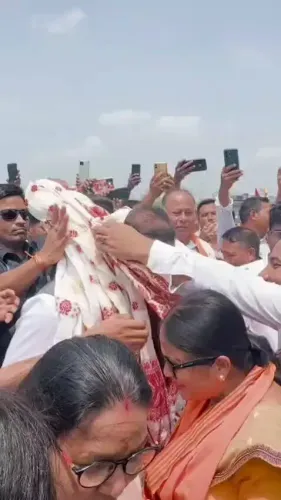
CM Himanta shares PM Modi's note on Vande Mataram in space
Synopsis
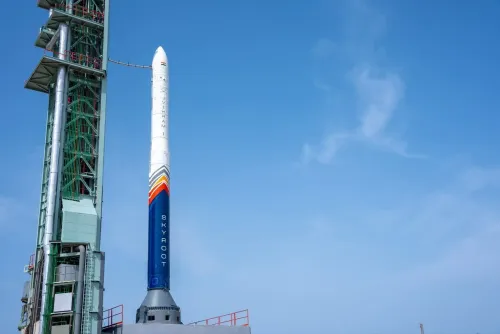
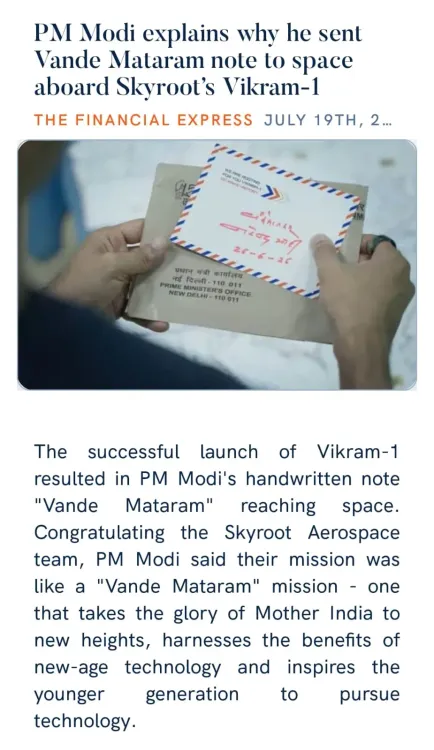
Assam CM Himanta Biswa Sarma amplified Prime Minister Modi's decision to send a Vande Mataram note aboard Skyroot Aerospace's Vikram-1 — India's first private orbital rocket — blending national cultural symbolism with the country's expanding private space ambitions.
Key Takeaways
Assam CM Himanta Biswa Sarma shared the report on 20 July 2026 via the NaMo App on X.
PM Modi sent a Vande Mataram note to space aboard Skyroot Aerospace's Vikram-1 , India's first private orbital-class rocket.
Skyroot Aerospace is a Hyderabad -based startup developing small satellite launch vehicles under India's post-2020 space liberalisation framework.
India's space sector was opened to private firms in 2020 through IN-SPACe , with the Indian Space Policy 2023 further consolidating the framework.
ISRO has a precedent of carrying national symbols on missions including Chandrayaan-1 (2008) and Mangalyaan (2013-14) ; Vikram-1 extends this tradition to a private launch.
The flight date and outcome of Vikram-1 will be a key test of India's private space sector's orbital capability.
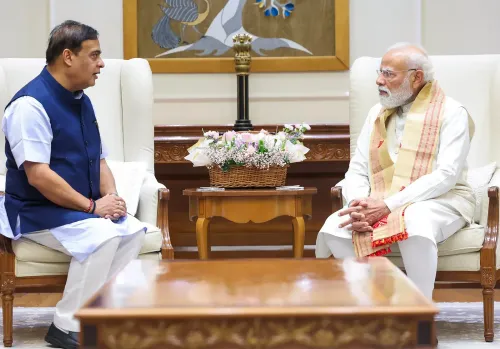
Assam Chief Minister Himanta Biswa Sarma on Monday, 20 July 2026, shared a report detailing why Prime Minister Narendra Modi sent a handwritten Vande Mataram note to space aboard Skyroot Aerospace's Vikram-1 rocket, amplifying the milestone on his official X account.
Context
Skyroot Aerospace, a Hyderabad-based private space startup, is developing the Vikram series of small satellite launch vehicles. Vikram-1 is the company's planned first orbital-class rocket and is poised to become India's first fully private orbital launch vehicle. Prime Minister Modi's decision to send a note bearing the national song Vande Mataram — 'I bow to thee, Mother' — aboard the rocket underscores the government's intent to infuse cultural identity into technological milestones.
Chief Minister Sarma, who frequently uses social media to amplify central government initiatives, shared the report through the NaMo App, signalling the BJP's coordinated effort to highlight the symbolic dimension of the launch.
Policy Backdrop
India's space sector underwent landmark reforms in 2020 when the government opened launch vehicle development to private firms and established IN-SPACe (Indian National Space Promotion and Authorisation Centre) as the nodal regulatory body. The Indian Space Policy 2023 further consolidated this framework, encouraging startups to develop end-to-end capabilities under the broader Atmanirbhar Bharat initiative.
ISRO has a precedent of carrying national symbols on landmark missions — including Chandrayaan-1 in 2008 and Mangalyaan in 2013-14 — pairing technological achievement with visible expressions of national pride. Extending this tradition to a private launch marks a new chapter: the state endorsing a startup's mission with the same ceremonial weight once reserved for government rockets.
Stakeholders and Impact
For Skyroot Aerospace and India's growing constellation of private space startups, Prime Minister Modi's personal involvement lends significant political and public visibility to what would otherwise be a niche commercial launch. Investor confidence in the sector is likely to receive a boost, as high-profile endorsement signals continued policy support.
For ordinary citizens, the Vande Mataram gesture serves as a bridge between an otherwise technical event and everyday national sentiment — a deliberate strategy successive governments have used to broaden public appetite for space spending. Assam and the wider North-East, where Chief Minister Sarma's NEDA coalition holds sway, stand to benefit from the aspirational messaging around India's space ambitions.
What's Next
All eyes are now on the confirmed flight date and outcome of Vikram-1's orbital attempt, which will determine whether India's private space sector can translate political goodwill into demonstrated launch capability. Policy watchers will also track any follow-on announcements in the next Union Budget or NITI Aayog review that could further liberalise IN-SPACe guidelines or expand funding for space startups.
Should Vikram-1 succeed, it would mark a defining inflection point in India's shift from a purely state-led space programme to a hybrid public-private model — one where cultural symbolism and commercial ambition travel together beyond Earth's atmosphere.
Point of View
CM Himanta Biswa Sarma extends this messaging into the North-East, a region where NEDA's political consolidation depends partly on projecting the Centre's developmental credentials. The move also signals to the investor community that the government's commitment to private space is not merely regulatory but personally endorsed at the highest level. If Vikram-1 succeeds, the Vande Mataram symbolism will be retrospectively amplified; if it faces setbacks, the cultural framing provides a buffer that keeps public sentiment positive regardless of technical outcome.
NationPress
21 Jul 2026
Frequently Asked Questions
Why did PM Modi send a Vande Mataram note to space on Vikram-1?
PM Modi sent a handwritten Vande Mataram note aboard Skyroot Aerospace's Vikram-1 rocket to mark India's cultural identity alongside the country's first private orbital launch attempt, continuing a tradition of including national symbols on landmark space missions.
What is Skyroot's Vikram-1 rocket?
Vikram-1 is Skyroot Aerospace's planned first orbital-class small satellite launch vehicle, developed by the Hyderabad-based startup under India's liberalised space policy framework, and is set to be India's first fully private orbital rocket.
What is India's private space policy and IN-SPACe?
India opened its space sector to private companies in 2020 and created IN-SPACe (Indian National Space Promotion and Authorisation Centre) as the nodal body to regulate and promote private launch vehicle development, further strengthened by the Indian Space Policy 2023.
Why did Himanta Biswa Sarma share the Vikram-1 story?
As Assam Chief Minister and a senior BJP leader, Himanta Biswa Sarma frequently amplifies central government achievements on social media; sharing PM Modi's symbolic gesture on Vikram-1 aligns with his role in promoting the government's Atmanirbhar Bharat narrative across the North-East.
Has India sent national symbols to space before Vikram-1?
Yes, ISRO carried Indian national symbols and messages on earlier landmark missions including Chandrayaan-1 in 2008 and Mangalyaan in 2013-14; the Vande Mataram note on Vikram-1 extends this tradition to India's first private orbital launch.