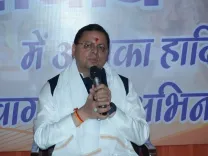
CM Himanta thanks Centre for ₹3,552cr tax devolution to Assam

Synopsis
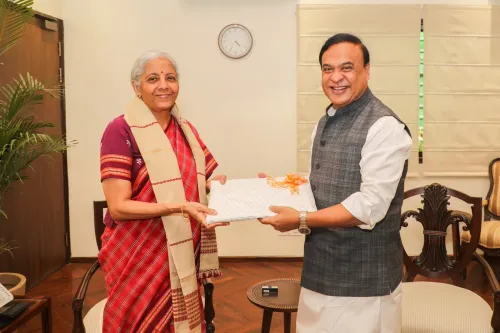
The Centre has released ₹3,552 crore in additional tax devolution to Assam. CM Himanta Biswa Sarma thanked PM Modi and Finance Minister Sitharaman, saying the funds will drive infrastructure investment and build a more resilient Assam.
Key Takeaways
The Union Government released an additional tax devolution instalment of ₹3,552 crore to Assam .
CM Himanta Biswa Sarma said the funds will be channelled into infrastructure development.
He specifically thanked PM Narendra Modi and Finance Minister Nirmala Sitharaman .
Tax devolution to states is governed by 15th Finance Commission recommendations, which set the states' share at 41% of central taxes for 2021–26 .
Assam relies heavily on central transfers to fund capital expenditure given its revenue profile as a northeastern state.
Deliberations on the 16th Finance Commission make current devolution utilisation a key data point for future state allocations.
A fresh fiscal injection is headed to Assam. Assam Chief Minister Himanta Biswa Sarma on Saturday, August 1, 2026, publicly thanked the Union Government for releasing an additional instalment of tax devolution worth ₹3,552 crore to the state, flagging it as fuel for infrastructure expansion across the Northeast.
₹3,552 crore and what Assam plans to do with it
Sarma was unambiguous about the intent: the funds will go toward building infrastructure that, in his words, will 'shape up a more resilient Assam.' He extended specific thanks to Union Finance Minister Nirmala Sitharaman, crediting her support in 'taking forward Assam's growth journey.' The acknowledgment of both Prime Minister Narendra Modi and Sitharaman by name signals how closely state governments track — and publicly valorise — Centre-to-state fiscal flows.
How tax devolution works — and why this transfer matters
Tax devolution is the constitutional backbone of India's fiscal federalism. Under the 15th Finance Commission's recommendations, accepted by the Union Government in 2021, states collectively receive 41% of central tax collections — released in monthly or periodic instalments by the Ministry of Finance. Assam, as a special-category northeastern state, depends significantly on these central transfers to fund capital expenditure that its own revenue base cannot fully sustain.
Additional or advance instalments — released outside the routine monthly schedule — are typically deployed when the Centre wants to front-load liquidity for states ahead of a spending push. For Assam, a state that has been aggressively pursuing road, bridge, and urban infrastructure projects since Sarma took charge in May 2021, the timing of such a release carries direct operational significance.
Northeast infrastructure: the bigger frame
The current administration at the Centre has consistently positioned the Northeast as a priority infrastructure corridor — both for domestic connectivity and for India's 'Act East' strategic posture. State-level capital investment, enabled by devolution transfers like this one, plugs into that larger architecture. Every rupee of devolution that flows to Guwahati is, in that sense, also a piece of a national geopolitical puzzle.
With deliberations around the 16th Finance Commission on the horizon, how states like Assam utilise current devolution tranches will shape the evidence base for future allocation formulas — making this not just a budget line, but a data point in a longer negotiation.
The money is in. Now the infrastructure has to follow.
Point of View
Visibly crediting the BJP-led Centre also tightens the political narrative of aligned governance delivering results. As the 16th Finance Commission process approaches, states that demonstrate effective utilisation of devolution funds and maintain cordial Centre-state optics are better placed to argue for a larger share. Sarma's post is as much a signal to Delhi as it is a message to Assam's voters.
NationPress
1 Aug 2026
Frequently Asked Questions
What is tax devolution and why does Assam receive it?
Tax devolution is the constitutionally mandated transfer of a share of central tax revenues to states. Under the 15th Finance Commission's formula, states collectively receive 41% of central taxes. Assam, as a northeastern state with limited own-revenue capacity, depends significantly on these transfers to fund public spending.
How much money did the Centre release to Assam?
The Centre released an additional instalment of ₹3,552 crore in tax devolution to Assam, as announced by Chief Minister Himanta Biswa Sarma on August 1, 2026.
What will Assam use the ₹3,552 crore for?
CM Himanta Biswa Sarma said the funds will be invested in creating infrastructure to build a 'more resilient Assam,' though specific projects were not detailed in his announcement.
Who is responsible for releasing tax devolution to states?
The Ministry of Finance, headed by Union Finance Minister Nirmala Sitharaman, manages the periodic release of tax devolution instalments to states based on Finance Commission recommendations.
What is the 15th Finance Commission and how does it affect Assam?
The 15th Finance Commission set the framework for sharing central taxes with states for the period 2021–26, recommending a 41% devolution share. Assam's allocation under this formula forms a critical part of its annual budget, especially for capital expenditure on infrastructure.