CM Himanta Thanks Contributors to Assam Flood Relief
Synopsis
Chief Minister Himanta Biswa Sarma has publicly thanked all contributors to Assam's ongoing flood relief and rehabilitation efforts. The acknowledgement, shared by the CMO on 28 July 2026, reflects the state's sustained public-private approach to managing annual Brahmaputra flooding.
Key Takeaways
Himanta Biswa Sarma , Chief Minister of Assam , formally thanked contributors to the state's ongoing flood relief and rehabilitation efforts on 28 July 2026 .
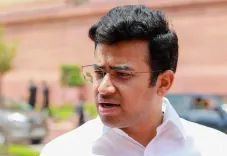
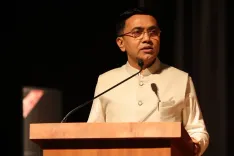
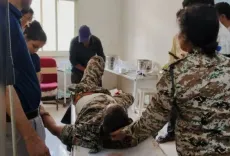
The announcement was made via the Chief Minister's Office of Assam on X, accompanied by four images from relief operations.
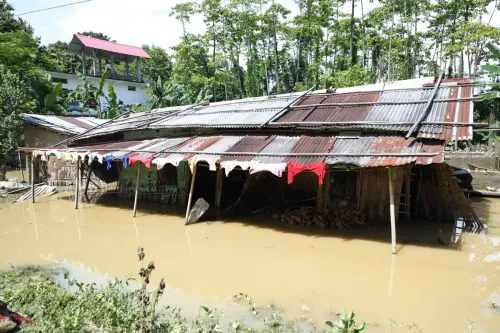
Assam faces annual flooding from the Brahmaputra and its tributaries, displacing lakhs of residents each monsoon season.
The state's relief framework combines the State Disaster Response Fund (SDRF) with private and community contributions, a model expanded after major floods in 2012 and 2017 .
The Chief Minister's public gratitude is part of a deliberate strategy to sustain voluntary and corporate participation in disaster response alongside official mechanisms.
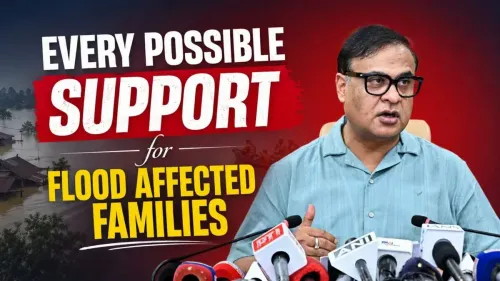
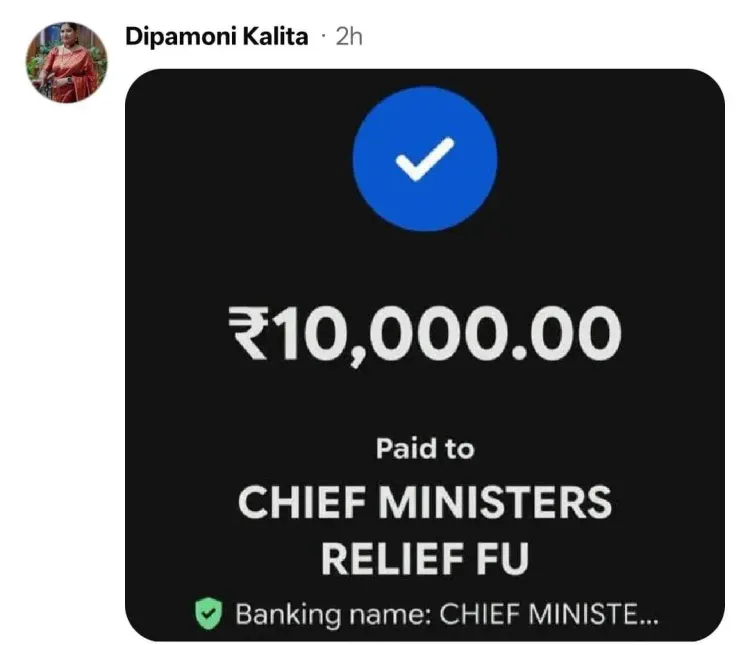
The Chief Minister's Office of Assam announced on Tuesday, 28 July 2026 that Chief Minister Dr. Himanta Biswa Sarma has expressed gratitude to all those who have contributed to the state's ongoing flood relief and rehabilitation efforts.
Context
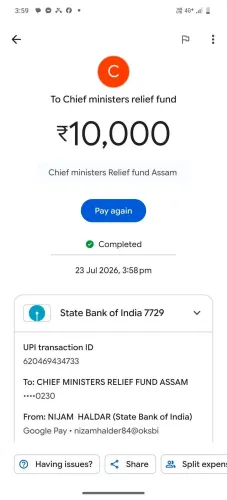
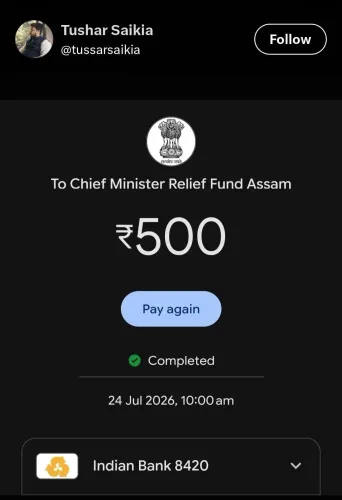
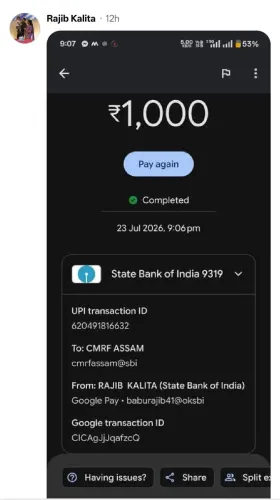
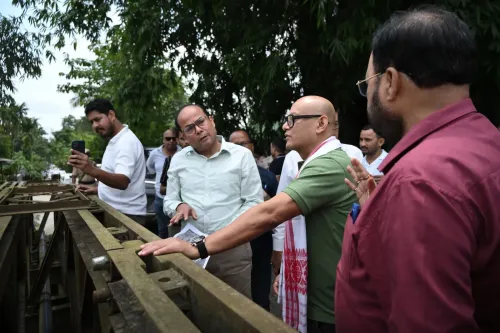
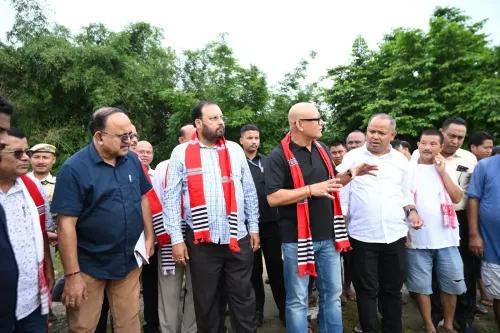
The Chief Minister's Office posted on X that Dr. Himanta Biswa Sarma 'expressed his gratitude to all contributors for their support towards the ongoing relief and rehabilitation efforts.' The acknowledgement comes amid Assam's recurring monsoon-season flooding, which annually displaces lakhs of residents across districts bordering the Brahmaputra and its tributaries. The post was accompanied by four images documenting aspects of the relief operations.
Policy Backdrop
Assam has long relied on a combination of state resources, central allocations, and voluntary contributions to manage its flood crisis. The State Disaster Response Fund (SDRF) has served as the primary financing mechanism since the early 2000s, with rehabilitation components significantly expanded after major inundations in 2012 and 2017. Successive administrations have institutionalised the practice of supplementing official outlays with private and community donations, a model now common across flood-prone Indian states.
Dr. Himanta Biswa Sarma, who has served as Chief Minister since May 2021, has overseen multiple flood cycles and has consistently emphasised a public-private coordination approach to disaster response. Expressions of formal gratitude to contributors are part of this framework, intended to encourage sustained private participation alongside government machinery.
Stakeholders and Impact
The beneficiaries of the relief and rehabilitation drive are flood-affected residents across Assam, who depend on timely support for food, shelter, and restoration of livelihoods. Contributors — ranging from corporate entities and civil society organisations to individual donors — play a meaningful role in bridging gaps that government funds alone cannot cover. The Chief Minister's public acknowledgement signals the administration's intent to maintain these partnerships through the duration of the relief operation.
Community and voluntary organisations operating on the ground in Assam have historically coordinated with district administrations to ensure last-mile delivery of relief materials. The scale of such efforts typically expands in proportion to the severity of the flooding season.
What's Next
Attention will now turn to progress reports on rehabilitation projects, including restoration of damaged infrastructure and housing for displaced families. Any announcements on new flood mitigation measures or early-warning system upgrades ahead of the next monsoon cycle will be closely watched. The administration's ability to translate relief contributions into durable rehabilitation outcomes will be a key metric for assessing the effectiveness of this coordinated response.
Point of View
Where official acknowledgement of private contributions is used to sustain donor engagement across a prolonged relief cycle. It reflects a broader pattern visible across flood-prone Indian states: governments increasingly treat voluntary contributions not as supplementary but as structurally necessary to relief operations. The gesture also carries a political dimension, reinforcing the Chief Minister's image as an accessible, responsive administrator during a crisis period. Whether the acknowledgement translates into measurable improvements in rehabilitation outcomes will depend on the coordination mechanisms that follow.
NationPress
28 Jul 2026
Frequently Asked Questions
Why did CM Himanta Biswa Sarma thank flood relief contributors?
Dr. Himanta Biswa Sarma expressed gratitude to acknowledge the role of private and community contributors in supporting Assam's ongoing flood relief and rehabilitation efforts, which supplement government funding through the State Disaster Response Fund.
What is the current flood situation in Assam?
Assam experiences recurrent monsoon-season flooding from the Brahmaputra and its tributaries. As of 28 July 2026 , relief and rehabilitation operations are ongoing, with the Chief Minister's Office confirming active support from contributors.
How does Assam fund its flood relief operations?
Assam primarily uses the State Disaster Response Fund (SDRF) , supplemented by central government allocations and voluntary contributions from private entities, corporate organisations, and individuals. This combined model has been in place since the early 2000s.
Who is Himanta Biswa Sarma?
Himanta Biswa Sarma is the Chief Minister of Assam , a position he has held since May 2021 . He has overseen the state's response to multiple flood cycles and has emphasised public-private coordination in disaster management.
What happens after flood relief in Assam?
Following immediate relief, the focus shifts to rehabilitation — restoring damaged housing, infrastructure, and livelihoods for displaced residents. Progress reports on these projects and announcements on flood mitigation measures are typically issued by the state administration in the weeks that follow.