CM Himanta Announces Promotion Path for Grade IV School Staff
Synopsis
Assam Chief Minister Himanta Biswa Sarma announced a structured promotion pathway for Grade IV employees in government and provincialised schools, with positions earmarked for advancement based on seniority and gradation — addressing years of career stagnation in the cadre.
Key Takeaways
CM Himanta Biswa Sarma announced a new career advancement framework for Grade IV staff in Assam's government and provincialised schools on June 11, 2026 .
A specific number of positions will be earmarked for promotion , though exact figures await a formal government notification.
Promotions will be determined by seniority and gradation , providing a transparent and predictable pathway for eligible employees.
The policy covers staff in both government schools and provincialised schools — former private institutions absorbed into state service.
The Assam Education Department is expected to issue a formal order specifying eligibility norms and implementation timelines.
The move addresses long-standing stagnation among Grade IV employees, many of whom were absorbed into government service through Assam's large-scale school provincialisation over the past two decades.
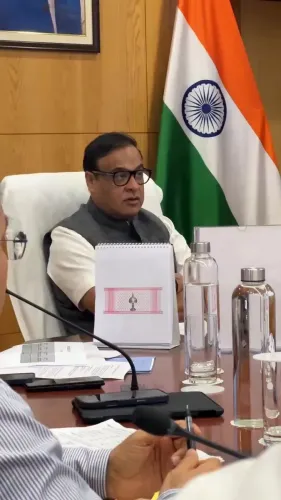
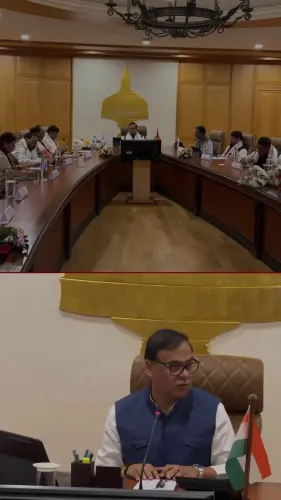
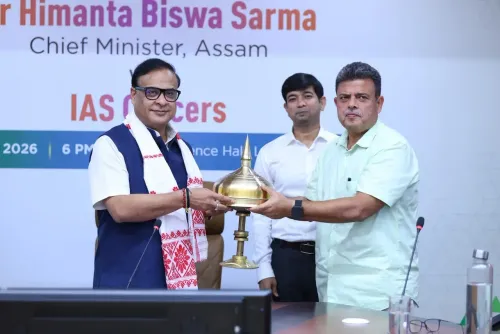
Assam Chief Minister Himanta Biswa Sarma announced on Thursday, June 11, 2026, that the state government is creating a structured career advancement pathway for Grade IV employees in government and provincialised schools, with promotions to be determined by seniority and gradation through earmarked positions.
Context
In his post, CM Sarma stated that the government is 'redrawing a clear career advancement pathway' for Grade IV staff, with a 'certain number of positions' to be earmarked for promotion. Eligible employees will be able to 'scale up on basis of seniority and gradation,' directly addressing long-standing concerns about career stagnation in this cadre.
Grade IV or Group D employees form the foundational support layer of school administration — comprising attendants, peons, and other auxiliary staff — who have historically had limited upward mobility in state government service.
Policy Backdrop
Assam has significantly expanded its education workforce over the past two decades through large-scale provincialisation of schools — a process by which former private or venture schools were brought under state government control and their staff absorbed into government service.
This absorption created a large body of employees, many of whom have served for years without a defined promotion structure. State governments across India periodically revise promotion rules for Grade IV cadres to address stagnation and improve administrative efficiency, and Assam's move follows that broader pattern.
The Assam Education Department administers both government and provincialised schools and will be responsible for issuing the formal notification specifying earmarked posts, eligibility norms, and the implementation timeline.
Stakeholders and Impact
The primary beneficiaries are Grade IV staff employed across government and provincialised schools in Assam — a constituency that spans thousands of employees statewide. For many, this represents the first clearly defined route to promotion since their absorption into government service.
A seniority-and-gradation-based framework is considered more transparent than discretionary promotion systems, as it reduces scope for arbitrariness and gives employees a predictable timeline for advancement. School managements and the Education Department will need to align staffing structures to accommodate the newly earmarked positions.
What's Next
The critical next step is the issuance of a formal government order or notification by the Assam Education Department detailing the exact number of earmarked positions, the eligibility criteria, seniority lists, and the rollout schedule. Until that notification is published, the policy remains at the announcement stage.
Implementation will also require reconciliation of seniority records across government and provincialised school rosters — a process that has historically been complex given the varied timelines of provincialisation across districts. How swiftly the department moves to operationalise the framework will determine the real-world impact for eligible staff.
Point of View
The government signals a preference for rule-based administration, which can reduce grievances and litigation. The timing, ahead of potential electoral cycles in the North-East, also carries political utility: Grade IV staff represent a numerically significant voter bloc with direct familial reach. The real test will be in the speed and completeness of the formal notification — past instances of similar announcements in Indian states have sometimes stalled at the implementation stage due to unresolved seniority disputes between government and provincialised school rosters.
NationPress
15 Sept 2026
Frequently Asked Questions
What is the new promotion policy for Grade IV staff in Assam schools?
Assam CM Himanta Biswa Sarma announced that a certain number of positions will be earmarked for promotion of Grade IV employees in government and provincialised schools, with advancement based on seniority and gradation. A formal government notification with exact details is awaited.
Who are Grade IV employees in Assam government schools?
Grade IV or Group D employees are the lowest rung of school support staff, typically including attendants, peons, and auxiliary workers. In Assam, many were absorbed into government service through the provincialisation of private schools over the past two decades.
What are provincialised schools in Assam?
Provincialised schools are former private or venture schools in Assam that were brought under state government control through a provincialisation process, with their staff and costs taken over by the government.
How will promotions be decided for Grade IV school staff in Assam?
According to CM Sarma's announcement, promotions will be based on seniority and gradation among eligible employees, within a set of positions earmarked specifically for this purpose.
When will the Assam Grade IV school staff promotion policy be implemented?
No implementation date has been announced yet. The next step is a formal notification from the Assam Education Department specifying earmarked posts, eligibility norms, and a rollout timeline.