CM Himanta Seeks Direct Public Feedback Every Day
Synopsis
Assam Chief Minister Himanta Biswa Sarma declared on 16 June 2026 that his daily goal is to receive direct feedback from the public, reinforcing a governance style built on open citizen engagement and social-media accessibility since he took office in May 2021.
Key Takeaways
Himanta Biswa Sarma posted on 16 June 2026 that seeking direct public feedback is his everyday priority.
The statement was made in Hindi and accompanied by a video on X, signalling an ongoing governance commitment rather than a one-time event.
Sarma has used social media as a primary citizen-interface since becoming Assam Chief Minister in May 2021 .
The approach aligns with a broader BJP -governed-state model of real-time digital engagement with citizens.
As NEDA convenor, Sarma 's governance style carries influence across multiple north-eastern states.
Structured digital grievance mechanisms at the state level could emerge from this informal outreach model.
Assam Chief Minister Himanta Biswa Sarma reaffirmed his commitment to direct citizen engagement on Tuesday, 16 June 2026, stating that his daily endeavour is to receive unfiltered feedback from the public. The post, shared on X, underscores a governance philosophy that has defined his tenure since he assumed office in May 2021.
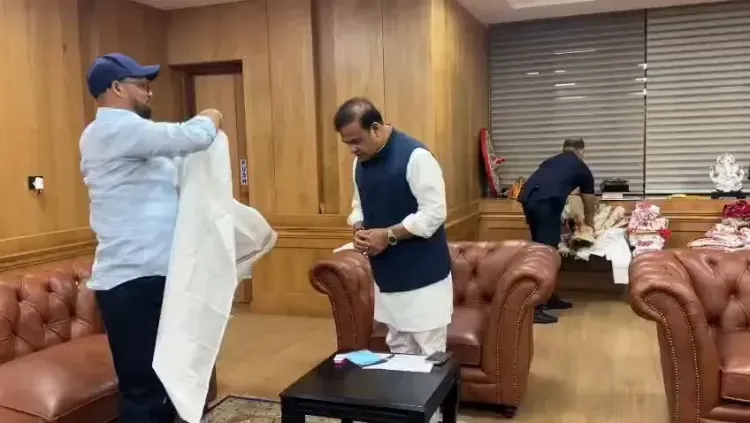
In his post, Sarma wrote in Hindi: 'मेरा हर दिन यहीं प्रयास रहता है कि जनता से Direct Feedback प्राप्त कर सकूँ' — 'My endeavour every single day is to be able to receive direct feedback from the public.' The statement, accompanied by a video, signals an ongoing priority rather than a one-off initiative.
Context
Himanta Biswa Sarma has consistently positioned himself as an accessible, on-the-ground administrator since taking charge of Assam. His social media presence has served as a running diary of governance decisions, public interactions, and policy announcements, making platforms like X a primary interface between his office and ordinary citizens.
The emphasis on 'direct feedback' reflects a broader desire to bypass conventional bureaucratic layers that can dilute or delay citizen grievances from reaching the chief minister's office.
Policy Backdrop
Several BJP-governed states have institutionalised social-media-driven public engagement, following the model popularised at the national level after 2014. In Assam, this approach dovetails with state-level efforts to improve grievance redressal systems and infrastructure project monitoring in a state that faces complex ethnic-diversity and development challenges.
Sarma, who also serves as convenor of the North-East Democratic Alliance (NEDA), has used his digital outreach to build political capital across the north-eastern region, where trust in government institutions has historically been uneven.
Stakeholders and Impact
The primary beneficiaries of a robust direct-feedback mechanism are Assam's residents, who can flag local concerns — ranging from road connectivity and flood relief to public health and land records — without navigating multiple administrative tiers. For citizens in remote or conflict-affected districts, a chief minister's open digital channel can represent a meaningful shortcut to accountability.
Civil-society groups and opposition parties, however, have periodically questioned whether social-media engagement translates into measurable on-ground outcomes, pointing to the gap between online responsiveness and institutional reform.
What's Next
Observers will watch for structured announcements at upcoming state assembly sessions or district-level outreach programmes that could formalise the digital feedback loop into a verifiable grievance-redressal mechanism. If Sarma's administration moves from informal social-media engagement to a codified public-feedback platform, it could set a template for other NEDA-aligned state governments in the north-east. The consistency of his messaging suggests this is a long-term governance brand, not a campaign-season gesture.
Point of View
People-first chief minister ahead of what remains a competitive political landscape in Assam. The use of Hindi rather than Assamese or English is notable, signalling an appeal to a pan-India audience and possibly to the BJP's national leadership. This pattern of social-media governance has become a standard playbook for BJP chief ministers, but Sarma's consistency gives it credibility beyond optics. Whether this translates into structural grievance-redressal reform will be the real test of the commitment he articulates daily.
NationPress
15 Sept 2026
Frequently Asked Questions
What did Assam CM Himanta Biswa Sarma post on X on 16 June 2026?
He posted in Hindi that his daily endeavour is to receive direct feedback from the public, sharing the message alongside a video on X.
How does Himanta Biswa Sarma collect feedback from citizens?
Sarma primarily uses social media platforms, including X, as a direct channel for citizens to reach his office, bypassing conventional bureaucratic layers.
When did Himanta Biswa Sarma become Chief Minister of Assam?
Himanta Biswa Sarma became Chief Minister of Assam in May 2021 , after the BJP-led coalition won the state assembly elections.
What is NEDA and what is Sarma's role in it?
NEDA stands for the North-East Democratic Alliance, a BJP-led regional political grouping. Himanta Biswa Sarma serves as its convenor, giving him political influence across several north-eastern states.
Does social-media feedback from the Assam CM lead to real policy changes?
While Sarma 's digital engagement is well-documented, civil-society groups have noted that the link between online responsiveness and institutional reform on the ground remains an area to watch.