CM Himanta Wishes 'Forest Man' Jadav Payeng a Speedy Recovery

Synopsis
Assam Chief Minister Himanta Biswa Sarma publicly wished 'Forest Man of India' Jadav Payeng — who single-handedly grew a 1,360-acre forest on a Brahmaputra sandbar — a speedy recovery, addressing him with the respectful Assamese honorific 'dangoriya' on 3 October 2026.
Key Takeaways
Assam CM Himanta Biswa Sarma posted a public get-well message for conservationist Jadav Payeng on 3 October 2026 .
Sarma addressed Payeng as 'dangoriya' , an Assamese honorific meaning 'respected elder.' Payeng spent over four decades planting trees on a barren sandbar near Jorhat , creating the 1,360-acre Molai Forest .
The forest now shelters elephants, tigers, rhinoceroses, and hundreds of bird species.
Payeng received the Padma Shri in 2015 and is globally recognised as the 'Forest Man of India.' CM Sarma expressed confidence that Payeng would recover and continue his conservation work.
A living legend of Indian conservation is unwell — and Assam Chief Minister Himanta Biswa Sarma has sent a public message of solidarity to Jadav Payeng, the man who single-handedly grew a forest larger than Central Park on a barren sandbar in the Brahmaputra.
In a post on X on Saturday, 3 October 2026, CM Sarma addressed Payeng with the respectful Assamese honorific 'dangoriya' — meaning 'elder' or 'respected one' — wishing him a speedy recovery and expressing confidence that he would 'continue his remarkable work.' The gesture, brief but pointed, underlines how deeply Payeng's legacy is woven into Assam's identity.
The Man Who Planted a Forest Alone
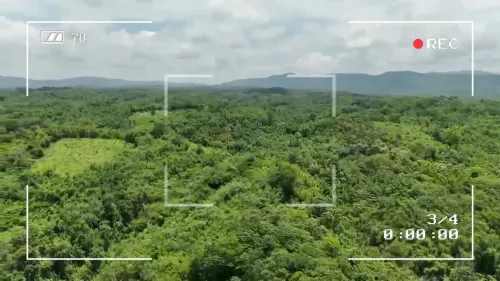
Jadav Payeng, born in 1963 on Majuli island in Assam, began planting trees on the eroding sandbar of Aruna Chapori near Jorhat as a teenager in 1979. Over four decades of solitary, daily effort, he transformed roughly 1,360 acres of barren land into a dense, biodiverse forest — now officially named Molai Forest after him. The forest is home to elephants, tigers, rhinoceroses, deer, and hundreds of bird species.
His story gained global attention after a documentary brought his work to wider audiences, earning him the title 'Forest Man of India.' The Government of India honoured him with the Padma Shri in 2015, one of the country's highest civilian awards. International conservation bodies and universities have since recognised his contribution as a rare, sustained act of ecological restoration carried out without institutional support.
Why CM Sarma's Words Carry Weight
For CM Sarma, who also serves as the convenor of the North-East Democratic Alliance (NEDA), invoking Payeng is more than a courtesy — it is an acknowledgement that the North-East's environmental credibility rests partly on individuals like him. Assam faces acute pressures: riverbank erosion along the Brahmaputra, annual floods, and shrinking forest cover. Payeng's work is a counter-narrative the state's leadership has repeatedly pointed to as proof that individual agency can reverse ecological damage.
The use of 'dangoriya' is also culturally deliberate — it situates Payeng not merely as a national icon but as a son of Assam deserving of community respect and care.
As one of the world's most celebrated grassroots conservationists battles a health setback, the Chief Minister's message is a reminder that Payeng's forest will outlast any single season — but the man who made it still has work left to do.
Point of View
' Sarma roots Payeng's global legacy back in local cultural soil, signalling that conservation in the region is not just a policy file but a living tradition. The gesture also reflects a broader BJP pattern of associating governance with individual heroes of the soil — figures whose work predates and transcends party politics. Payeng's recovery will be watched closely; his continued presence as an active conservationist remains symbolically important for both the state and the national environmental narrative.
NationPress
4 Oct 2026
Frequently Asked Questions
Who is Jadav Payeng and why is he famous?
Jadav Payeng, known as the 'Forest Man of India,' single-handedly planted a 1,360-acre forest called Molai Forest on a barren Brahmaputra sandbar near Jorhat, Assam, over more than four decades. He received the Padma Shri in 2015 for his extraordinary contribution to afforestation and conservation.
What did Assam CM Himanta Biswa Sarma say about Jadav Payeng?
CM Sarma posted a public message on 3 October 2026 wishing Payeng a speedy recovery, calling his contribution to afforestation and conservation globally recognised, and expressing confidence that Payeng would return to his work.
What does 'dangoriya' mean?
'Dangoriya' is an Assamese honorific meaning 'elder' or 'respected one,' used by CM Sarma to address Jadav Payeng in his post.
Where is Molai Forest located?
Molai Forest is located on the Aruna Chapori sandbar near Jorhat in Assam, on the banks of the Brahmaputra river. It covers approximately 1,360 acres and is named after Jadav Payeng.
What award did Jadav Payeng receive from the Government of India?
Jadav Payeng was awarded the Padma Shri, one of India's highest civilian honours, in 2015, in recognition of his decades-long work in afforestation and ecological restoration.