CM Himanta's Assam push: education up, child marriage down

Synopsis
Assam CM Dr Himanta Biswa Sarma has outlined a dual strategy — boosting girl-child education and tightening enforcement of the child-marriage prohibition law — as the state government intensifies its campaign against one of its most stubborn social challenges.
Key Takeaways
CM Dr Himanta Biswa Sarma reaffirmed Assam's twin approach of education access and anti-child-marriage enforcement on 16 October 2026 .
The state has run crackdown drives under the Prohibition of Child Marriage Act since Sarma took office in May 2021 .
Assam records child-marriage prevalence above the national average, especially in rural and riverine districts.
Policy tools include legal action alongside education incentives such as scholarships and conditional-cash transfers.
Precise new scheme details or fresh enforcement targets had not been officially notified at the time of the post.
State health and education surveys will be the key yardstick for measuring progress.
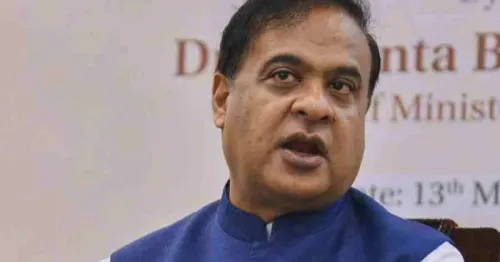
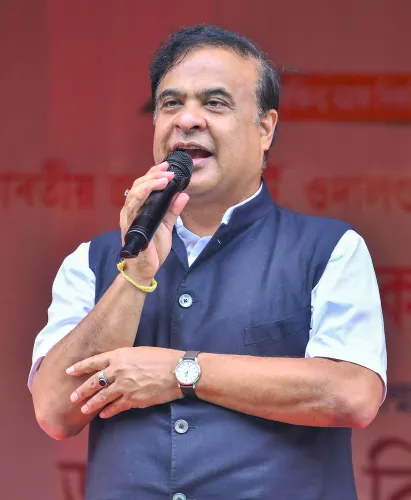
Tackling one of Assam's most persistent social challenges head-on, the Chief Minister's Office of Assam on Friday, 16 October 2026 shared remarks by Chief Minister Dr Himanta Biswa Sarma outlining the state government's twin-track approach: expand access to education while cracking down on child marriage.
What the CM said — and why it matters now
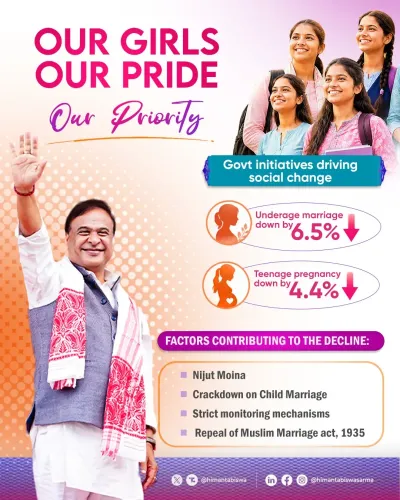
Dr Sarma framed the two issues as deeply connected: when girls stay in school, early marriage rates fall. The government, he indicated, is moving on both fronts simultaneously — education-linked incentives to keep adolescent girls enrolled, paired with firmer enforcement of the Prohibition of Child Marriage Act.
Assam consistently records child-marriage prevalence rates that outpace the national average, particularly in rural and riverine districts. For successive administrations, the problem has been structural: poverty, limited schooling infrastructure, and entrenched social norms that nudge families toward early marriage for daughters.
Enforcement plus incentive: Assam's approach since 2021
Since Dr Sarma took office in May 2021, the state has run successive awareness campaigns and enforcement drives, registering cases under the child-marriage prohibition law and pressing district administrations to act on tip-offs. The strategy deliberately combines the stick of legal action with the carrot of scholarships, bicycle schemes, and conditional-cash transfers tied to school attendance.
Adolescent girls and rural families — the stakeholders most directly affected — sit at the centre of this policy calculus. State health and education surveys have been the key scorecard; officials watch enrolment figures and district-level marriage registration data as lead indicators of whether the needle is moving.
The road the data will judge
The precise contours of any new incentive packages or fresh enforcement targets announced in this round have yet to be detailed in official government notifications. What is clear is the political signalling: the Sarma administration is keeping both levers — education access and legal deterrence — firmly in the public eye ahead of forthcoming state social-sector surveys.
Observers tracking Assam's development indicators will watch whether enrolment numbers in high-prevalence districts respond to the latest push, and whether case-registration data under the child-marriage law shows a sustained upward trend or a one-cycle spike.
If school attendance and the law move together consistently, Assam could offer a replicable model for other high-prevalence states. If one outpaces the other, the gap itself becomes the story.
Point of View
But execution in hard-to-reach districts has historically been uneven. The real test is whether district-level institutions sustain pressure year-round rather than during headline-generating drives. If Assam demonstrates consistent data improvement, it repositions the BJP-led government as a credible social-sector reformer in a state where welfare delivery has long been a vulnerability.
NationPress
16 Oct 2026
Frequently Asked Questions
What is Assam doing to stop child marriage?
The Assam government is combining enforcement actions under the Prohibition of Child Marriage Act with education-linked incentives — such as scholarships and conditional-cash transfers — designed to keep adolescent girls in school and reduce the economic pressure on families that drives early marriage.
Who is Himanta Biswa Sarma?
Dr Himanta Biswa Sarma is the Chief Minister of Assam, in office since May 2021, and a senior BJP leader who has made education access and social-welfare enforcement central to his administration's agenda.
What is the child marriage rate in Assam?
Assam consistently records child-marriage prevalence above the national average, with certain rural and riverine districts being particularly high-prevalence areas, though precise current figures depend on the latest state health and education surveys.
What law covers child marriage in India?
The Prohibition of Child Marriage Act is the primary legal instrument; Assam has used it to register cases and direct district administrations to act on complaints and tip-offs as part of its enforcement drives.
How does education help reduce child marriage in Assam?
When adolescent girls remain enrolled in school — supported by incentives like bicycles, scholarships, and attendance-linked cash transfers — families face both a financial reason and a social norm shift that defers marriage, directly lowering early-marriage rates over time.