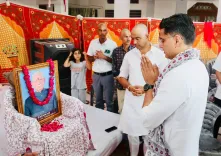
CM Joseph Vijay inspects Social Justice Hostels in Chennai Saidapet

Synopsis
Tamil Nadu Chief Minister Joseph Vijay visited Social Justice Hostels in Chennai's Saidapet on 17 July 2026, inspecting residential welfare facilities that provide accommodation to students from Scheduled Castes, Scheduled Tribes, and backward classes — a scheme rooted in the state's decades-long Dravidian welfare tradition.
Key Takeaways
CM Joseph Vijay conducted an on-site inspection of Social Justice Hostels in Saidapet, Chennai on 17 July 2026 .
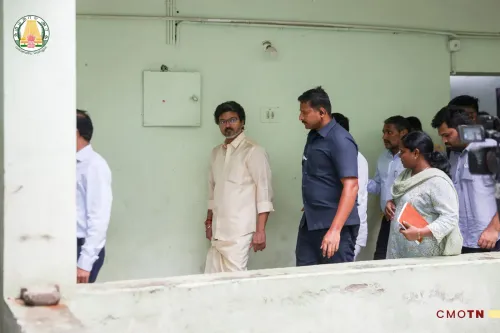
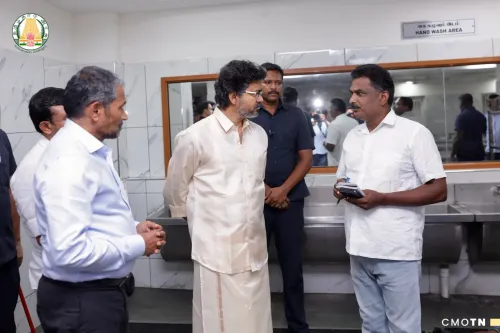
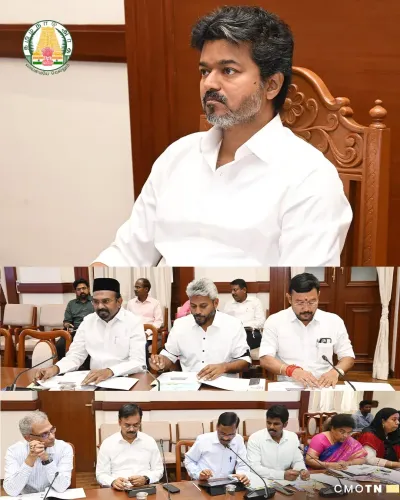
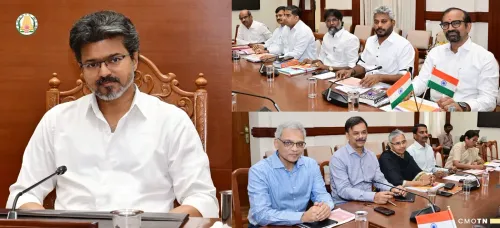
The Chief Minister's Office shared four photographs from the visit on X, tagging #CMJosephVijay .
Social Justice Hostels serve students from Scheduled Castes, Scheduled Tribes, and Other Backward Classes across Tamil Nadu.
Tamil Nadu has maintained this hostel network since the 1970s–80s under successive Dravidian governments.
Chief Ministerial inspections are a recurring practice to review maintenance, occupancy, and scheme implementation at welfare facilities.
Analysts will watch for follow-up announcements on budget allocations or capacity expansion for the hostel network.
The Chief Minister's Office of Tamil Nadu announced on Friday, 17 July 2026 that Chief Minister Joseph Vijay conducted an inspection of Social Justice Hostels located in Saidapet, Chennai, reviewing welfare facilities provided to students from marginalised communities.
Context
The Chief Minister's Office shared the visit on X with the Tamil caption 'மாண்புமிகு தமிழ்நாடு முதலமைச்சர் அவர்கள் சென்னை சைதாப்பேட்டையில் உள்ள சமூக நீதி விடுதிகளில் ஆய்வு' ('The Honourable Chief Minister of Tamil Nadu conducted an inspection of Social Justice Hostels in Chennai Saidapet'), accompanied by four photographs from the visit. The post was tagged #CMJosephVijay, confirming the identity of the visiting official.
Social Justice Hostels in Tamil Nadu provide residential accommodation and allied support to students belonging to Scheduled Castes, Scheduled Tribes, and Other Backward Classes, with the explicit goal of improving access to higher and secondary education for those who face financial and geographic barriers.
Policy Backdrop
Tamil Nadu has operated a network of Social Justice Hostels since the 1970s and 1980s, a legacy of successive Dravidian-movement governments that embedded caste-based welfare infrastructure — hostels, scholarships, and fee waivers — at the centre of the state's social policy architecture. The scheme has been periodically expanded in scope and capacity across administrations.
On-site inspections by the Chief Minister are a recurring administrative practice in the state, designed to assess maintenance standards, occupancy levels, and the on-ground implementation of welfare entitlements, particularly in urban centres such as Chennai where hostel demand from outstation students is high.
Stakeholders and Impact
The primary beneficiaries of Social Justice Hostels are students from marginalised communities who relocate to cities for education. Access to subsidised or free accommodation directly reduces dropout rates and enables continued schooling and college attendance for those who would otherwise be unable to afford urban living costs.
Education department officials and hostel administrators are the key implementing stakeholders, responsible for ensuring that facilities meet hygiene, safety, and capacity standards. A Chief Ministerial visit typically triggers a review of pending maintenance requests and administrative bottlenecks at the facility level.
What's Next
Following field inspections of this kind, state governments in Tamil Nadu have historically followed up with announcements on budget allocations, capacity additions, or infrastructure upgrades for the hostel network. Observers will watch for any directives issued by the Chief Minister's Office in the days following the visit, as well as forthcoming assembly questions on hostel utilisation data and maintenance expenditure in the current fiscal year.
The inspection signals continued political prioritisation of welfare infrastructure for marginalised students, a theme that has defined Tamil Nadu's social policy for over four decades and remains electorally and administratively significant for the ruling dispensation.
Point of View
Visible engagement with hostel conditions for marginalised students reinforces a core identity marker. The visit also comes at a time when urban hostel capacity and quality are under scrutiny across Indian states, making on-ground reviews politically prudent. Whether the inspection translates into concrete budgetary or policy action will be the real measure of its administrative weight.
NationPress
17 Jul 2026
Frequently Asked Questions
What are Social Justice Hostels in Tamil Nadu?
Social Justice Hostels are government-run residential facilities in Tamil Nadu that provide free or subsidised accommodation to students from Scheduled Castes, Scheduled Tribes, and Other Backward Classes, helping them access education in cities away from their home districts.
Why did CM Joseph Vijay visit Saidapet hostels?
CM Joseph Vijay visited Social Justice Hostels in Saidapet, Chennai on 17 July 2026 to conduct an official inspection, reviewing the maintenance, facilities, and welfare conditions available to resident students from marginalised communities.
Where are the Social Justice Hostels that CM Vijay inspected?
The hostels inspected by Chief Minister Joseph Vijay are located in Saidapet , a locality in Chennai , Tamil Nadu, which houses several government welfare and administrative establishments.
How long has Tamil Nadu run Social Justice Hostels?
Tamil Nadu has operated Social Justice Hostels since the 1970s and 1980s , with the scheme established and expanded under successive Dravidian-movement governments as part of the state's broader caste-welfare policy framework.
What happens after a Chief Minister inspects a welfare hostel in Tamil Nadu?
Historically, Chief Ministerial inspections of welfare hostels in Tamil Nadu have been followed by administrative directives on maintenance, and sometimes by budget announcements or capacity expansion decisions in the subsequent fiscal cycle.