CM Karnataka Orders Officials to Stay Posted at District Level
Synopsis
The Chief Minister's Office of Karnataka has directed all district and taluk-level officials to remain stationed within their jurisdictions, maintain daily registers of subordinate field visits, and ensure citizens are not made to run from office to office for routine work.
Key Takeaways
The Chief Minister's Office of Karnataka issued the directive on 9 July 2026 via its official X account, as part of a nine-part thread.
District and taluk-level officers are ordered to be physically stationed within their jurisdictions to remain accessible to citizens.
The Chief Minister's Office stated it will not tolerate citizens being made to wander from office to office unnecessarily for minor tasks.
District-level officers must maintain daily registers tracking which subordinates went for field work, the areas covered, and problems resolved.
The move mirrors administrative accountability measures adopted by multiple Indian states to curb officer absenteeism and improve last-mile service delivery.
Compliance reviews and service-delivery audits at district offices across Karnataka are expected to follow the directive.
The Chief Minister's Office of Karnataka on Thursday, 9 July 2026, issued a firm directive through its official X account, instructing district and taluk-level officers to remain stationed within their respective jurisdictions to ensure accessible and responsive governance for citizens.
Context
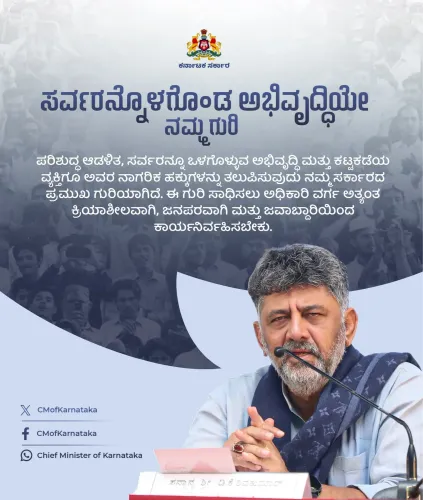
The post, part of a thread (marked 3/9), carries a direct message in Kannada from the Chief Minister's Office, warning that officials must be physically present at the district and taluk levels. The directive states: 'ಜಿಲ್ಲಾ ಮತ್ತು ತಾಲ್ಲೂಕು ಮಟ್ಟದ ಅಧಿಕಾರಿಗಳು ಜಿಲ್ಲಾ ಮತ್ತು ತಾಲ್ಲೂಕು ಮಟ್ಟದಲ್ಲೇ ನೆಲೆಸಬೇಕು' — 'District and taluk-level officials must be stationed at the district and taluk level itself.' The message emphasises that only then can officials be accessible to the public and respond to their needs.
The Chief Minister's Office explicitly stated it will not tolerate citizens being made to run from office to office unnecessarily: 'I will not accept people being made to wander from office to office without reason.' The directive underscores that if work is handled smoothly at the officer's own level, citizens will not need to visit offices even for minor tasks.
Policy Backdrop
The directive also mandates that all district-level officers must have fingertip information about their subordinate officers at all times. Specifically, officers must maintain a daily update covering which subordinate officials have gone for field work, which areas they visited, and what problems they resolved by reaching out to citizens.
The post makes maintenance of a formal register at the district level a direct responsibility of district officers, institutionalising accountability for field visits and on-ground grievance resolution. This type of administrative accountability mechanism — requiring officers to log field movements and outcomes — mirrors reform efforts seen across several Indian states aimed at curbing absenteeism and improving last-mile service delivery.
Stakeholders and Impact
The primary beneficiaries of this directive are rural and semi-urban citizens of Karnataka who depend on district and taluk offices for routine government services, certificates, and grievance redressal. For them, the chronic problem of being redirected across multiple offices for basic work has long been a source of hardship and loss of wages.
District collectors, taluk officers, and subordinate field officials across Karnataka are directly covered by this order. They are now expected to be physically present in their designated jurisdictions and to ensure their subordinates are conducting regular field visits with documented outcomes. Non-compliance would expose officers to accountability reviews by senior administration.
What's Next
The immediate next step will be the rollout and operationalisation of the mandated daily register at district offices across Karnataka. Compliance reviews and service-delivery audits are expected to follow as the administration monitors whether officers are maintaining records of field visits and resolving citizen grievances at the ground level.
The directive, forming part of a nine-part thread, suggests a broader administrative reform communication from the Chief Minister's Office. Subsequent posts in the thread are likely to address further aspects of governance accountability and field-level administration, signalling a sustained push to decentralise responsive governance down to the taluk level across the state.
Point of View
The administration is attempting to convert an informal expectation into a formal accountability mechanism. This fits a broader national pattern of state governments using social media to publicly signal administrative discipline, creating political pressure on the bureaucracy. The real test, however, will be in enforcement: similar circulars across Indian states have historically seen uneven compliance without sustained follow-up audits.
NationPress
9 Jul 2026
Frequently Asked Questions
What did the Karnataka Chief Minister's Office order district officials to do?
The Chief Minister's Office of Karnataka ordered district and taluk-level officials to remain physically stationed within their own jurisdictions, maintain daily registers of subordinate field visits, and ensure citizens are not made to run between offices for routine work.
What is the daily register that Karnataka district officers must maintain?
District-level officers in Karnataka must maintain a register recording which subordinate officials went for field work each day, the areas they visited, and what citizen problems they resolved — providing district heads with real-time accountability over their teams.
Why is Karnataka directing officers to stay at the district and taluk level?
The directive aims to improve citizen access to government services and reduce the common problem of people being redirected from office to office for minor tasks, which causes unnecessary hardship especially for rural residents.
Which officials are covered by the Karnataka CM's governance directive?
The directive covers all district-level and taluk-level officers across Karnataka, along with their subordinate field officials who are required to conduct regular visits to citizens in their areas.
Is this type of administrative reform common in India?
Yes, several Indian state governments have issued similar circulars requiring sub-district officers to remain in their posted jurisdictions and maintain field-visit logs, as part of broader administrative reform efforts to improve last-mile service delivery.