CM Pema Khandu flags Bamboo & Cane Centre at Gungu for youth, artisans

Synopsis
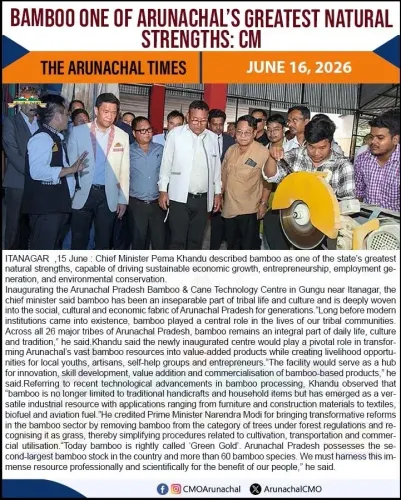
Arunachal Pradesh Chief Minister Pema Khandu has spotlighted the Bamboo & Cane Technology Centre at Gungu as a vehicle for skilling youth, artisans and SHGs, calling bamboo the state's 'Green Gold' with strong potential for sustainable livelihoods and value-added manufacturing.
Key Takeaways
CM Pema Khandu described bamboo as Arunachal Pradesh's 'Green Gold' with immense livelihood and innovation potential.
The Bamboo & Cane Technology Centre at Gungu will focus on skill development and value addition for youth, artisans, SHGs and entrepreneurs.
India's National Bamboo Mission , launched in 2006-07 and restructured in 2018 , provides the central policy framework for such initiatives.
Jitan Ram Manjhi was tagged in the post, suggesting possible central-level coordination with rural or MSME programmes.
Arunachal Pradesh holds some of India's largest bamboo reserves, making it a natural candidate for bamboo-based rural industrialisation.
The Gungu centre could serve as a replicable model for district-level bamboo value-chain development across the Northeast.
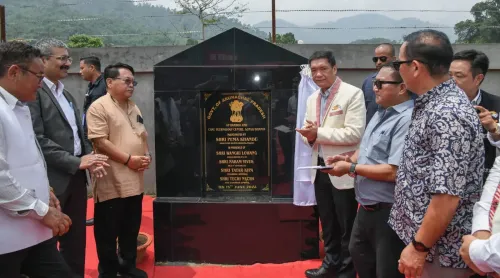
Arunachal Pradesh Chief Minister Pema Khandu on Tuesday, June 16, 2026, highlighted the transformative potential of bamboo for the state's economy, announcing that the Bamboo & Cane Technology Centre at Gungu will serve as a hub for skill development, value addition and entrepreneurship for youth, artisans, self-help groups and small business owners.
Context
Pema Khandu described bamboo as Arunachal Pradesh's 'Green Gold', underlining its capacity to generate livelihoods and drive sustainable growth. The post also tagged Jitan Ram Manjhi, the Bihar politician and former Chief Minister who has been associated with rural and MSME-linked initiatives at the national level, signalling a possible central-state coordination dimension to the announcement. The Bamboo & Cane Technology Centre at Gungu is positioned as a dedicated facility to train and equip local communities with the tools to extract greater economic value from the state's abundant bamboo resources.
Policy Backdrop
India's push to develop bamboo as a mainstream economic resource dates to the National Bamboo Mission, launched in 2006-07, which aimed to expand cultivation, processing and market linkages across the country. The mission was restructured in 2018 under the National Mission for Sustainable Agriculture, with a sharper focus on value-chain development and entrepreneurship, particularly in bamboo-rich states of the Northeast. Arunachal Pradesh, which holds some of the country's largest natural bamboo reserves, has consistently featured bamboo as a priority sector in its state industrial policies, citing its potential for local manufacturing and export.
Central and state governments have also promoted bamboo as an eco-friendly substitute for timber and single-use plastic, aligning it with broader green growth and rural income targets. The Gungu centre fits squarely within this policy lineage, extending the value-chain approach to a district-level facility designed to serve grassroots stakeholders directly.
Stakeholders and Impact
The centre's stated beneficiaries include Arunachal Pradesh's youth, traditional bamboo artisans, women-led self-help groups (SHGs) and first-generation entrepreneurs — segments that have historically had limited access to formal skilling infrastructure and organised markets. By combining technology support with hands-on training, the facility is intended to help these groups move beyond raw material supply toward finished, higher-value bamboo products. This shift in the value chain could meaningfully improve incomes in rural and semi-urban pockets of the state where bamboo harvesting is already a primary livelihood activity.
Jitan Ram Manjhi's tagging in the post may indicate that the initiative has a connection to central MSME or skill-development frameworks, though the precise nature of any such linkage has not been formally detailed in the post itself.
What's Next
Attention will now turn to the operational launch of the Gungu centre, including any accompanying state budget allocations, capacity figures and product categories targeted for development. Observers will also watch for formal linkages with central programmes such as MSME clusters or NITI Aayog bamboo initiatives, which could unlock additional funding and market access for the facility's trainees and entrepreneurs. If the centre scales as envisaged, it could serve as a replicable model for bamboo-based rural industrialisation across other districts of Arunachal Pradesh and the broader Northeast.
Point of View
From raw harvest to skilled manufacturing and entrepreneurship. Tagging Jitan Ram Manjhi signals an intent to anchor this initiative within the broader central government's MSME and rural livelihood architecture, potentially unlocking larger funding streams. The 'Green Gold' framing is politically astute: it positions a resource-rich but infrastructurally underserved state as a proactive contributor to India's green economy narrative. Whether the centre translates this ambition into measurable income gains for SHGs and artisans will be the real test of the initiative's depth.
NationPress
15 Sept 2026
Frequently Asked Questions
What is the Bamboo & Cane Technology Centre at Gungu in Arunachal Pradesh?
The Bamboo & Cane Technology Centre at Gungu is a facility announced by Arunachal Pradesh Chief Minister Pema Khandu to provide skill development, value addition and technology support for bamboo products, targeting youth, artisans, self-help groups and entrepreneurs in the state.
Why is bamboo called 'Green Gold' in Arunachal Pradesh?
Bamboo is called 'Green Gold' in Arunachal Pradesh because the state holds extensive natural bamboo reserves that carry significant potential for sustainable livelihoods, rural manufacturing and eco-friendly alternatives to timber and plastic, making it one of the state's most valuable natural resources.
What is India's National Bamboo Mission?
India's National Bamboo Mission was launched in 2006-07 to expand bamboo cultivation, processing and market linkages across the country. It was restructured in 2018 under the National Mission for Sustainable Agriculture to place greater emphasis on value-chain development and entrepreneurship, especially in bamboo-rich Northeastern states.
Who is Jitan Ram Manjhi and why was he tagged in Pema Khandu's bamboo post?
Jitan Ram Manjhi is a Bihar politician and former Chief Minister who has been associated with rural and MSME-linked initiatives at the national level. His tagging in CM Pema Khandu's post suggests a possible coordination between the Arunachal Pradesh government and central rural or MSME programmes, though the precise linkage has not been formally detailed.
How will the Gungu bamboo centre benefit SHGs and artisans in Arunachal Pradesh?
The Gungu centre is designed to give self-help groups and traditional bamboo artisans access to formal skilling infrastructure, technology support and value-addition training, enabling them to produce finished, higher-value bamboo products rather than supplying only raw material, which could significantly improve their incomes.