Bamboo is Arunachal's Green Gold: CM Pema Khandu opens Bamboo Tech Centre
Synopsis
Arunachal Pradesh sits on the country's second-largest bamboo stock with over 60 species — and CM Pema Khandu is now betting it can be the state's economic engine. The inauguration of the Bamboo & Cane Technology Centre at Gungu marks a shift from cultural heritage to industrial strategy, with applications ranging from biofuel to seismic-resilient housing.
Key Takeaways
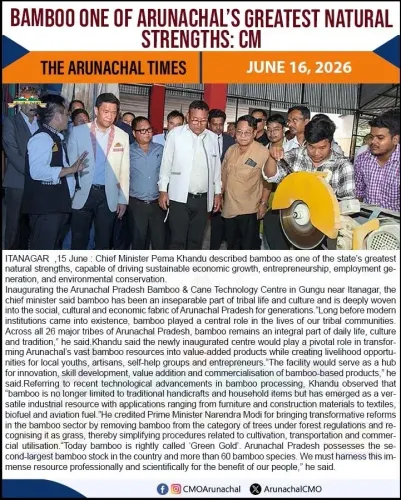
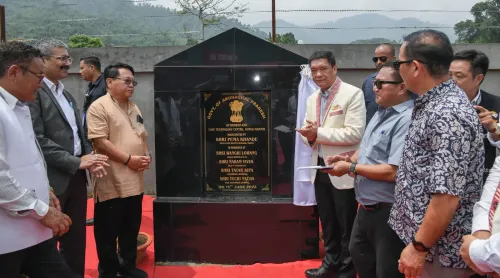
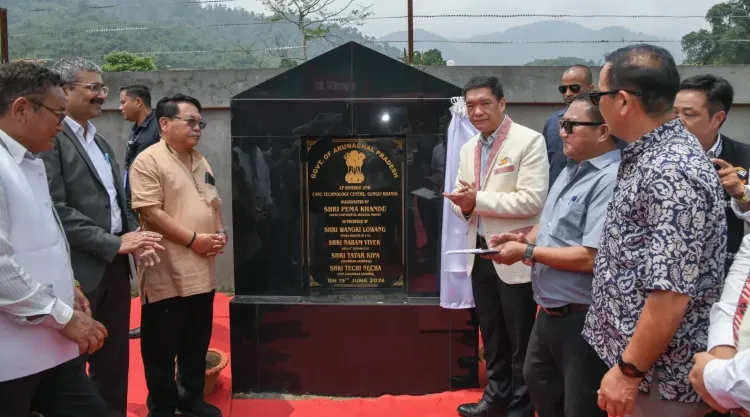
CM Pema Khandu inaugurated the Arunachal Pradesh Bamboo & Cane Technology Centre at Gungu near Itanagar on 15 June .
Arunachal Pradesh holds the second-largest bamboo stock in India with more than 60 bamboo species .
PM Modi's reclassification of bamboo as grass — not a tree — simplified cultivation, transport, and commercial use across the country.
The centre will support local youth, artisans, self-help groups, and entrepreneurs, with linkages to the UNNATI Scheme and MSME programmes .
Bamboo-based prefabricated housing was advocated as a cost-effective, seismic-resilient alternative for the high seismic zone Himalayan region.
Arunachali youth completed a project worth ₹10 lakh that an outside agency had quoted at ₹18 lakh , underlining the value of local skill development.
Arunachal Pradesh Chief Minister Pema Khandu on Monday, 15 June inaugurated the Arunachal Pradesh Bamboo & Cane Technology Centre at Gungu near Itanagar, declaring bamboo the state's 'Green Gold' and outlining an ambitious plan to transform the resource into a driver of sustainable economic growth, entrepreneurship, and employment for the state's 26 major tribes.
Why Bamboo Matters to Arunachal Pradesh
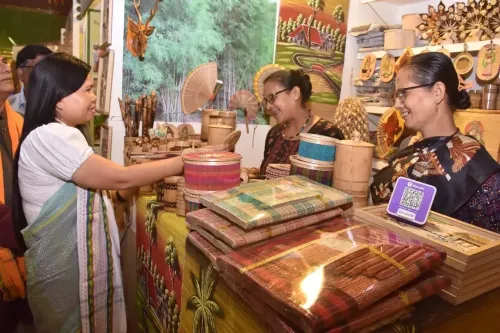
Khandu described bamboo as deeply woven into the social, cultural, and economic fabric of the state across generations. 'Bamboo is not a new subject for us. Long before modern institutions came into existence, bamboo played a central role in the lives of our tribal communities. Across all 26 major tribes of Arunachal Pradesh, bamboo remains an inseparable part of daily life, culture and tradition,' he said at the inauguration.
Arunachal Pradesh holds the second-largest bamboo stock in India, with more than 60 bamboo species — a natural endowment that Khandu said must now be harnessed professionally and scientifically. The state's bamboo wealth, long confined to traditional handicrafts and household use, is increasingly being recognised as a versatile industrial resource with applications spanning furniture, construction materials, textiles, biofuel, ethanol manufacturing, and reportedly even aviation fuel.
What the New Centre Will Do
The newly inaugurated centre, developed under the Arunachal Pradesh Bamboo Resources and Development Agency (APBRDA) in partnership with the Forest Department, is designed to serve as a hub for innovation, skill development, value addition, and the commercialisation of bamboo-based products. Khandu said the facility would create livelihood opportunities for local youth, artisans, self-help groups, and entrepreneurs — particularly those from the Gungu and Sangdupota areas.
He called upon Panchayati Raj representatives and community leaders to motivate young people to use the centre's training facilities and access government schemes promoting self-employment. Notably, he highlighted opportunities under the Prime Minister's UNNATI Scheme and various MSME programmes, through which bamboo-based enterprises could reach national and international markets via e-commerce platforms.
Modi's Bamboo Reforms: The Policy Backdrop
Khandu credited Prime Minister Narendra Modi with introducing a transformative policy shift by removing bamboo from the category of trees under forest regulations and classifying it as grass. This reclassification significantly simplified procedures for cultivation, transportation, and commercial utilisation — unlocking the sector for private enterprise and small producers alike.
This comes amid a broader national push to position India's Northeast as a bamboo economy powerhouse. Khandu pointed to Vietnam as a benchmark, where bamboo contributes significantly to the national economy, and argued that Arunachal Pradesh must adopt a similarly market-oriented approach.
Prefabricated Housing and Seismic Safety
The Chief Minister also made a case for bamboo-based prefabricated housing technology across Arunachal Pradesh and the wider Himalayan region. 'Arunachal Pradesh falls in a high seismic zone. Bamboo-based prefabricated structures can provide sustainable and aesthetically appealing alternatives while preserving our traditional architectural heritage,' he said, noting that such structures are cost-effective, lightweight, and better suited to earthquake-prone areas than many conventional construction methods.
Skill Development and the Road Ahead
Khandu stressed that a skilled local workforce is essential to reducing dependence on outside labour. He cited a recent example where Arunachali youth trained under government-supported skill development programmes completed an electrical and plumbing project worth ₹10 lakh, compared to an outside agency's quotation of ₹18 lakh — a saving he held up as proof of the value of local skilling.
He directed APBRDA experts, scientists, and officials to prepare a long-term vision document for bamboo development across the state, including scientific management of bamboo flowering and regeneration cycles to ensure uninterrupted raw material supply. He also called for establishing similar bamboo technology and training centres in the eastern and western regions of the state.
Responding to local demands, Khandu assured support for strengthening water supply infrastructure and constructing a bridge to improve connectivity to the new centre, directing concerned departments to prepare Detailed Project Reports (DPRs) for state government consideration. With large-scale hydropower investments flowing into Arunachal Pradesh, the Chief Minister said thousands of skilled workers would be needed in coming years — making the bamboo sector's development both timely and strategically significant.
Point of View
But the gap between inauguration and sustained industrial output is where past Northeast development initiatives have stalled. Khandu's reference to Vietnam as a model is apt, but Vietnam's bamboo economy was built on decades of export-oriented policy, not technology centres alone. The real test will be whether APBRDA can deliver a credible long-term vision document — and whether the Centre's UNNATI and MSME pipelines translate into market-linked income rather than training certificates. With hydropower investments pouring in and Sangdupota emerging as a growth corridor, the timing is right; execution is everything.
NationPress
14 Sept 2026
Frequently Asked Questions
What is the Arunachal Pradesh Bamboo & Cane Technology Centre?
It is a newly inaugurated facility at Gungu near Itanagar, set up under the Arunachal Pradesh Bamboo Resources and Development Agency (APBRDA), designed to drive innovation, skill development, value addition, and commercialisation of bamboo-based products. CM Pema Khandu inaugurated it on 15 June.
Why is bamboo called 'Green Gold' in Arunachal Pradesh?
Arunachal Pradesh holds the second-largest bamboo stock in India with over 60 species, making it a vast natural resource with applications in furniture, construction, textiles, biofuel, and more. CM Khandu used the term 'Green Gold' to highlight bamboo's potential to drive sustainable economic growth for the state's 26 major tribes.
How did PM Modi's policy change help the bamboo sector?
PM Modi's government reclassified bamboo as grass rather than a tree under forest regulations, which significantly simplified procedures for its cultivation, transportation, and commercial utilisation. This policy shift opened the sector to private enterprise and small producers who were previously constrained by forest law restrictions.
Who will benefit from the new Bamboo Technology Centre?
The centre is primarily aimed at local youth, artisans, self-help groups, and entrepreneurs — particularly from the Gungu and Sangdupota areas. It offers training, skill development, and linkages to government schemes such as the PM's UNNATI Scheme and MSME programmes for market access.
Why is bamboo-based housing being promoted in Arunachal Pradesh?
Arunachal Pradesh lies in a high seismic zone, and CM Khandu argued that bamboo-based prefabricated structures are cost-effective, lightweight, and more earthquake-resilient than many conventional construction methods, while also preserving the region's traditional architectural heritage.