CM Pema Khandu Lauds Geku Households Over Siang Project MoU
Synopsis
Chief Minister Pema Khandu has commended 110 households of Geku, Upper Siang, for signing an MoU supporting the pre-feasibility report of the Siang Upper Multipurpose Project, marking an early but critical milestone in a hydropower and flood-control initiative with national and strategic significance.
Key Takeaways
110 households of Geku in Upper Siang district signed an MoU supporting the Pre-Feasibility Report of the Siang Upper Multipurpose Project .
Chief Minister Pema Khandu called the development a 'significant step towards national development, water security and the protection of communities along the Siang River.' The project is designed to deliver hydropower generation , flood moderation , and water storage along the Brahmaputra basin.
The initiative carries strategic importance given China's upstream dam construction on the Yarlung Tsangpo , the same river before it enters Arunachal Pradesh as the Siang.
Community consent at the PFR stage is a prerequisite before the project can advance to detailed planning and central government sanction.
Subsequent village-level MoUs and Union government clearances will determine the pace of the project's progression.
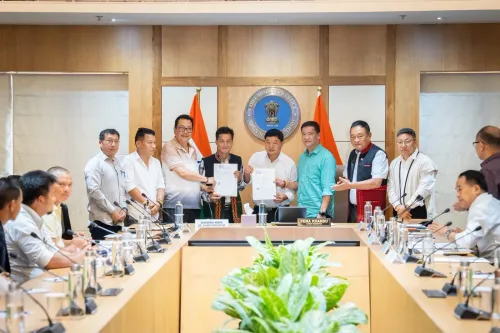
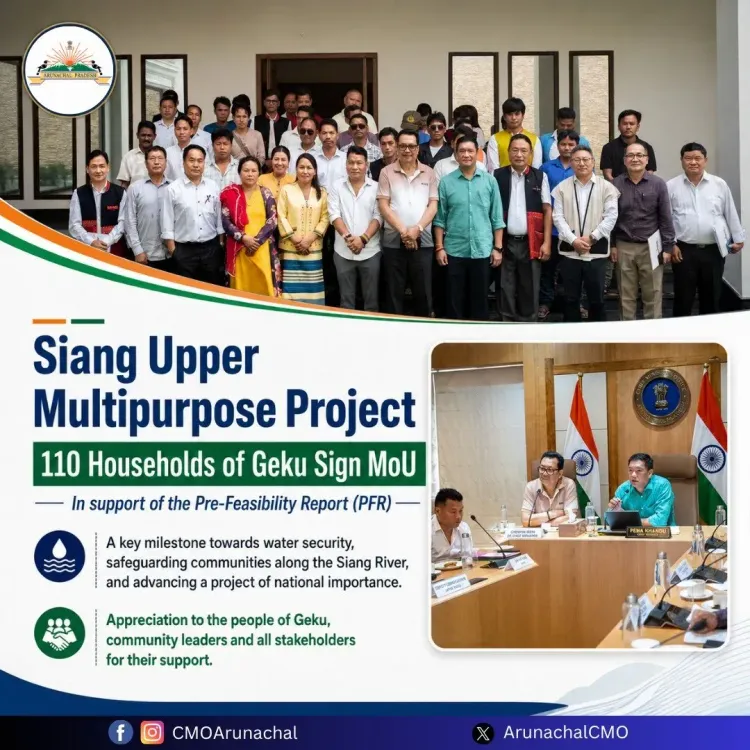
The Chief Minister's Office of Arunachal Pradesh announced on Monday, June 8, 2026, that Chief Minister Pema Khandu has appreciated the 110 households of Geku for signing a Memorandum of Understanding (MoU) supporting the Pre-Feasibility Report (PFR) of the Siang Upper Multipurpose Project, calling it a significant step towards national development, water security, and the protection of communities living along the Siang River.
Context
Geku, a settlement in Upper Siang district, became the first village cluster to formally sign on to the PFR process for the Siang Upper Multipurpose Project. The MoU represents the consent and participation of local households in the preliminary planning stage of one of Arunachal Pradesh's most consequential proposed infrastructure undertakings. Chief Minister Khandu described the move as 'a significant step towards national development, water security and the protection of communities along the Siang River.'
The Siang River — the upper course of the Brahmaputra as it flows through Arunachal Pradesh — is a lifeline for riverine communities across the state and the broader Northeast. Community buy-in at the pre-feasibility stage is considered a foundational requirement before any large dam project can advance through environmental and statutory clearances.
Policy Backdrop
The Siang Upper Multipurpose Project is envisioned to serve three interlocking purposes: hydropower generation, flood moderation, and water storage for the Brahmaputra basin. Since 2016, the Arunachal Pradesh government under Pema Khandu has positioned hydropower and multipurpose river projects as central pillars of the state's development agenda, leveraging the state's vast river network to generate revenue and improve energy access.
The project also carries a pronounced strategic dimension. China has been constructing large dams on the Yarlung Tsangpo — the same river upstream before it enters Indian territory as the Siang — raising concerns in India about altered water flows, sudden flooding events, and long-term hydrological security. Developing robust infrastructure on the Indian side is seen by planners as both an energy imperative and a strategic counterbalance on a shared transboundary river system.
Stakeholders and Impact
The 110 households of Geku whose signatures anchor this MoU are among the communities most directly affected by any future construction. Their formal participation in the PFR process signals an early-stage social acceptance that project proponents will need to sustain and expand as planning advances to subsequent villages and districts along the Siang corridor.
Beyond Geku, the project's footprint is expected to involve a broader set of Siang riverine communities across Upper Siang and neighbouring districts. Flood-prone settlements downstream stand to benefit from the project's proposed moderation infrastructure, which has gained urgency following episodes of glacial lake outburst floods and sudden surges linked to upstream activity in Tibet.
What's Next
The completion of the PFR is a prerequisite for the project to move toward a detailed project report and formal sanction by the Union government. Analysts watching the project will track whether subsequent village-level MoUs follow in other Geku-adjacent settlements, and whether the Ministry of Jal Shakti and Ministry of Power accelerate central clearances in the wake of growing community participation.
The Geku MoU sets a template for community engagement that the Arunachal government may seek to replicate across the Siang basin. How swiftly that momentum translates into statutory approvals and project financing will determine whether the Siang Upper Multipurpose Project moves from the planning ledger to ground-level execution within this decade.
Point of View
Framing community participation as patriotic contribution rather than administrative compliance. The move fits a broader pattern in which New Delhi and state governments are recasting large Himalayan water projects as instruments of strategic depth against China's upstream infrastructure push. Whether this consent-first approach can be sustained across the full Siang basin — where communities are more numerous and grievances more varied — will be the real test of the project's social licence.
NationPress
16 Sept 2026
Frequently Asked Questions
What is the Siang Upper Multipurpose Project?
The Siang Upper Multipurpose Project is a proposed large dam on the Siang River in Arunachal Pradesh designed to generate hydropower, moderate floods in the Brahmaputra basin, and provide water storage. It is at the pre-feasibility stage as of 2026.
What did the Geku households sign and why does it matter?
The 110 households of Geku signed an MoU supporting the Pre-Feasibility Report (PFR) of the Siang Upper Multipurpose Project. This community consent is a foundational step required before the project can advance to detailed planning and seek Union government approval.
Why is the Siang River project considered strategically important?
The Siang River is the Indian stretch of the Yarlung Tsangpo, on which China is constructing large upstream dams. India views the Siang Upper Multipurpose Project as both an energy asset and a strategic measure to manage hydrological risks posed by upstream infrastructure in Tibet.
Who is Pema Khandu and what is his role in this project?
Pema Khandu is the Chief Minister of Arunachal Pradesh and has been in office since 2016. He has championed hydropower and multipurpose river projects as core elements of state development, and personally appreciated the Geku households for their participation in the MoU.
What happens after the MoU is signed?
Following the MoU, the Pre-Feasibility Report process will continue, likely requiring similar community consultations in other affected villages. Subsequent steps include a detailed project report, environmental clearances, and formal sanction from the Union government before construction can begin.