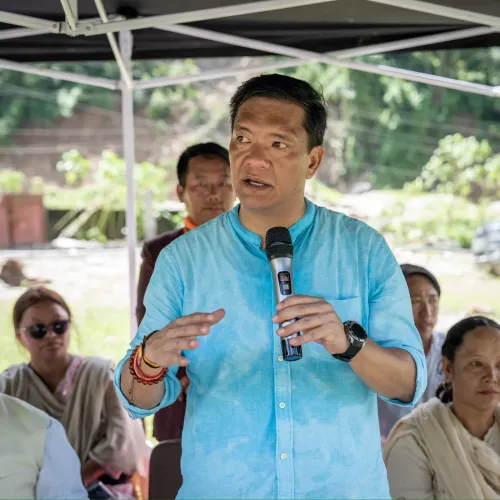
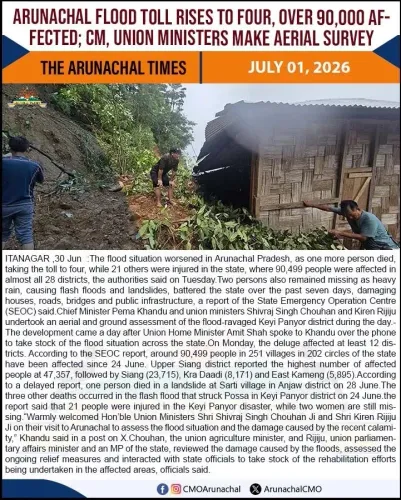
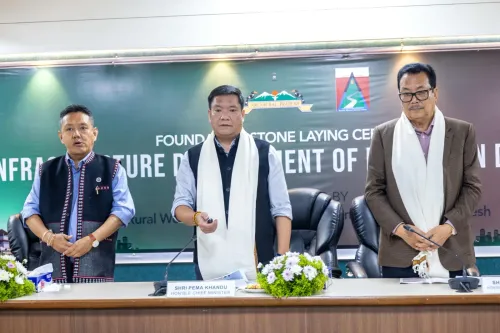
CM Pema Khandu lays foundation for SEOC-SDMA building in Itanagar
Synopsis
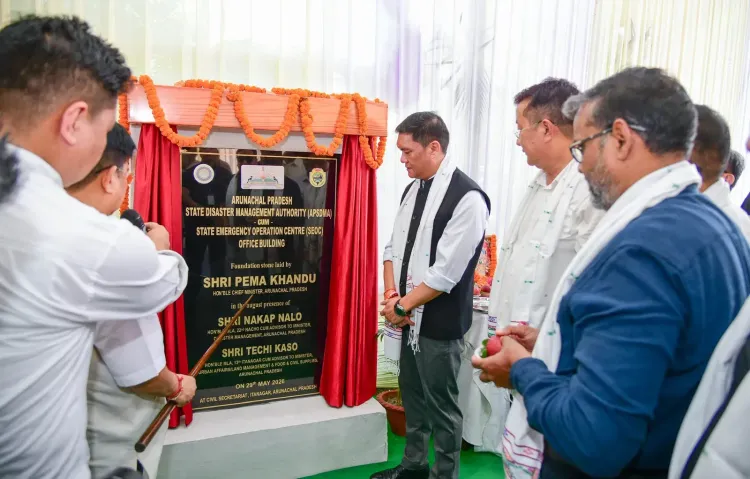
Arunachal Pradesh Chief Minister Pema Khandu laid the foundation stone for a new State Emergency Operation Centre-cum-SDMA office building at Itanagar's Civil Secretariat on 29 May 2026, aiming to unify the state's disaster preparedness and emergency response under one roof.
Key Takeaways
Chief Minister Pema Khandu laid the foundation stone for the new SEOC-SDMA Office Building at Civil Secretariat, Itanagar on 29 May 2026 .
MLAs Techi Kaso , Nakap Nalo , and Rode Bui attended the foundation-stone ceremony.
The facility will house advanced control rooms, communication systems, conference halls, and emergency operation infrastructure under a single roof.
Arunachal Pradesh falls entirely in seismic zone V and faces recurrent floods, landslides, and cloudbursts.
The project aligns with the Disaster Management Act, 2005 and NDMA guidelines mandating dedicated SEOCs in every state.
Integration with the national early-warning network of NDMA and IMD is a key milestone to watch post-construction.
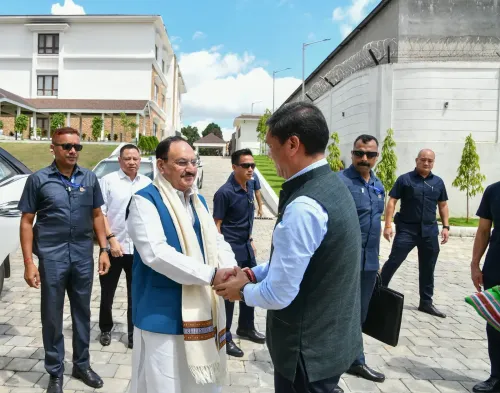
Arunachal Pradesh Chief Minister Pema Khandu on Friday, 29 May 2026, laid the foundation stone for a new State Emergency Operation Centre (SEOC)-cum-State Disaster Management Authority (SDMA) Office Building at the Civil Secretariat, Itanagar. The ceremony was attended by MLAs Techi Kaso, Nakap Nalo and Rode Bui. The facility is designed to consolidate the state's disaster preparedness and emergency response capabilities under a single roof.
Context
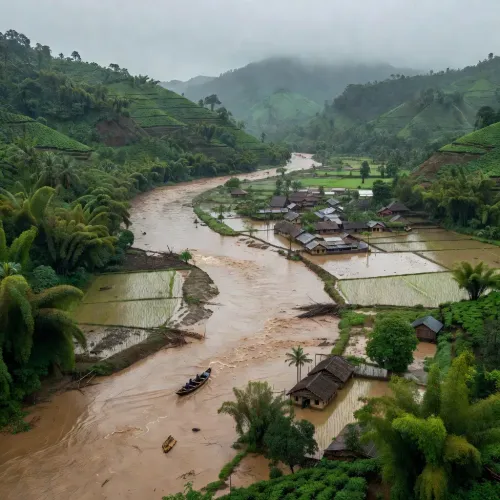
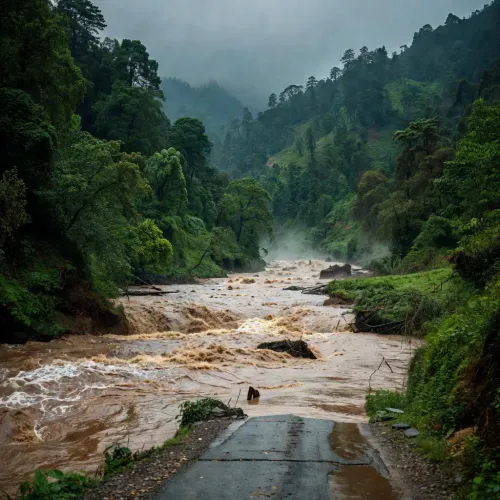
Arunachal Pradesh sits entirely within seismic zone V, the highest-risk category on India's seismic hazard map, and regularly contends with floods, landslides, and cloudbursts during the monsoon season. The state's dispersed geography — spanning remote valleys and high-altitude terrain — has historically made coordinated emergency response a logistical challenge. A purpose-built, centralised command facility at the Civil Secretariat in Itanagar directly addresses that gap.
Chief Minister Khandu described the upcoming facility as 'state-of-the-art,' listing 'advanced control rooms, communication systems, conference halls, emergency operation infrastructure — everything under one roof' as its core components. The combined SEOC-SDMA structure will allow real-time monitoring, inter-agency coordination, and administrative decision-making to operate from a single location during crisis events.
Policy Backdrop
The legal foundation for such infrastructure dates to the Disaster Management Act, 2005, which mandated the creation of National and State Disaster Management Authorities across India. Follow-on guidelines issued by the National Disaster Management Authority (NDMA) between 2008 and 2010 directed every state to establish a dedicated SEOC equipped with modern communication networks and GIS-based monitoring tools.
Central funding streams — including the National Disaster Response Fund and grants from the 15th Finance Commission — have supported comparable SEOC projects in other Himalayan states since 2015. The Itanagar project fits squarely within this national push to modernise sub-national disaster governance, particularly in ecologically vulnerable northeastern and Himalayan states.
Stakeholders and Impact
The primary beneficiaries are the roughly 1.5 million residents of Arunachal Pradesh, who face recurring natural hazard events with limited institutional buffer. Emergency responders — including state police, fire services, and civil defence units — stand to gain a unified command node that reduces coordination lag during active disasters.
The SDMA, which under the Disaster Management Act is chaired by the Chief Minister, will also receive a permanent, purpose-designed office, elevating its institutional visibility and operational capacity. Consolidating both bodies in one building is expected to shorten the decision-to-deployment cycle during emergencies.
What's Next
Key milestones to watch include the formal construction timeline, the projected commissioning date, and — critically — the building's integration with the national early-warning network managed jointly by the NDMA and the India Meteorological Department (IMD). Seamless data links to national systems would allow Arunachal Pradesh to receive and relay real-time weather and seismic alerts directly into its command infrastructure. The state government is expected to release further technical and budgetary details as construction progresses.
Point of View
A centralised command hub is a structural upgrade with tangible life-safety implications. Chief Minister Khandu's personal presence alongside three MLAs also reflects a deliberate effort to frame disaster preparedness as a cross-constituency political priority ahead of any future election cycle. The project fits a broader national pattern of Himalayan and northeastern states leveraging 15th Finance Commission and NDRF funding to close long-standing infrastructure gaps in emergency management.
NationPress
13 Oct 2026
Frequently Asked Questions
What is the SEOC-SDMA building being built in Itanagar?
It is a new State Emergency Operation Centre-cum-State Disaster Management Authority office building at the Civil Secretariat in Itanagar, designed to house advanced control rooms, communication systems, and emergency infrastructure under one roof for Arunachal Pradesh.
Why does Arunachal Pradesh need a dedicated disaster management facility?
Arunachal Pradesh lies entirely in seismic zone V, the highest seismic risk category in India, and regularly faces floods, landslides, and cloudbursts. A centralised facility is meant to improve coordination and reduce response time during disasters.
Who attended the foundation stone ceremony for the SEOC building in Itanagar?
Chief Minister Pema Khandu laid the foundation stone, joined by MLAs Techi Kaso, Nakap Nalo, and Rode Bui at the Civil Secretariat on 29 May 2026.
What is the State Disaster Management Authority (SDMA)?
The SDMA is a state-level body constituted under the Disaster Management Act, 2005, chaired by the Chief Minister, responsible for planning, coordinating, and overseeing disaster preparedness and response in the state.
How is the SEOC-SDMA project funded?
While specific funding details for this project have not been disclosed, similar SEOC projects in Himalayan states have drawn from the National Disaster Response Fund and 15th Finance Commission grants provided by the central government.