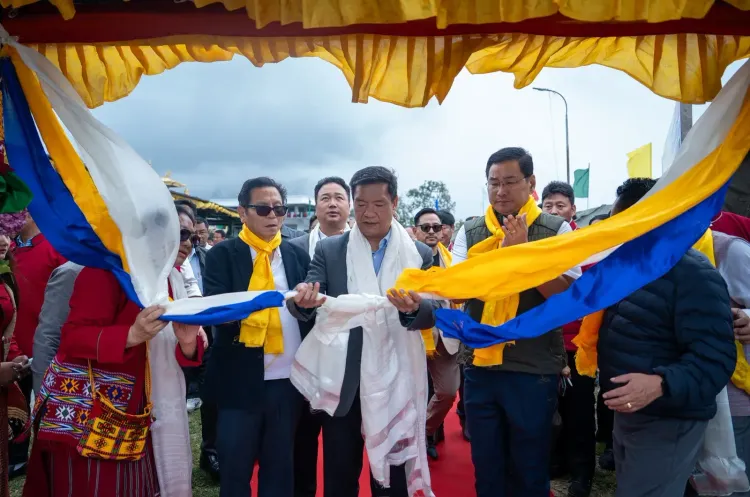
CM Pema Khandu Inaugurates Jan Kalyan Shivir at Lungla
Synopsis
Arunachal Pradesh Chief Minister Pema Khandu inaugurated a Jan Kalyan Shivir at Lungla in Tawang district on 20 June 2026, converging multiple government departments to deliver welfare services, organic manures for farmers, and Chief Minister Social Security Scheme benefits to remote citizens.
Key Takeaways
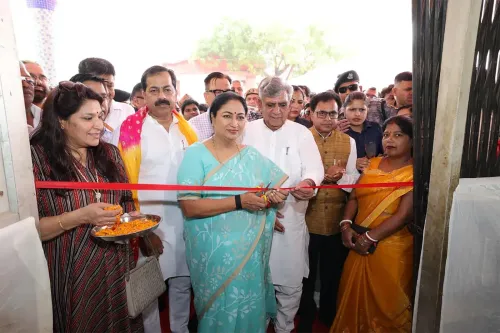
CM Pema Khandu inaugurated the Jan Kalyan Shivir at Lungla, Tawang district on 20 June 2026 .
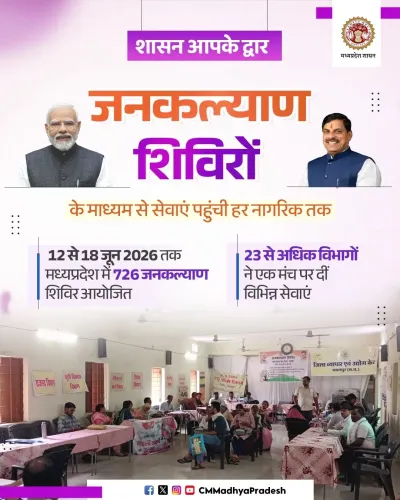
The camp brought multiple government departments under one roof to deliver welfare services in a single location.
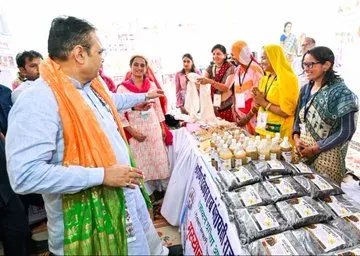
Organic manures were distributed to farmers at the event, aligned with the push for natural farming in the Northeast.
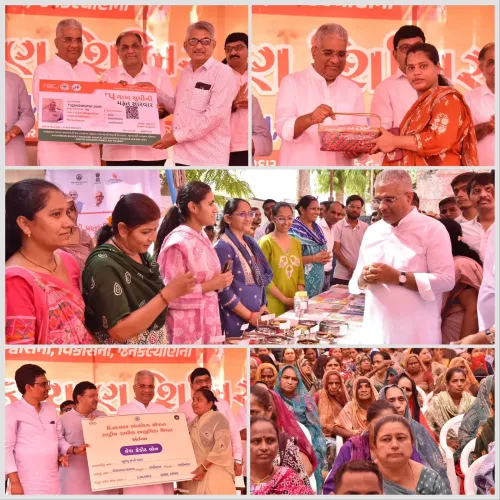
Eligible citizens received benefits under the Chief Minister Social Security Scheme (CMSSS) , which provides pensions and financial assistance to vulnerable residents.
Lungla is a remote sub-divisional headquarters in Tawang district serving significant tribal populations with limited access to government offices.
The event was framed within the Viksit Bharat vision and the BJP's broader last-mile governance narrative across northeastern states.
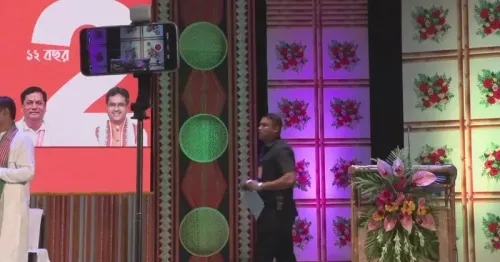
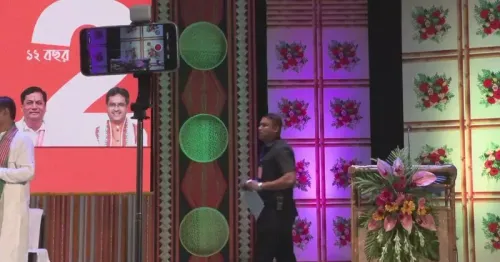
Arunachal Pradesh Chief Minister Pema Khandu on Saturday, 20 June 2026, inaugurated a Jan Kalyan Shivir at Lungla in Tawang district, bringing multiple government departments under one roof to deliver welfare services directly to citizens in one of the state's more remote sub-divisional areas.
Context
The shivir — a multi-department outreach camp — was held at Lungla, a sub-divisional headquarters in Tawang district that serves significant tribal populations with limited day-to-day access to government offices. CM Khandu said the camp was aimed at 'taking governance to the doorstep of every citizen,' consolidating services that residents would otherwise have to travel considerable distances to access.
Among the activities at the camp, the Chief Minister distributed organic manures to farmers and extended benefits under the Chief Minister Social Security Scheme (CMSSS) to eligible beneficiaries — a state programme providing pensions and financial assistance to vulnerable citizens.
Policy Backdrop
Arunachal Pradesh has organised multi-department welfare camps in remote districts since at least 2016, reflecting a long-standing effort to bridge the administrative gap in a state defined by difficult terrain and dispersed settlements. The Jan Kalyan Shivir model consolidates departments ranging from agriculture and health to social welfare, reducing the burden on citizens who must navigate multiple offices for different entitlements.
The Lungla camp also carries a national policy dimension. The distribution of organic manures aligns with the central government's push to expand organic and natural farming across northeastern states, while the CMSSS mirrors the architecture of centrally sponsored social security schemes adapted at the state level. CM Khandu explicitly credited the 'visionary leadership' of Prime Minister Narendra Modi and linked the event to the Viksit Bharat roadmap — the government's long-term national development vision targeting 2047.
Stakeholders and Impact
The primary beneficiaries of the Lungla shivir are farmers in the Tawang region who received organic inputs, and vulnerable citizens — including the elderly and economically weaker sections — brought into the CMSSS coverage net. For communities in remote corners of Arunachal Pradesh, single-window camps of this nature can represent the most direct interaction many residents have with state welfare machinery.
The event also fits a broader pattern visible across BJP-governed states, where outreach camps serve both an administrative purpose — accelerating last-mile delivery — and a political one, reinforcing the party's 'seva' (service) narrative, underscored by the hashtag #12YearsOfSeva used in the post.
What's Next
The Arunachal Pradesh government is expected to roll out additional Jan Kalyan Shivirs across other districts, particularly in geographically challenging areas of the state. Observers will watch whether the state's upcoming budget cycles expand CMSSS coverage and increase allocations for organic farming inputs, building on the momentum from camps like the one held at Lungla. The frequency and geographic spread of future shivirs will be a practical indicator of how far the last-mile governance push extends beyond headline events.
Point of View
CM Khandu is tying a local welfare event to a national development narrative, a pattern that serves both administrative and electoral purposes in a border state where public service delivery has historically been uneven. The dual focus on organic farming and social security also reflects the Centre's attempt to align northeastern state schemes with national priorities on agriculture and welfare. Whether these camps translate into sustained institutional change — or remain periodic showcases — will depend on the regularity of follow-up shivirs and measurable expansion of CMSSS coverage.
NationPress
19 Sept 2026
Frequently Asked Questions
What is a Jan Kalyan Shivir?
A Jan Kalyan Shivir is a multi-department government outreach camp that brings various state departments under one roof to deliver welfare services, scheme benefits, and public services directly to citizens — particularly in remote or underserved areas.
What is the Chief Minister Social Security Scheme (CMSSS) in Arunachal Pradesh?
The Chief Minister Social Security Scheme (CMSSS) is an Arunachal Pradesh state programme that provides social security benefits such as pensions and financial assistance to eligible vulnerable citizens, including the elderly and economically weaker sections.
Where is Lungla located?
Lungla is a sub-divisional headquarters in Tawang district of Arunachal Pradesh, a remote area in the northeastern corner of India with significant tribal populations.
What did CM Pema Khandu do at the Lungla Jan Kalyan Shivir?
CM Pema Khandu inaugurated the Jan Kalyan Shivir at Lungla on 20 June 2026, where he distributed organic manures to farmers and extended benefits under the Chief Minister Social Security Scheme (CMSSS) to eligible beneficiaries.
What is Viksit Bharat and how does it relate to welfare camps in Arunachal Pradesh?
Viksit Bharat is the Indian government's long-term national development vision targeting 2047. CM Khandu linked the Lungla welfare camp to this framework, positioning last-mile governance outreach in remote northeastern states as part of the broader national development roadmap.