CM Maharashtra Highlights Women Farmer Empowerment Drive
Synopsis
The Chief Minister's Office of Maharashtra promoted the Mahila Shetkari Sakshamikaran initiative on 2 July 2026, highlighting state efforts to empower women farmers through training, credit access, and market linkages — a push rooted in the Maharashtra Agriculture Policy 2021–2025.
Key Takeaways
The Chief Minister's Office of Maharashtra posted about the Mahila Shetkari Sakshamikaran initiative on 2 July 2026 .
Women perform an estimated 50–70% of agricultural labour in Maharashtra but hold fewer than 15% of land titles.
The scheme focuses on skills training, institutional credit access, and market linkages for women cultivators.
The initiative is rooted in the Maharashtra Agriculture Policy 2021–2025 , which mandated gender-responsive farm interventions.
State Budget 2026–27 allocations and district rollout data will be key indicators of the programme's scale and impact.
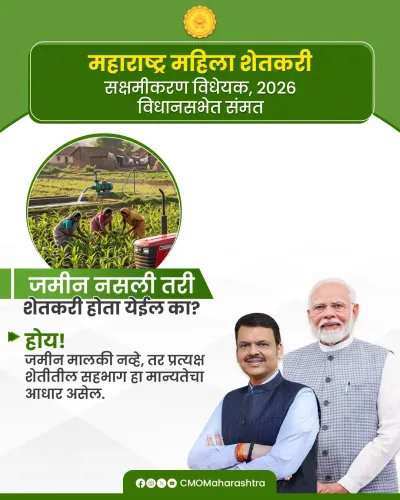
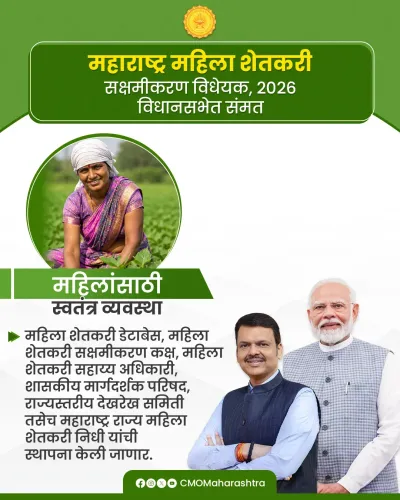
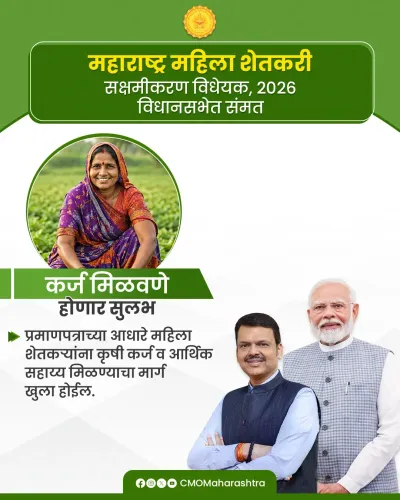
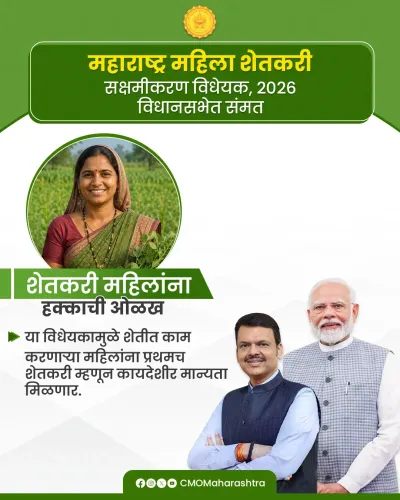
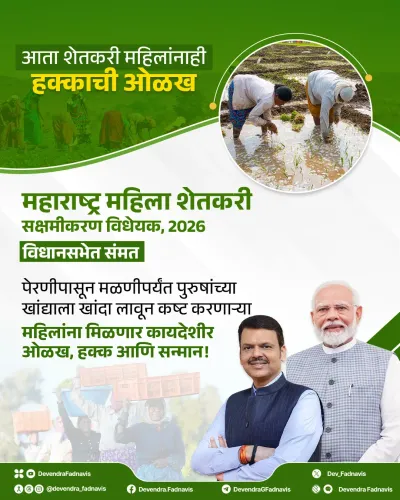
The Chief Minister's Office of Maharashtra spotlighted the state's Mahila Shetkari Sakshamikaran initiative on Thursday, 2 July 2026, using the hashtags #महिला_शेतकरी_सक्षमीकरण ('Women Farmer Empowerment') and #MahilaShetkariSakshamikaran to draw attention to ongoing efforts aimed at strengthening the role of women in Maharashtra's agricultural sector.
Context
Maharashtra is one of India's largest agrarian states, with more than half its workforce engaged in farming and allied activities. Despite contributing an estimated 50 to 70 per cent of all agricultural labour in the state, women farmers hold fewer than 15 per cent of land titles — a structural gap that successive state governments have sought to address through targeted policy interventions.
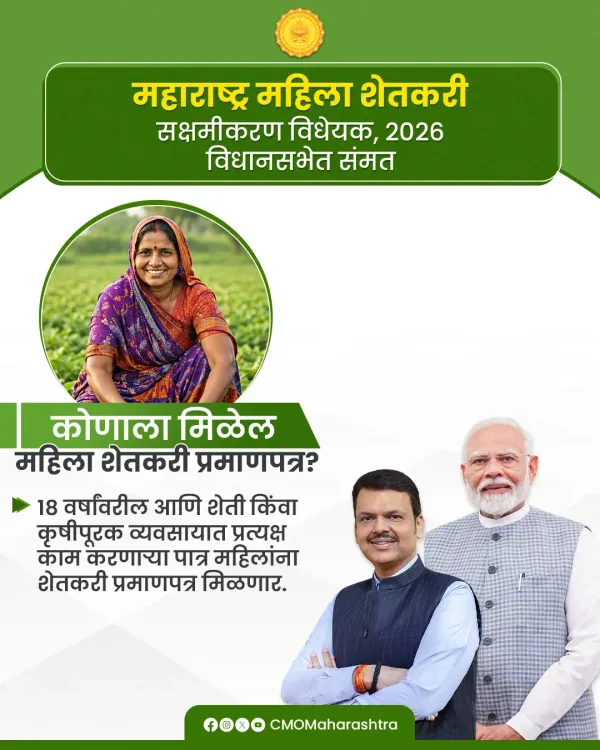
The Mahila Shetkari Sakshamikaran programme focuses on three pillars: skills training, access to institutional credit, and improved market linkages for women cultivators. The official post, accompanied by two images, signals the government's continued use of social media to amplify these efforts.
Policy Backdrop
The current initiative draws its mandate from the Maharashtra Agriculture Policy 2021–2025, which made gender-responsive interventions a stated priority. Among its key provisions was the creation of separate land records for women farmers — a step designed to give them independent access to government schemes, subsidies, and formal credit.
Chief Minister Eknath Shinde, who has helmed the state since 2022, has presided over incremental expansions of women-specific components within broader farmer welfare programmes, including crop insurance and skill development schemes. The Mahila Shetkari Sakshamikaran hashtag campaign is consistent with this administrative pattern.
Stakeholders and Impact
The primary beneficiaries of the scheme are women farmers across Maharashtra, particularly those in rain-dependent districts where economic vulnerability is highest. Improved credit access and training are intended to reduce their dependence on informal moneylenders and intermediary traders, enabling more direct participation in agricultural value chains.
Ancillary stakeholders include rural self-help groups, cooperative banks, and district-level agricultural extension officers who are central to the scheme's on-ground delivery. The success of such programmes is closely tied to administrative bandwidth at the taluka and gram panchayat levels.
What's Next
Policy watchers will look to the Maharashtra State Budget 2026–27 for specific allocations earmarked under the Mahila Shetkari Sakshamikaran umbrella, including credit guarantee funds and training infrastructure outlays. District-level rollout reports are expected to offer the first concrete measure of reach and uptake.
The government's sustained social media focus on women farmer empowerment suggests the issue will remain a visible plank of the state's rural development agenda in the months ahead — particularly as Maharashtra approaches its next electoral cycle.
Point of View
And targeted schemes alone have historically struggled to close it without sustained administrative follow-through. The real test will be whether Budget 2026–27 backs the hashtag with hard rupee allocations and measurable district-level targets. Until then, the initiative sits at the intersection of genuine policy intent and political optics.
NationPress
2 Jul 2026
Frequently Asked Questions
What is the Mahila Shetkari Sakshamikaran scheme in Maharashtra?
Mahila Shetkari Sakshamikaran is a Maharashtra state initiative designed to empower women farmers through skills training, access to institutional credit, and improved market linkages. It operates under the broader Maharashtra Agriculture Policy 2021–2025.
How many women farmers are there in Maharashtra?
Women perform an estimated 50 to 70 per cent of all agricultural labour in Maharashtra, though official data indicate they hold fewer than 15 per cent of agricultural land titles in the state.
What did the CMO Maharashtra post about on 2 July 2026?
The Chief Minister's Office of Maharashtra posted about the Mahila Shetkari Sakshamikaran initiative, using hashtags in both Hindi and English to highlight the state government's women farmer empowerment programme.
What is Maharashtra's policy on women and land rights in agriculture?
The Maharashtra Agriculture Policy 2021–2025 includes a provision for separate land records for women farmers, aimed at giving them independent access to government schemes, subsidies, and formal bank credit.
Who is the Chief Minister of Maharashtra in 2026?
Eknath Shinde has served as Chief Minister of Maharashtra since 2022 and has overseen the incremental expansion of women-focused components within the state's farmer welfare programmes.