CM Majhi Backs 'Sambandh' Drive to Empower Odisha Farmers
Synopsis
Odisha Chief Minister Mohan Charan Majhi has backed the 'Sambandh' cooperative campaign, calling cooperatives the lifeline of farmers' economic empowerment and urging all citizens to join a people's movement for rural prosperity and better market access.
Key Takeaways
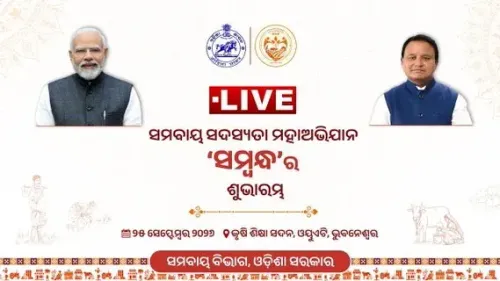
CM Mohan Charan Majhi posted in support of the Sambandh campaign on 25 September 2026 , anchoring it as his government's flagship farmers' welfare initiative.
The campaign targets three outcomes: strengthening cooperative institutions, improving their transparency, and connecting farmers to viable markets.
Majhi called on all citizens to make the drive a jan andolan (people's movement), broadening its framing beyond a government scheme.
The push aligns with the national cooperative policy framework established by the Union Ministry of Cooperation in 2021 .
Majhi, who became Odisha CM in June 2024 , has positioned farmers' income growth and rural economic strengthening as central goals of his administration.
Implementation progress — including budget allocations and legislative reforms — will determine whether the campaign's goals translate into measurable gains for smallholder farmers.
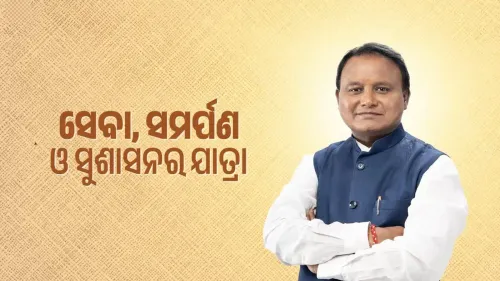
Farmers' prosperity is Odisha's prosperity — and Odisha Chief Minister Mohan Charan Majhi made that equation the centrepiece of a post on X on Friday, 25 September 2026, throwing the weight of his government behind the 'Sambandh' campaign, a cooperative-sector push aimed at boosting farm incomes and connecting cultivators to markets.
What the Sambandh Campaign Seeks to Do
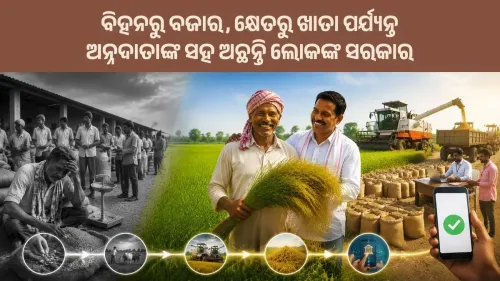
Writing in Odia, CM Majhi declared: 'Sambandhi Abhiyan eka dridha padaksepa' — 'the Sambandh campaign is a firm step forward.' The chief minister framed cooperatives as the 'lifeline of farmers' economic empowerment,' calling on all citizens to join the movement and turn it into a jan andolan — a people's movement. The stated goals are threefold: strengthen and clean up cooperative bodies, plug farmers into viable markets, and expand the profit opportunities available to rural households.
The resolve, as Majhi put it, is simple: 'to bring smiles to farmers' faces and prosperity to their families.' It is a phrase that doubles as a political promise and a governance benchmark — one his administration will now be measured against.
Cooperatives as Policy Backbone — The National Thread
The Sambandh campaign does not emerge in a vacuum. The Union Ministry of Cooperation, established in 2021, laid the national framework for exactly this kind of state-level push — making cooperative societies the primary vehicle for rural economic strengthening and agricultural market linkage. BJP-led governments across states have since operationalised that mandate in varying forms, and Odisha, under Majhi who assumed office in June 2024, is now bringing its own campaign to bear.
Transparency in cooperative operations is a recurring emphasis, reflecting a broader admission that opaque management has historically undercut what these bodies could deliver to their farmer-members. The Sambandh drive explicitly flags 'clean' cooperatives alongside 'strong' ones — a signal that governance reform inside these institutions is as much a target as outreach numbers.
What Odisha's Farmers Stand to Gain
Odisha's rural economy remains heavily agrarian, and income volatility — driven by monsoon dependence and weak market access — is the defining challenge for smallholder farmers. Cooperative networks, when functional, can aggregate produce, negotiate better prices, and reduce the cut taken by intermediaries. If the Sambandh campaign delivers on market linkage, the direct beneficiaries would be the state's millions of small and marginal farmers who currently sell at distress prices.
The campaign's real test will come in coming assembly sessions: whether state budget allocations back the rhetoric, and whether legislative measures for cooperative reform follow the social-media momentum.
Point of View
Framing cooperatives as a 'lifeline' and calling for a people's movement is an attempt to build a durable farmer-welfare narrative ahead of future electoral cycles. The emphasis on transparency within cooperatives is also politically smart: it implicitly distances the current administration from past governance failures in those bodies. Whether the rhetoric converts into structural reforms and budget commitments will determine if Sambandh becomes a model initiative or remains a well-branded aspiration.
NationPress
25 Sept 2026
Frequently Asked Questions
What is the Sambandh campaign in Odisha?
The Sambandh campaign is an Odisha government initiative aimed at strengthening cooperative societies, improving their transparency, and connecting farmers to better markets to increase their income and rural prosperity.
What did Odisha CM Mohan Majhi say about farmers and cooperatives?
CM Majhi stated that farmers' prosperity is Odisha's prosperity, called cooperatives the lifeline of farmers' economic empowerment, and urged all citizens to join the Sambandh campaign as a people's movement.
How does the Sambandh campaign relate to national cooperative policy?
It aligns with the framework set by India's Union Ministry of Cooperation, established in 2021, which promotes cooperative societies as vehicles for rural economic strengthening and farmer market linkage at the state level.
When did Mohan Charan Majhi become Chief Minister of Odisha?
Mohan Charan Majhi became Chief Minister of Odisha in June 2024, after the BJP won the state assembly elections.
How will cooperative reforms help Odisha's farmers?
Functional cooperatives can help smallholder farmers aggregate produce, negotiate better prices, and reduce intermediary costs, directly boosting income and reducing vulnerability to market volatility.