CM Majhi backs Centre's tightened FCRA framework
Synopsis
Odisha Chief Minister Mohan Charan Majhi on 24 June 2026 backed the Union government's tightened FCRA framework, citing new donor disclosure rules, field verification of fund use, and a ban on proselytization as essential safeguards for India's sovereignty and social harmony.
Key Takeaways
CM Mohan Charan Majhi publicly endorsed the Union government's latest FCRA amendments on 24 June 2026 .
The reforms cited include stricter disclosure requirements, mandatory identification of ultimate donors, and field verification of fund utilisation.
An explicit prohibition on proselytization is among the new measures outlined in the post.
The FCRA was originally enacted in 1976 , substantially revised in 2010 , and last significantly amended in 2020 .
Foreign-funded NGOs and civil society organisations are the primary entities affected by the expanded compliance requirements.
The Ministry of Home Affairs is expected to issue formal rule notifications to give legal force to the specific measures described.
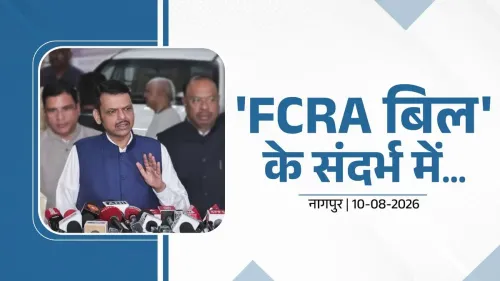
Odisha Chief Minister Mohan Charan Majhi on Wednesday, 24 June 2026 publicly backed the Union government's latest amendments to the Foreign Contribution (Regulation) Act, stating that stricter oversight of foreign funds was 'the need of the hour' and that the reforms reinforce India's sovereignty, social harmony and cultural ethos.
Context
In his post, CM Majhi outlined a set of measures he attributed to the Government of India under the #FCRA framework: stricter disclosure requirements, mandatory identification of ultimate donors, field verification of fund utilisation, enhanced monitoring of activities, and an explicit prohibition on proselytization. He framed these as a collective signal that 'India welcomes genuine developmental, educational and welfare initiatives, but will not permit foreign funding to be used as a vehicle for hidden agendas, ideological influence or activities that undermine national interests.'
The post credits the reforms to the 'visionary leadership' of Prime Minister Narendra Modi, positioning the changes as part of a broader agenda to protect national unity and institutional integrity.
Policy Backdrop
The Foreign Contribution (Regulation) Act (FCRA) was originally enacted in 1976 and substantially revised in 2010 to regulate how Indian associations and non-governmental organisations receive and utilise foreign contributions. A landmark amendment in 2020 introduced Aadhaar-based identity linkage for key functionaries of recipient organisations, prohibited sub-granting of foreign funds to third parties, and reduced the ceiling on administrative expenditure from 50 per cent to 20 per cent of total foreign receipts.
Successive governments have tightened compliance mechanisms under the Act, including cancellation of registrations for violations. The current administration has consistently framed these measures as safeguards for domestic harmony and national sovereignty — an approach that mirrors regulatory tightening seen in several other countries seeking to limit foreign influence in civil society.
Stakeholders and Impact
The most directly affected parties are foreign-funded NGOs and civil society organisations operating across India, which must now navigate expanded disclosure obligations and the prospect of field-level verification of how contributed funds are actually spent. Organisations engaged in developmental, educational and welfare work are explicitly identified by CM Majhi as welcome recipients, while those perceived to pursue ideological or proselytizing objectives face heightened scrutiny.
The explicit prohibition on proselytization cited in the post, if enacted through formal rule or amendment, would represent a significant new restriction on certain categories of faith-based organisations that receive overseas funding. Compliance costs and documentation requirements are also expected to rise for all registered entities under the framework.
What's Next
Observers will watch the Ministry of Home Affairs for formal rule notifications, gazette amendments or circulars that give legal force to the specific measures described — including ultimate donor identification protocols and field verification procedures. Parliamentary questions and potential judicial challenges concerning the scope and implementation of these provisions are anticipated.
Annual FCRA compliance reports published by the Ministry of Home Affairs will serve as a key indicator of whether the new framework translates into measurable changes in registration, fund flows and enforcement actions against non-compliant organisations. The Centre's approach to balancing genuine civil society work with sovereignty concerns will remain a closely watched governance question.
Point of View
The post signals that the BJP's ideological concerns around religious conversion remain embedded in its regulatory agenda. The emphasis on 'ultimate donor' identification mirrors global trends in anti-money-laundering and foreign-influence legislation, lending the reforms a degree of international legitimacy. Whether the specific measures cited survive judicial scrutiny will determine how substantively the FCRA framework is actually transformed.
NationPress
22 Sept 2026
Frequently Asked Questions
What is the FCRA and why is it in the news?
The Foreign Contribution (Regulation) Act governs how Indian NGOs and associations receive foreign funds. It is in the news because the Government of India has introduced new amendments adding donor disclosure requirements, field verification of fund use, and a prohibition on proselytization, which Odisha CM Mohan Charan Majhi publicly endorsed on 24 June 2026.
What are the new FCRA amendments about?
The amendments cited by CM Majhi include mandatory identification of ultimate donors, stricter disclosure requirements, field-level verification of how foreign funds are spent, enhanced activity monitoring, and an explicit ban on using foreign contributions for proselytization.
How does the FCRA proselytization ban work?
According to CM Majhi's post, the amended FCRA framework explicitly prohibits the use of foreign contributions for proselytization. The formal legal text of this provision is expected to be notified by the Ministry of Home Affairs through rules or gazette amendments.
Which organisations are affected by the tightened FCRA rules?
All Indian NGOs and associations registered under the FCRA that receive foreign funding are affected. Faith-based organisations engaged in proselytization and those with complex donor chains face the most significant new compliance burdens under the revised framework.
What was the last major FCRA amendment before 2026?
The Foreign Contribution (Regulation) Amendment Act, 2020 was the last major overhaul. It introduced Aadhaar-based identity verification for key functionaries, banned sub-granting of foreign funds, and reduced the administrative expenditure ceiling from 50 per cent to 20 per cent of foreign receipts.