CM Majhi shares Modi's vision: no citizen left behind
Synopsis
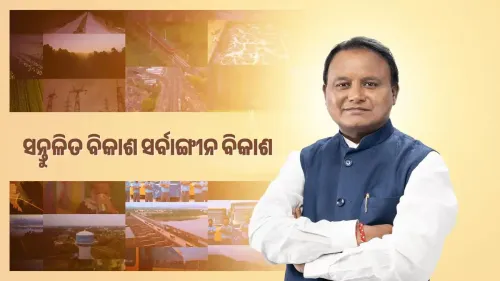
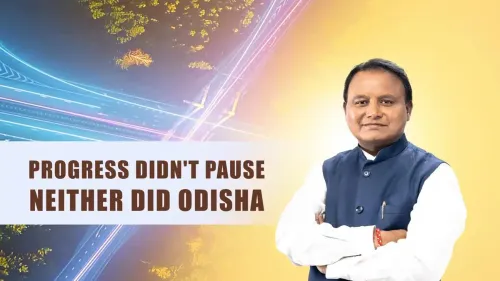
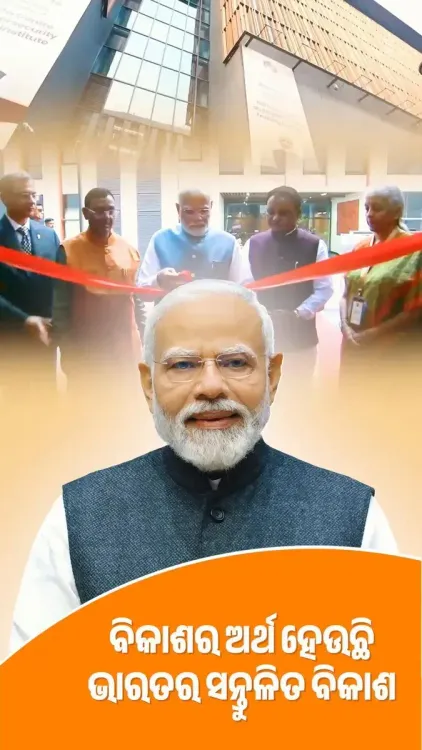
Odisha CM Mohan Charan Majhi shared a bilingual quote from PM Narendra Modi defining good governance as balanced, last-mile development that leaves no citizen behind — a message he rooted directly in the Odia language for his home state.
Key Takeaways
CM Mohan Charan Majhi posted a quote from PM Narendra Modi on 25 October 2026 emphasising inclusive, last-mile development as the core of good governance.
The quote was shared in both Odia and English , signalling its direct relevance to Odisha's own development challenges.
The BJP formed its first-ever government in Odisha in June 2024 , making the inclusive-development narrative central to its political positioning in the state.
The message echoes the NDA's 'Sabka Saath, Sabka Vikas' doctrine and the connectivity goals of the Bharatmala Pariyojana launched in 2015.
Odisha's tribal hinterlands and remote KBK-region districts — historically underserved — make 'no one left behind' a concrete policy challenge, not just rhetoric.
Budget watchers should track Odisha's upcoming rural road and connectivity allocations for evidence that this messaging translates into fiscal priorities.
Development that begins at the village boundary and reaches the remotest corner of the country — not just the skylines of big cities — is the true measure of good governance. That is the message Odisha Chief Minister Mohan Charan Majhi amplified on Sunday, 25 October 2026, sharing a pointed quote from Prime Minister Narendra Modi that frames inclusive, last-mile growth as the defining yardstick of state power.
What Modi said — and why Majhi is saying it now
The post carries a bilingual quote — first in Odia, then in English — attributed directly to the Prime Minister: 'ବିକାଶର ଅର୍ଥ କେବଳ ବଡ଼ ସହରର ପ୍ରଗତି ନୁହେଁ' ['Development is not just about the progress of big cities']. The full rendering reads: 'Balanced development, improved connectivity and access to a dignified life ensure that no one is left behind in the journey of progress. This is the true goal of good governance.'
By sharing the quote in Odia — the language of the state he governs — CM Majhi roots the national message firmly in an Odisha context. The subtext is deliberate: Odisha, a state where the BJP formed its first-ever government in June 2024, carries large stretches of tribal hinterland, coastal districts, and KBK-region villages that have historically lagged in infrastructure and human-development indices.
The 'Sabka Saath, Sabka Vikas' thread running through the post
The philosophy Majhi is invoking is not new — it traces directly to the NDA's 'Sabka Saath, Sabka Vikas' doctrine, formalised after 2014 as the central organising principle of federal welfare delivery. The idea: growth metrics measured only by metro GDP or urban infrastructure miss the majority of India's population. Real progress is counted at the last mile — the pucca road reaching a remote block headquarters, the broadband connection in a forest-fringe village, the hospital at a drive-able distance.
The Bharatmala Pariyojana, launched in 2015, operationalised part of that philosophy by prioritising road corridors linking underserved districts to national highways. For a state like Odisha — which spans dense forests, tribal corridors in Koraput and Malkangiri, and a long coastline — connectivity is not an abstraction. It is the difference between a farmer accessing a mandi and watching produce rot on a kutcha track.
Governance as a brand — and a budget signal
Political messaging of this kind rarely floats free of fiscal intent. Watch the Odisha state budget allocations in the coming fiscal year for rural road expansion, district-level connectivity projects, and last-mile welfare delivery schemes. When a chief minister publicly aligns with the Prime Minister's definition of 'good governance', it typically precedes either a policy push or a pitch for enhanced central funding — sometimes both.
For the BJP in Odisha, the narrative serves a dual purpose: it consolidates the party's image as a reformist government committed to rural uplift, and it reassures constituencies outside Bhubaneswar and Cuttack that they are not an afterthought in the new administration's development calculus.
One sentence from the quoted text carries particular weight: 'No one is left behind in the journey of progress.' In a state where development has long been geographically uneven, that is less a platitude and more a political contract — one that CM Majhi has now put into writing, in his constituents' own language.
Point of View
CM Majhi is doing more than simple brand alignment — he is anchoring the BJP's national inclusive-growth narrative to Odisha's specific, uneven development geography. For a party that won its first Odisha mandate in 2024, this framing is strategic: it signals continuity with central policy while staking a claim to rural and tribal constituencies that have historically felt bypassed. The 'last mile' language also functions as a soft accountability frame — one that opposition parties can and likely will test against actual budget allocations and district-level outcomes. How Majhi translates this rhetoric into measurable rural infrastructure spending will determine whether it remains a slogan or becomes a governance signature.
NationPress
25 Oct 2026
Frequently Asked Questions
What did Odisha CM Mohan Charan Majhi post about development on 25 October 2026?
CM Majhi shared a bilingual quote from PM Narendra Modi stating that good governance means ensuring balanced development and opportunity for every citizen — from villages to remote regions — not just big cities.
What is PM Modi's 'Sabka Saath, Sabka Vikas' and how does it relate to this post?
'Sabka Saath, Sabka Vikas' — meaning 'Together with all, development for all' — is the NDA government's inclusive-growth doctrine adopted after 2014. CM Majhi's post directly echoes this philosophy by emphasising last-mile delivery over metro-centric progress.
When did the BJP first form a government in Odisha?
The BJP formed its first-ever government in Odisha in June 2024 , with Mohan Charan Majhi as Chief Minister.
What is Bharatmala Pariyojana and why is it relevant to Odisha?
Bharatmala Pariyojana, launched in 2015, is a national highway and road-connectivity programme that prioritises linking underserved districts to the national network. For Odisha, with its tribal interior and remote KBK region, such connectivity is critical to closing the urban-rural development gap.
Why did CM Majhi share the quote in Odia?
Sharing PM Modi's development quote in Odia roots the national message in a local context, signalling to Odisha's citizens — including those in rural and tribal areas — that the state government is committed to bringing development to their doorsteps.