CM Majhi credits Modi for Odisha infrastructure gains
Synopsis
Odisha Chief Minister Mohan Charan Majhi on 16 June 2026 credited PM Narendra Modi's leadership for historic infrastructure gains, citing the Chenab Bridge, Vande Bharat Express, Coastal Highway Project, and PMGSY roads as pillars of Odisha's connectivity-led development under the 'double-engine' government model.
Key Takeaways
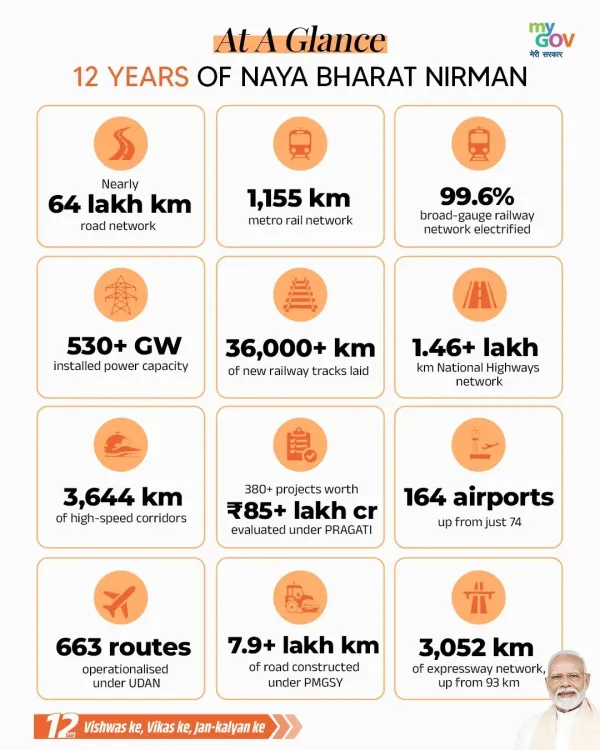
CM Mohan Charan Majhi praised PM Narendra Modi 's infrastructure record in a post on 16 June 2026 , marking #12YearsOfNayaBharatNirman .
He cited the Chenab Bridge — the world's highest railway arch bridge — as a symbol of India's engineering ambition and reach to remote regions.
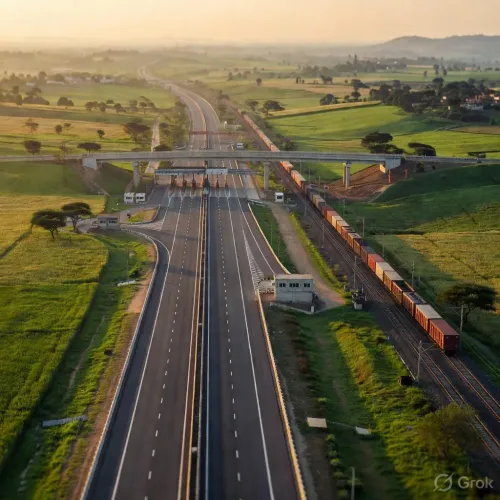
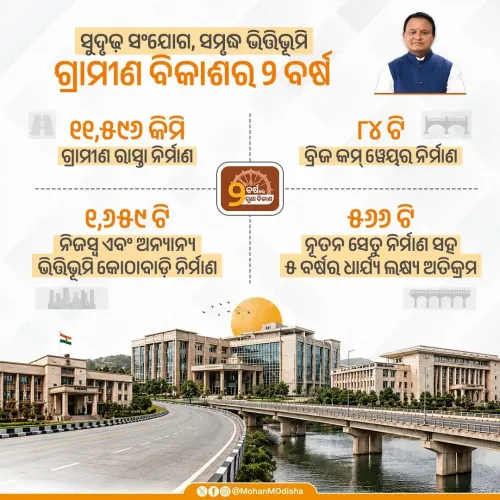
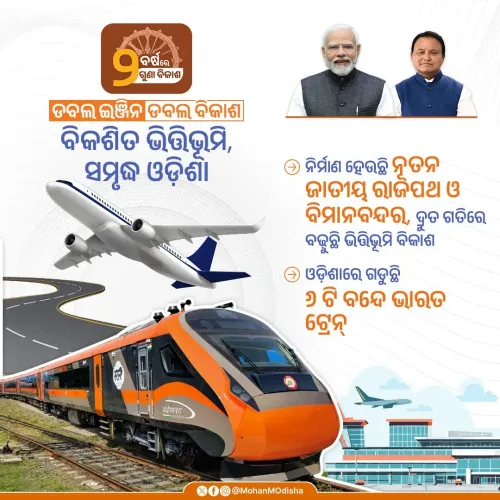
Majhi highlighted the Coastal Highway Project , Vande Bharat Express services on Odisha routes, and PMGSY rural road strengthening as key state-level gains.
The CM invoked the 'double-engine government' concept, framing Centre-state BJP alignment as the driver of Odisha's connectivity improvements.
He linked Odisha's infrastructure progress to the broader 'Viksit Bharat' (Developed India) vision for 2047 , pledging continued efforts.
Rural households, small traders, and industrial investors in Odisha are identified as primary beneficiaries of improved road and rail access.
Odisha Chief Minister Mohan Charan Majhi on Tuesday, 16 June 2026 praised Prime Minister Narendra Modi's infrastructure push, highlighting landmark projects such as the Chenab Bridge and the expansion of rail and road networks as evidence that development has reached India's remotest frontiers. Majhi credited the 'double-engine government' model for triggering what he called a golden chapter in Odisha's connectivity and infrastructure.
Context
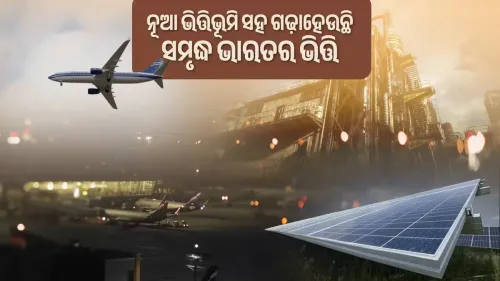
Writing in Odia, Majhi stated: 'ଆଧୁନିକ ଭିତ୍ତିଭୂମି ଯେକୌଣସି ବିକଶିତ ରାଷ୍ଟ୍ରର ପ୍ରକୃତ ପରିଚୟ' ('Modern infrastructure is the true identity of any developed nation'). He argued that milestones such as the Chenab Bridge — the world's highest railway arch bridge — and the extension of rail lines to difficult terrain prove that 'development has today reached the last frontier of the country.' The post was accompanied by an image and carried the hashtag #12YearsOfNayaBharatNirman, marking twelve years of the BJP-led central government's nation-building agenda.
Majhi became Odisha's first BJP Chief Minister in June 2024, and has consistently framed state development as inseparable from central government priorities. His post reflects a broader BJP communication strategy of tying state-level progress to the Prime Minister's leadership.
Policy Backdrop
The infrastructure record Majhi references spans more than a decade. Since 2014, the central government accelerated national highway construction under the Bharatmala Pariyojana and significantly scaled up the Pradhan Mantri Gram Sadak Yojana (PMGSY), the rural roads programme originally launched in 2000. The PM Gati Shakti National Master Plan, introduced in 2021, brought multimodal infrastructure planning under a single framework.
On the railways front, the Vande Bharat Express — India's semi-high-speed train introduced in 2019 — has been deployed on multiple routes across Odisha. Majhi specifically cited these trains alongside the Coastal Highway Project and PMGSY rural road strengthening as drivers of Odisha's regional economy. The Chenab Bridge, part of the Udhampur-Srinagar-Baramulla Rail Link in Jammu and Kashmir, became operational under Indian Railways' modernisation drive and has been widely cited by BJP leaders as a symbol of engineering ambition.
Stakeholders and Impact
Majhi's post frames the beneficiaries in inclusive terms, stating that Odisha's growth is 'not limited to cities' but is building a 'bridge of prosperity from village to city, connecting every family to the mainstream of development.' Rural households, small traders, and industrial investors in the state stand to gain from improved road and rail access. Odisha has been positioning itself as a port-led and connectivity-driven industrial destination, and better multimodal links are central to attracting investment.
The 'double-engine' framing — a BJP term for alignment between a BJP-ruled state and the BJP-led Centre — implies that Odisha can access central infrastructure funds more smoothly than states with different ruling parties. This has political as well as economic implications for how infrastructure credit is distributed in public discourse.
What's Next
Attention will now turn to the actual rollout timelines and land acquisition progress for the Coastal Highway Project and pending rail corridor expansions within Odisha. Parliamentary deliberations on 2026-27 infrastructure budget allocations will also shape how much central capital flows to the state. Majhi closed his post with a pledge that efforts to build a 'healthy, prosperous and progressive Odisha' and realise the 'Viksit Bharat' (Developed India) vision for 2047 will continue unabated — signalling that infrastructure delivery will remain a central political and governance priority for his administration.
Point of View
Just two years into Odisha's first BJP administration. By anchoring state-level connectivity gains to PM Modi's central programmes, the Chief Minister simultaneously builds his own credibility and deepens the Centre-state political compact. The hashtag #12YearsOfNayaBharatNirman suggests coordinated party-wide communication rather than a standalone statement. The real test will be whether the Coastal Highway and pending rail corridors move from announcement to ground-level delivery within the tenure of this government.
NationPress
15 Sept 2026
Frequently Asked Questions
What did Odisha CM Mohan Majhi say about infrastructure on 16 June 2026?
CM Mohan Charan Majhi praised PM Narendra Modi's infrastructure record, citing the Chenab Bridge, Vande Bharat Express trains, the Coastal Highway Project, and PMGSY rural roads as evidence of historic development reaching every corner of Odisha.
What is the Chenab Bridge and why is it significant?
The Chenab Bridge is the world's highest railway arch bridge, located on the Udhampur-Srinagar-Baramulla Rail Link in Jammu and Kashmir. It was completed under Indian Railways' modernisation drive and is frequently cited by BJP leaders as a landmark engineering achievement connecting remote regions.
What is the 'double-engine government' that CM Majhi referred to?
The 'double-engine government' is a BJP term describing the alignment between a BJP-ruled state government and the BJP-led central government, implying smoother access to central funds and coordinated policy implementation for faster development.
Which infrastructure projects in Odisha did CM Majhi highlight?
Majhi specifically mentioned the Coastal Highway Project, Vande Bharat Express services on Odisha routes, and the strengthening of rural roads under the Pradhan Mantri Gram Sadak Yojana (PMGSY) as key infrastructure gains for the state.
What is the 'Viksit Bharat' vision CM Majhi mentioned?
'Viksit Bharat' means 'Developed India' and refers to the BJP-led government's stated goal of making India a fully developed nation by 2047, the centenary of Indian independence. CM Majhi pledged that Odisha's infrastructure efforts would continue in line with this national vision.