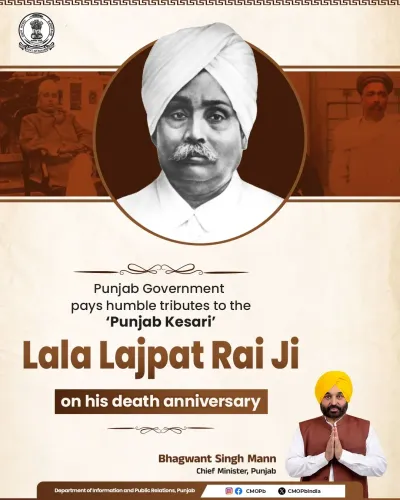
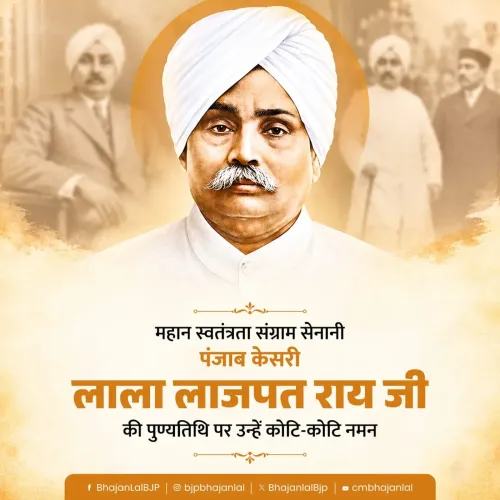
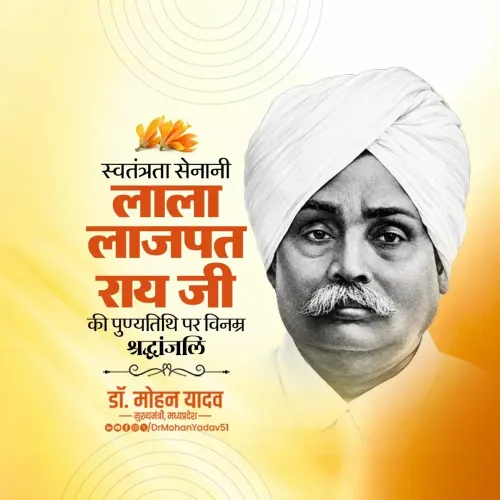
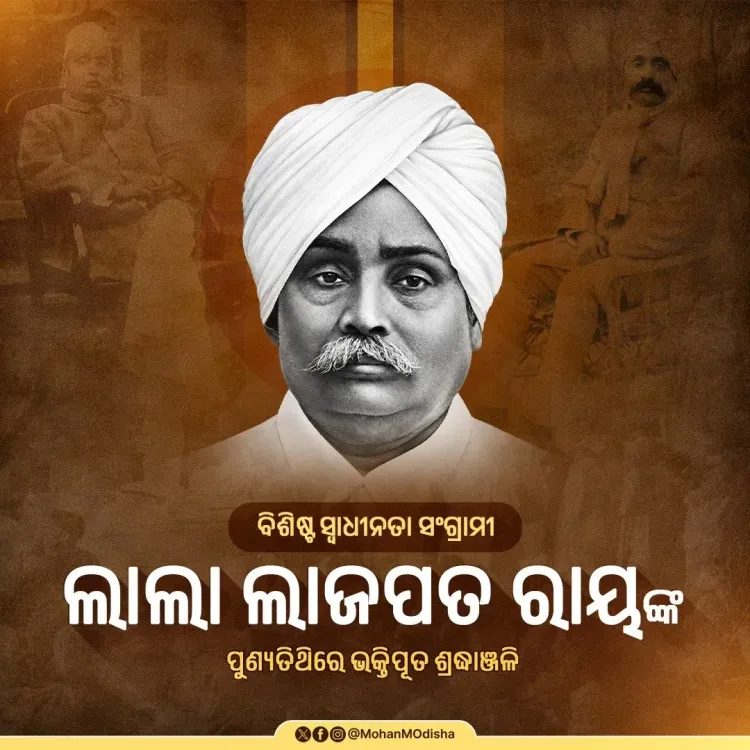
CM Majhi pays tribute to Lala Lajpat Rai on death anniversary
Synopsis
Odisha Chief Minister Mohan Charan Majhi honoured Lala Lajpat Rai — Punjab Kesari — on his death anniversary on 17 November 2026, paying tribute to the freedom fighter who died in 1928 after a police lathi charge at a Simon Commission protest in Lahore.
Key Takeaways
Odisha CM Mohan Charan Majhi posted a tribute to Lala Lajpat Rai on 17 November 2026 , the freedom fighter's death anniversary.
Lala Lajpat Rai , known as Punjab Kesari , died on 17 November 1928 from injuries sustained in a police lathi charge in Lahore .
Rai was leading a protest against the Simon Commission , an all-white panel appointed to recommend constitutional reforms with no Indian representation.
His death directly inspired revolutionary Bhagat Singh 's subsequent actions, deepening the radicalism of the independence movement.
CM Majhi, who took office in 2024 , regularly issues tributes on national commemorative dates as part of Odisha's public remembrance tradition.
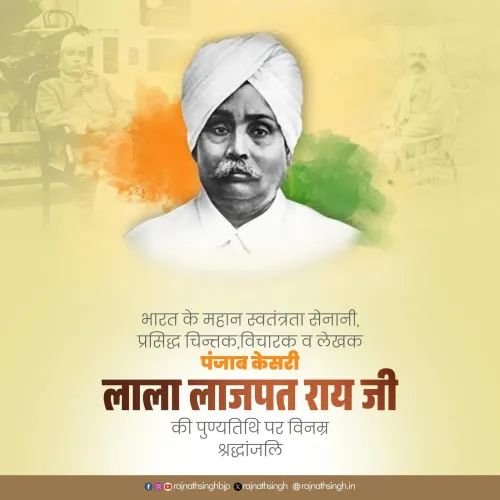
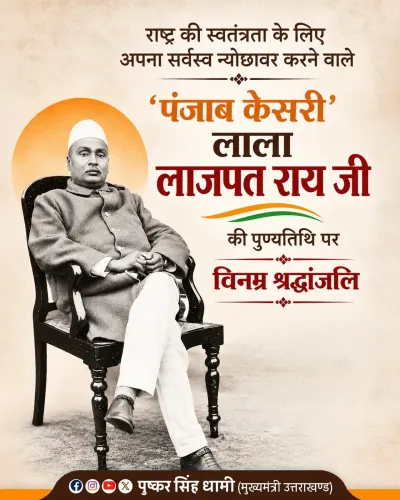
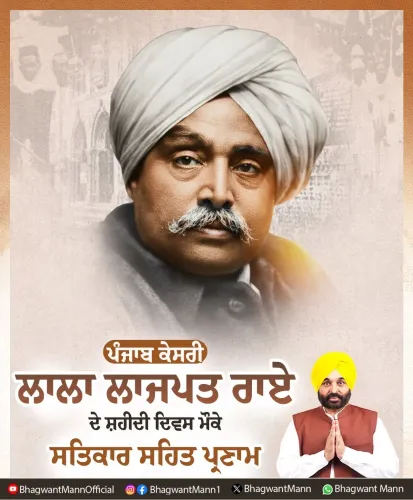
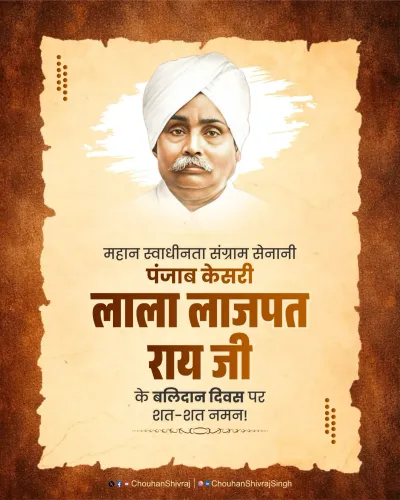
Ninety-eight years after a British lathi charge stole one of India's most defiant voices, Odisha Chief Minister Mohan Charan Majhi paused on 17 November 2026 to honour Lala Lajpat Rai — the man history remembers as Punjab Kesari (the Lion of Punjab) — on his death anniversary.
Posting in Odia on X, CM Majhi offered what he called 'bhaktiputa shraddhanjali' — a 'devotion-filled tribute' — to the legendary freedom fighter, invoking Rai's title Punjab Kesari and describing him as a 'bishishta swadhinata sanggrami', a distinguished freedom fighter.
The blow that became a battle cry
Lala Lajpat Rai was struck by police batons on 30 October 1928 in Lahore while leading a protest march against the all-white Simon Commission, which had been appointed to recommend constitutional reforms without a single Indian member. He died from his injuries on 17 November 1928. His last public words — that every blow on his body would prove a nail in the coffin of British imperialism — became one of the defining declarations of the independence movement.
His death directly inspired a chain of events that shook colonial India: revolutionary Bhagat Singh, incensed by the assault on Rai, carried out the killing of British police officer J.P. Saunders in Lahore shortly afterward — an act of retribution that accelerated the radicalism of the late-1920s freedom struggle.
A chief minister's annual duty of memory
Chief ministers across India regularly mark the death anniversaries of independence-era icons, treating public commemoration as both civic duty and a reaffirmation of the state's connection to the national freedom struggle. CM Majhi, who took office in Odisha in 2024 as the BJP's first chief minister in the state after the Naveen Patnaik era ended, has been consistent in issuing such tributes on nationally significant dates.
That a leader from Odisha chooses to honour a figure most associated with Punjab speaks to the pan-Indian character of the freedom struggle — a movement Rai served not just as a street-level agitator but as a writer, lawyer, and founder of institutions that outlasted colonial rule.
Every 17 November, India does not simply mark a death. It marks the moment a baton blow became a wound the entire nation felt — and never forgot.
Point of View
Simultaneously affirming nationalist credentials and reinforcing the ruling party's claim to the freedom-struggle legacy. For CM Majhi — leading a BJP government in Odisha since 2024 — honouring Lala Lajpat Rai, a figure central to both the Hindu Mahasabha tradition and the broader anti-colonial movement, carries particular ideological resonance. The choice to post in Odia rather than Hindi or English also signals a deliberate effort to localise a pan-Indian narrative for a state audience. As BJP continues to consolidate its position in eastern India, such commemorations serve as quiet but persistent cultural messaging.
NationPress
17 Nov 2026
Frequently Asked Questions
Why is 17 November significant in Indian history?
17 November marks the death anniversary of Lala Lajpat Rai , the prominent freedom fighter known as Punjab Kesari, who died on this date in 1928 from injuries sustained during a police lathi charge at an anti-Simon Commission protest in Lahore.
Who is Lala Lajpat Rai and why is he called Punjab Kesari?
Lala Lajpat Rai was a leading Indian freedom fighter, lawyer, and writer from Punjab. He is called Punjab Kesari — meaning 'Lion of Punjab' — for his fierce leadership of the independence movement and his fearless opposition to British colonial rule.
What was the Simon Commission and why did Lala Lajpat Rai protest it?
The Simon Commission was a British-appointed panel formed in 1927 to review India's constitutional framework. It had no Indian members, which sparked widespread protests. Lala Lajpat Rai led a protest march against it in Lahore, during which police used lathi charges on demonstrators, fatally injuring him.
What did Mohan Charan Majhi post about Lala Lajpat Rai?
Odisha CM Mohan Charan Majhi posted a tribute in Odia on X on 17 November 2026 , describing Lala Lajpat Rai as a distinguished freedom fighter and offering a 'devotion-filled tribute' on his death anniversary.
How did Lala Lajpat Rai's death influence Bhagat Singh?
The death of Lala Lajpat Rai deeply angered revolutionary Bhagat Singh , who subsequently carried out the killing of British police officer J.P. Saunders in Lahore as an act of retribution, accelerating the radical phase of India's independence movement.