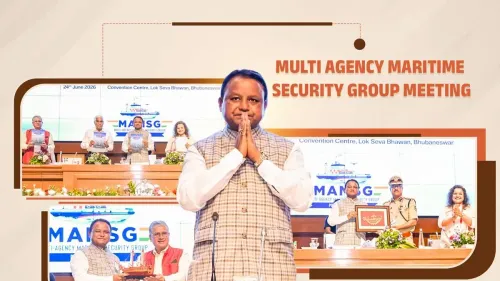
CM Majhi Inaugurates 14th Maritime Security Meet in Bhubaneswar
Synopsis
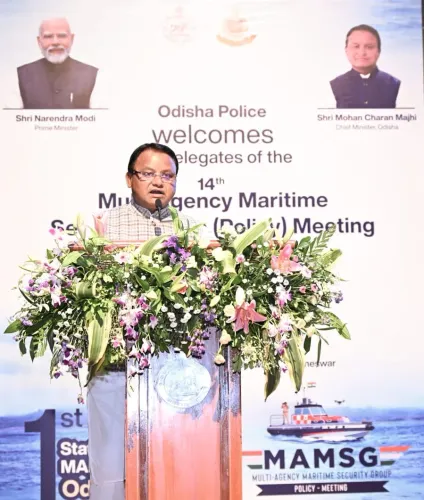
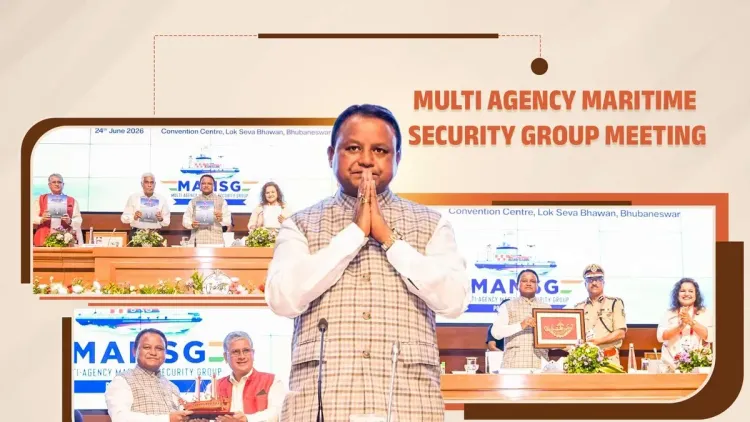
Chief Minister Mohan Charan Majhi inaugurated the 14th Multi Agency Maritime Security Group (Policy) meeting in Bhubaneswar on 24 June 2026, calling the ocean a gateway to prosperity and reaffirming Odisha's commitment to blue economy, coastal security, and modern maritime infrastructure development.
Key Takeaways
CM Mohan Charan Majhi inaugurated the 14th MAMSG (Policy) meeting in Bhubaneswar on 24 June 2026 .
He described the ocean as 'a gateway to opportunity, prosperity, and global partnership,' not merely a geographical boundary.
The Odisha government reaffirmed commitment to the blue economy , coastal security, and modern maritime infrastructure.
The MAMSG(P) is an inter-agency body coordinating maritime security policy among central and state stakeholders across India.
The meeting aligns with India's SAGAR vision (2015) integrating maritime security with regional economic cooperation.
Odisha's coastline, anchored by Paradip Port , gives the state a strategic role in national maritime governance.
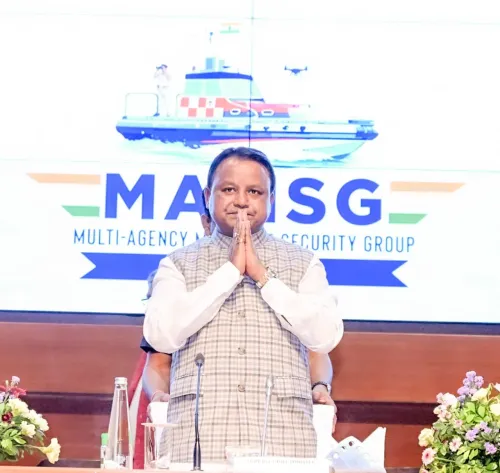
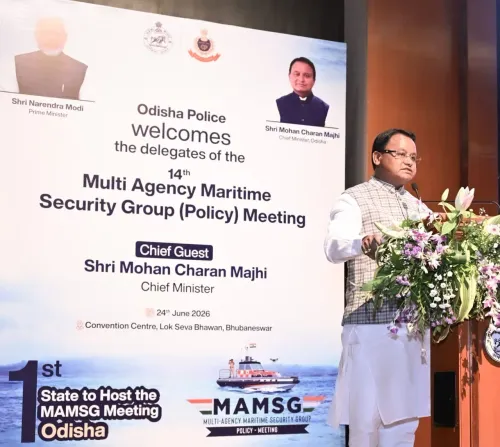
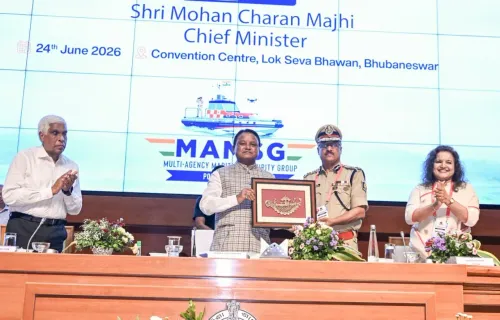
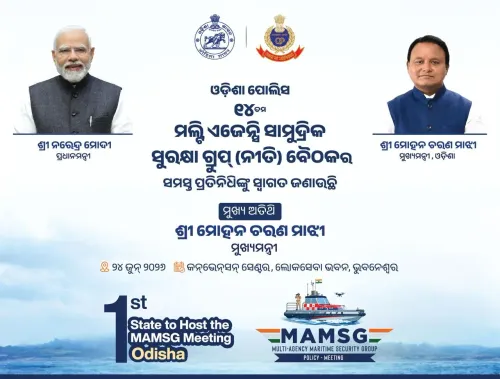
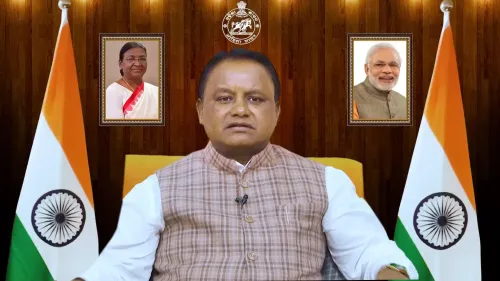
The Chief Minister's Office of Odisha announced on Wednesday, 24 June 2026, that Chief Minister Mohan Charan Majhi inaugurated the 14th Multi Agency Maritime Security Group (Policy) meeting in Bhubaneswar, underscoring the state's commitment to blue economy, coastal security, and modern maritime infrastructure.
Context
Addressing the gathering, CM Majhi declared that 'our ocean is not merely a geographical boundary — it is a gateway to opportunity, prosperity, and global partnership.' He further stated that maritime trade and security form 'the cornerstone of comprehensive progress,' signalling Odisha's intent to position itself as a front-runner in India's maritime governance framework. The Multi Agency Maritime Security Group (Policy), commonly referred to as MAMSG(P), is an inter-agency body that coordinates policy on maritime security among central and state stakeholders across India. The 14th edition of this meeting being hosted in Bhubaneswar reflects the growing strategic importance of coastal states in national security deliberations.Policy Backdrop
The meeting sits within India's broader SAGAR (Security and Growth for All in the Region) vision, articulated in 2015, which seeks to integrate maritime security with economic cooperation across the Indian Ocean region. The framework encourages coastal states to align their port development and coastal surveillance capacities with national security objectives. Odisha is home to major ports including Paradip Port, one of India's largest cargo-handling facilities, and has consistently featured in discussions on port-led development. The state's participation in the MAMSG(P) mechanism reflects the decentralised approach India has adopted for implementing coastal security infrastructure.Stakeholders and Impact
The meeting brings together maritime security agencies, port authorities, and coastal state representatives. For Odisha, the stakes are significant: the state government has reiterated its commitment to advancing the blue economy — encompassing fisheries, offshore energy, shipping, and marine tourism — alongside strengthening coastal surveillance. CM Majhi's remarks about carrying forward 'Odisha's rich maritime heritage' signal an effort to weave historical identity into contemporary policy, lending political momentum to infrastructure and security investments along the state's coastline. Fishing communities, port workers, and coastal residents stand to be directly affected by any policy decisions emerging from the deliberations.What's Next
Attention will now turn to the outcomes and recommendations of the 14th MAMSG(P) meeting, particularly any decisions relating to Odisha's maritime infrastructure projects, coastal surveillance upgrades, or blue economy initiatives. The meeting's conclusions are expected to feed into the broader national maritime security architecture, with implementation responsibilities likely to be shared between the state government and central agencies.Point of View
A dual framing that has become standard in coastal state politics. The invocation of Odisha's maritime heritage adds a cultural legitimacy to what is essentially a technocratic coordination exercise. Taken together, this positions the Majhi administration as an active participant in India's Indian Ocean ambitions, not merely a passive recipient of central policy.
NationPress
24 Jun 2026
Frequently Asked Questions
What is the Multi Agency Maritime Security Group (Policy) meeting?
The Multi Agency Maritime Security Group (Policy), or MAMSG(P), is an inter-agency body that coordinates maritime security policy among central ministries, state governments, port authorities, and security agencies across India. It meets periodically to align coastal security frameworks and blue economy strategies.
Why was the 14th MAMSG(P) meeting held in Bhubaneswar?
Bhubaneswar, the capital of Odisha, hosted the 14th edition of the meeting, reflecting the state's strategic importance as a major coastal state with significant port infrastructure including Paradip Port and a stated focus on maritime security and blue economy development.
What did CM Mohan Majhi say at the maritime security meeting?
CM Mohan Charan Majhi stated that the ocean is 'not merely a geographical boundary but a gateway to opportunity, prosperity, and global partnership,' and called maritime trade and security the 'cornerstone of comprehensive progress.' He also reaffirmed the state government's commitment to the blue economy and coastal security.
What is India's SAGAR vision and how does it relate to this meeting?
SAGAR stands for 'Security and Growth for All in the Region,' a vision articulated in 2015 to integrate maritime security with economic cooperation in the Indian Ocean region. The MAMSG(P) meetings are part of the institutional mechanism that helps implement this vision at the state level.
What is Odisha's blue economy focus?
Odisha's blue economy agenda encompasses fisheries, offshore energy, shipping, marine tourism, and coastal infrastructure development. The state government has committed to modernising maritime infrastructure and strengthening coastal surveillance as part of this broader economic strategy.