CM Majhi: Odisha Evacuates Coastal Residents Ahead of Cyclone
Synopsis
Odisha Chief Minister Mohan Charan Majhi confirmed on 19 November 2026 that residents from vulnerable coastal areas are being evacuated to cyclone shelters, with free cooked meals, medicines, and essential supplies being distributed ahead of an approaching cyclone.
Key Takeaways
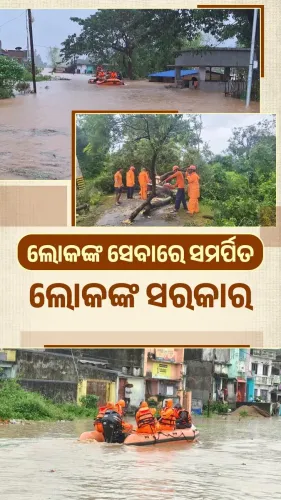
Evacuations underway: Residents from vulnerable coastal areas in Odisha are being moved to shelter centres ahead of a possible cyclone.
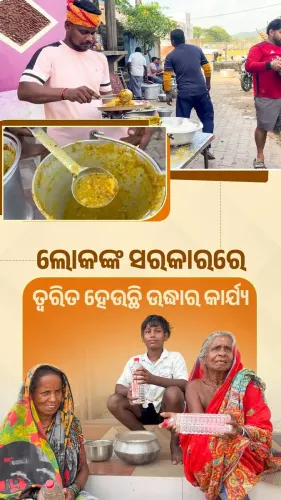
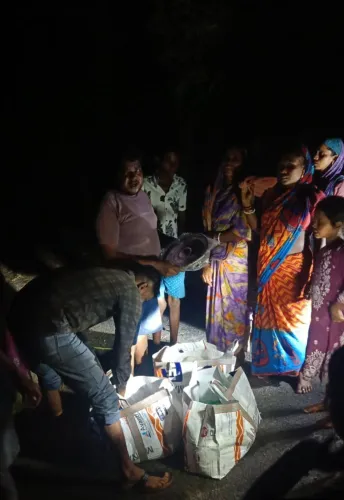
Free cooked meals are being provided at all shelter centres during the emergency, alongside medicines and other essential supplies.
Odisha has a world-recognised cyclone response framework built after the 1999 Super Cyclone that killed over 10,000 people .
During Cyclone Fani (2019) , Odisha evacuated more than 1.2 million people within 48 hours, setting the template still in use today.
CM Mohan Charan Majhi posted the update in both Odia and English, signalling active state-level coordination.
The India Meteorological Department's cyclone trajectory data will determine the full scale and duration of relief operations.
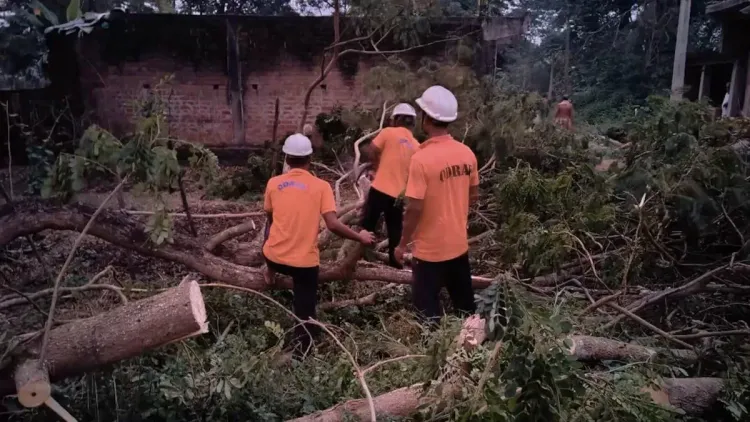
With a cyclone bearing down on Odisha's coast, Chief Minister Mohan Charan Majhi confirmed on Thursday, 19 November 2026 that the state machinery is in full emergency mode — evacuating residents from vulnerable areas to shelter centres and ensuring free cooked meals, medicines, and essential supplies reach everyone inside.
Posting in both Odia and English, Majhi stated: 'People from vulnerable areas are being safely evacuated to shelter centres ahead of the possible cyclone. Free cooked meals, medicines and other essential facilities are being provided to ensure their safety and well-being during the emergency.'
A State Hardwired for Cyclone Response
Odisha's response playbook did not write itself overnight. The 1999 Super Cyclone killed more than 10,000 people and left the state in ruins — a catastrophe that forced a fundamental rethinking of disaster governance. What followed was one of India's most systematic rebuilds of emergency infrastructure: a dense network of multipurpose cyclone shelters, early warning protocols, and community-level evacuation drills that now activate automatically when the Bay of Bengal stirs.
The benchmark that defined the new Odisha was Cyclone Fani in May 2019, when authorities evacuated more than 1.2 million people in under 48 hours — an operation that drew international attention and was widely cited as a model for low-casualty cyclone response. Coordinated relief inside shelters, including cooked meals and medical aid, was central to that effort. The pattern Majhi described on Thursday maps precisely onto that established protocol.
Shelter Centres as the Front Line
The emphasis on free cooked food is not a small detail. In past evacuations, the breakdown of nutrition and sanitation inside shelters — not the storm itself — has been a secondary source of suffering. By flagging meal distribution explicitly, the administration is signalling that provisioning pipelines are live before the cyclone makes landfall, not scrambled together after.
Successive Odisha governments, across party lines, have treated this preparedness architecture as non-negotiable. The current BJP administration under Majhi — in office since the 2024 state assembly elections — has continued and built on that institutional continuity. Thursday's communication is consistent with the state's standard operating procedure of real-time public updates during cyclone emergencies, keeping coastal communities and their families informed as conditions evolve.
The India Meteorological Department's tracking of the system's precise trajectory, intensity, and expected landfall timing will determine how long shelter operations run and how many additional resources are mobilised. For now, the state's pre-emptive machinery is already turning — and in Odisha, that early start has historically been the difference between catastrophe and survival.
Point of View
Effective cyclone management carries political as well as humanitarian weight. How the state handles casualty figures and shelter conditions in the days ahead will be the true measure of whether institutional preparedness has been fully preserved under the new dispensation.
NationPress
19 Nov 2026
Frequently Asked Questions
What is Odisha doing to prepare for the cyclone in November 2026?
Odisha is evacuating residents from vulnerable coastal areas to shelter centres and providing free cooked meals, medicines, and other essential supplies to those displaced, as confirmed by Chief Minister Mohan Charan Majhi on 19 November 2026.
Which cyclone is approaching Odisha in 2026?
The specific name and intensity of the approaching cyclone had not been officially confirmed at the time of CM Majhi's post. The state administration referred to it as a 'possible cyclone' and activated evacuation protocols as a precaution.
How has Odisha handled cyclones in the past?
Odisha built a comprehensive cyclone response system after the devastating 1999 Super Cyclone that killed over 10,000 people. During Cyclone Fani in 2019, the state evacuated more than 1.2 million people within 48 hours, a widely praised operation that became a national model.
Who is Odisha Chief Minister Mohan Charan Majhi?
Mohan Charan Majhi is a BJP leader who became Chief Minister of Odisha following the 2024 state assembly elections, when the BJP ended the long tenure of the Biju Janata Dal in the state.
Are cyclone shelters in Odisha equipped with food and medicine?
Yes. Odisha's cyclone shelters are designed as multipurpose facilities, and the state's standard operating procedure includes distributing free cooked meals and medicines during emergencies, as is currently being done ahead of the November 2026 cyclone threat.