CM Majhi Unveils Odisha's Revamped Semiconductor Policy
Synopsis
Odisha's cabinet has approved the third amendment to its Semiconductor Manufacturing and Fabless Policy, offering a 25% additional capital expenditure incentive for ISM-approved projects and new supply-chain incentives, as CM Mohan Charan Majhi bids to position the state as a chip-industry destination.
Key Takeaways
The Odisha state cabinet approved the third amendment to the Odisha Semiconductor Manufacturing and Fabless Policy on 14 August 2026 .
The revised policy is aligned with the central government's India Semiconductor Mission 2.0 (ISM 2.0) .
ISM-approved projects will receive 25% additional financial support on eligible capital expenditure.
New incentives cover semiconductor equipment, specialty gases, advanced materials, and supply-chain sectors.
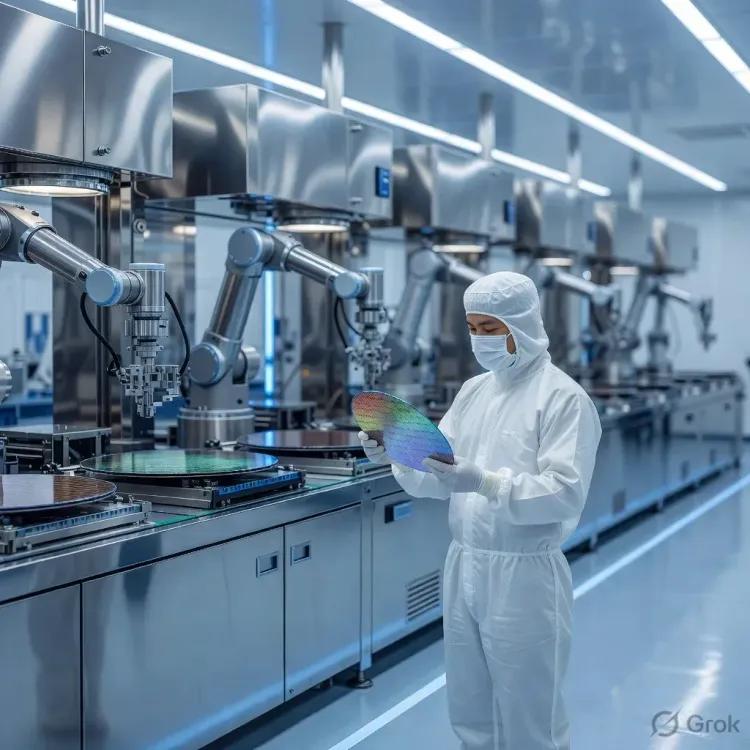
The policy targets fabrication, OSAT/ATMP , display manufacturing, and fabless chip design segments.
CM Mohan Charan Majhi linked the move to the Atmanirbhar Bharat goal of high-value employment and domestic manufacturing self-reliance.
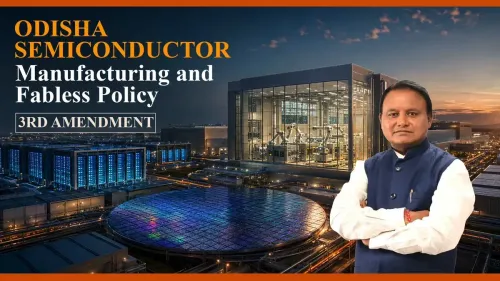
Odisha has staked its claim in the global chip race. Odisha Chief Minister Mohan Charan Majhi announced on 14 August 2026 that the state cabinet has approved the third amendment to the Odisha Semiconductor Manufacturing and Fabless Policy, opening a new chapter for the state in one of the world's most strategically contested industries.
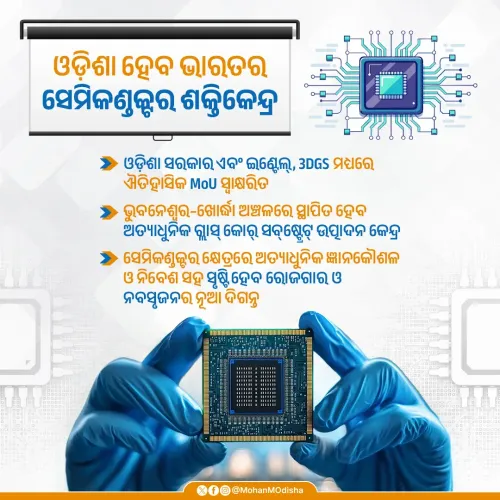
Posting in Odia, CM Majhi declared: 'ସେମିକଣ୍ଡକ୍ଟର ଶିଳ୍ପରେ ଓଡ଼ିଶାର ନୂଆ ଯାତ୍ରା ଆରମ୍ଭ ହୋଇଛି' — 'Odisha's new journey in the semiconductor industry has begun.' The revised policy is aligned with the central government's India Semiconductor Mission 2.0 (ISM 2.0) and targets four high-value segments: semiconductor fabrication, OSAT/ATMP (outsourced semiconductor assembly, testing, marking, and packaging), display manufacturing, and fabless chip design.
The 25% Incentive That Changes the Math for Investors
The headline number in the amendment is a 25% additional financial support on eligible capital expenditure for projects already approved under the ISM framework. Beyond that top-up, the policy introduces fresh incentive structures for the semiconductor supply chain — covering specialised equipment, specialty gases, advanced materials, and logistics. These are the unglamorous but mission-critical inputs that determine whether a fab ecosystem actually takes root or remains a paper promise.
Together, the measures are designed to make Odisha a more compelling destination for investors who are already being courted by rival states. The chief minister framed it explicitly as a step toward Atmanirbhar Bharat — India's national self-reliance drive — promising 'large-scale investment, high-value employment, and the fulfilment of Atmanirbhar Bharat goals.'
Where Odisha Fits in India's Chip Ambitions
The backstory matters here. In December 2021, the Union Cabinet approved the original India Semiconductor Mission with an outlay of Rs 76,000 crore to seed fabrication, assembly, and design capabilities across India. Between 2023 and 2024, the central government gave in-principle approvals to semiconductor projects in Gujarat, Assam, and Tamil Nadu — states that moved early and aggressively to align their own policies with ISM incentives.
Odisha is now making the same calculated move, with this third amendment sharpening the state's offer at a moment when global supply chains are actively diversifying away from Taiwan and China. Several Indian states have revised their semiconductor policies for exactly this reason — the window is open, and it will not stay open indefinitely.
High-Value Jobs and the ST Community's First CM
CM Majhi, who took office in June 2024 as the first Chief Minister from the Scheduled Tribe community in Odisha's history, has positioned industrial investment as central to his administration's agenda. A semiconductor ecosystem — if it materialises — would represent some of the highest-skill, highest-wage manufacturing employment a state can attract, a meaningful shift for a state economy historically anchored in mining, steel, and agriculture.
The real test comes next: whether the revised incentives draw firm MoUs, project proposals, or ISM approvals that translate the cabinet resolution into ground-level investment. Odisha has fired its shot — now the industry responds.
Point of View
Essentially telling them that Odisha will sweeten the deal beyond what New Delhi offers. For CM Majhi, whose administration is just over two years old, landing a marquee semiconductor project would be a defining industrial achievement. The broader pattern — states racing to align with central ISM frameworks — reflects how India's chip ambitions are increasingly being executed through competitive state-level policy rather than top-down central planning alone.
NationPress
14 Aug 2026
Frequently Asked Questions
What is the Odisha Semiconductor Manufacturing and Fabless Policy?
It is Odisha's state-level policy framework designed to attract investment in semiconductor fabrication, chip design, display manufacturing, and assembly and testing. The cabinet approved its third amendment on 14 August 2026.
What is the 25% incentive announced in Odisha's semiconductor policy?
The amended policy offers 25% additional financial support on eligible capital expenditure for projects that have already received approval under the central India Semiconductor Mission (ISM), on top of existing central incentives.
What is India Semiconductor Mission 2.0 (ISM 2.0)?
ISM 2.0 is the central government's updated initiative under MeitY to develop domestic semiconductor manufacturing, assembly, testing, and design capabilities, building on the original Rs 76,000 crore ISM approved in December 2021.
Which sectors does Odisha's revised semiconductor policy cover?
The policy covers semiconductor fabrication, OSAT/ATMP (outsourced assembly, testing, marking, and packaging), display manufacturing, fabless chip design, and the supporting supply chain including equipment, specialty gases, and advanced materials.
How does Odisha's semiconductor move compare to other Indian states?
Gujarat, Tamil Nadu, and Assam have already attracted central ISM project approvals. Odisha's third policy amendment is a direct attempt to compete with these states by offering sharper incentives at a time when global chip supply chains are diversifying away from Taiwan and China.