CM Majhi unveils Sarala Devi statue at Odisha Assembly
Synopsis
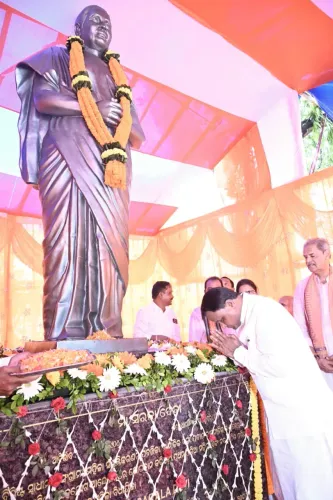
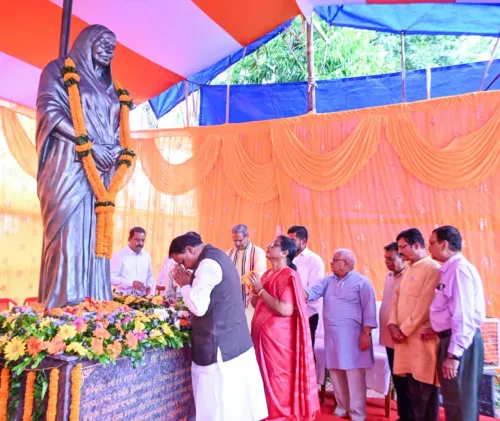
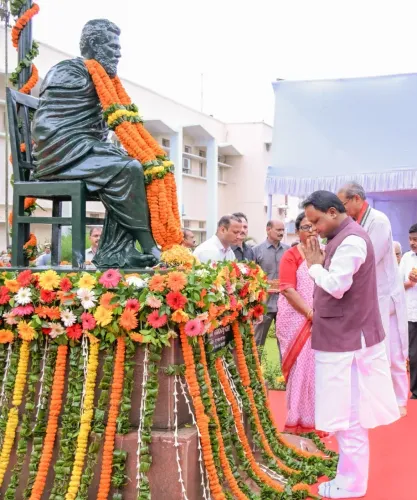
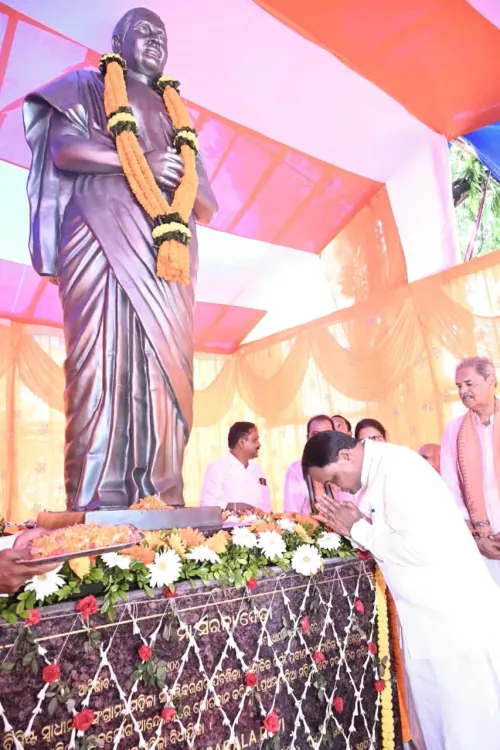
Chief Minister Mohan Charan Majhi unveiled a statue of Sarala Devi — freedom fighter and Odisha's first woman legislator — near the Odisha Legislative Assembly in Bhubaneswar on 9 August 2026, formally anchoring her dual legacy to the institution she helped pioneer.
Key Takeaways
CM Mohan Charan Majhi unveiled the statue of Sarala Devi near the Odisha Legislative Assembly in Bhubaneswar on 9 August 2026 .
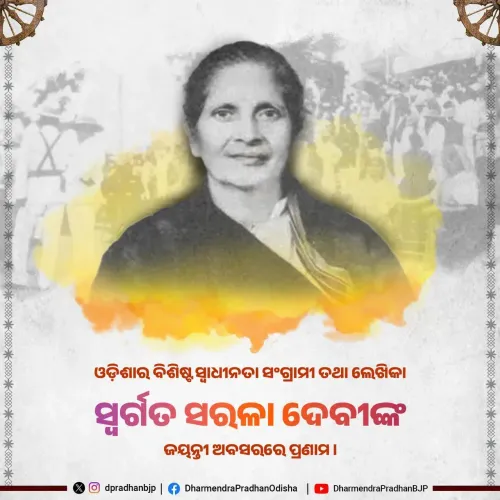
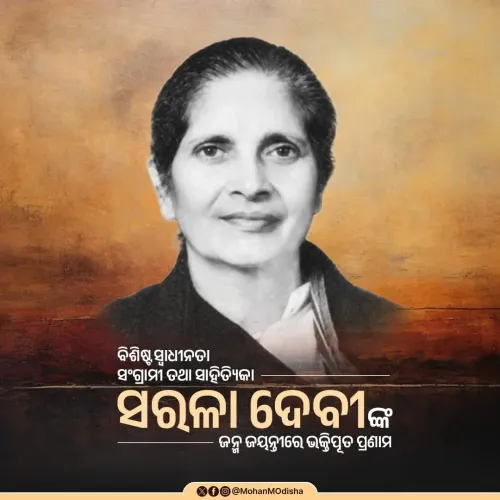
Sarala Devi (1904–1986) was a prominent freedom fighter and the first woman elected to the Odisha Legislative Assembly in the pre-independence era.
The Odisha Legislative Assembly was established in 1936 , giving Sarala Devi's election historic significance.
The BJP government under CM Majhi , in office since June 2024 , has emphasised commemorating Odisha's contributions to the national independence movement.
The unveiling falls close to Independence Day , amplifying its symbolic connection to the freedom struggle.
She fought for India's freedom and then walked into the Odisha Legislative Assembly as its first woman member — and now, decades later, Sarala Devi stands in bronze outside the very institution she helped pioneer. Chief Minister Mohan Charan Majhi unveiled a statue of the freedom fighter and legislator near the Odisha Legislative Assembly in Bhubaneswar on Sunday, 9 August 2026, marking a formal act of state recognition for one of Odisha's most consequential women in public life.
From the independence movement to the Assembly floor
Sarala Devi (1904–1986) occupies a singular place in Odia history: a freedom fighter who translated her activism into electoral politics, becoming the first woman elected to the Odisha Legislative Assembly in the pre-independence era. Her dual legacy — as a participant in the national liberation struggle and as a trailblazer in Odisha's early democratic life — makes her a figure who bridges two defining chapters of modern India.
The Odisha Legislative Assembly itself, established in 1936, predates independence, giving Sarala Devi's election a particular historical weight. To have broken into that chamber at a time when women's political participation was the exception rather than the rule marks her as a figure well beyond regional footnote.
A statue outside the chamber she entered first
Placing the memorial at the Assembly premises is a deliberate choice. Statue unveilings at legislative buildings in India carry symbolic freight: they anchor a figure's legacy to the institution itself, ensuring that every legislator and visitor confronts that history in a physical, unavoidable way. For Sarala Devi, whose claim to the Assembly is literally foundational, the location is fitting rather than incidental.
Odisha governments across administrations have periodically installed memorials for freedom fighters at public sites, but the BJP government that took office under CM Majhi in June 2024 has placed renewed emphasis on highlighting Odisha's contributions to the national independence movement. This unveiling continues that pattern, and the choice of a woman pioneer adds a specific resonance to the gesture.
Why Sarala Devi's recognition matters now
India's political landscape has grown increasingly attentive to the histories of women who shaped its democratic foundations — figures who were often overlooked in the male-dominated narratives of the freedom struggle. Sarala Devi's formal memorialisation at the seat of Odisha's legislature places her squarely in that corrective frame. Her statue is not just a tribute; it is an argument about whose contributions the state chooses to remember.
The unveiling also arrives close to Independence Day, a timing that amplifies its resonance and connects Sarala Devi's personal history to the broader national commemoration of 1947.
Odisha now has a permanent, public answer to the question of who its first woman legislator was — and it stands in stone outside the chamber she entered first.
Point of View
In this case, women's contributions. For CM Majhi, the gesture serves both a historical corrective purpose and a contemporary political one: linking his administration to Odisha's proudest democratic firsts. The timing near Independence Day is unlikely to be accidental, and the Assembly location ensures the tribute carries institutional permanence rather than the transience of a ceremony. Whether similar memorials follow for other overlooked Odia figures will reveal how systematic, rather than selective, this commemorative push truly is.
NationPress
9 Aug 2026
Frequently Asked Questions
Who was Sarala Devi of Odisha?
Sarala Devi (1904–1986) was an Odia freedom fighter and writer who became the first woman elected to the Odisha Legislative Assembly in the pre-independence era, making her a pioneering figure in both the independence movement and Odisha's democratic history.
Where was the Sarala Devi statue unveiled?
The statue was unveiled near the Odisha Legislative Assembly in Bhubaneswar on 9 August 2026 by Chief Minister Mohan Charan Majhi.
Who is Mohan Charan Majhi?
Mohan Charan Majhi is the Chief Minister of Odisha, heading the BJP government that came to power in the state after the June 2024 assembly elections.
Who was the first woman MLA of Odisha?
Sarala Devi is recognised as the first woman elected to the Odisha Legislative Assembly, a distinction she achieved in the pre-independence era when women's political participation was extremely rare.
When was the Odisha Legislative Assembly established?
The Odisha Legislative Assembly was established in 1936, predating Indian independence, which makes Sarala Devi's election to it particularly significant in the context of early democratic participation.