CM Majhi Pledges Power, Water, Roads for Every Odisha Village
Synopsis
Odisha Chief Minister Mohan Charan Majhi marked two years in office by reaffirming his government's commitment to universal village-level electricity, clean drinking water, and all-weather roads through Mission Power, aligning state delivery with central schemes including Saubhagya, Jal Jeevan Mission, and PMGSY.
Key Takeaways
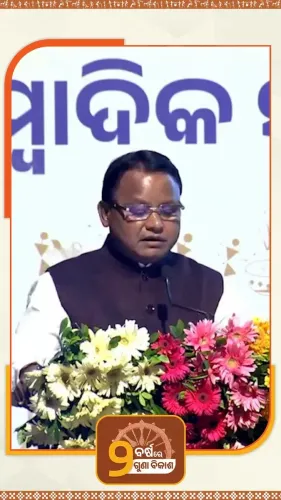
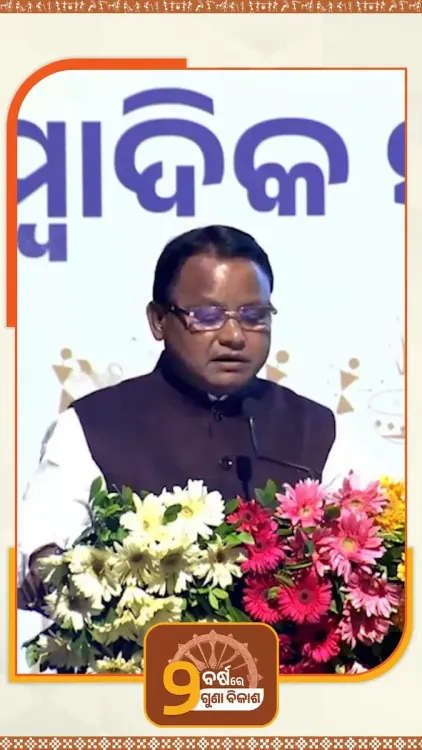
CM Mohan Charan Majhi posted on 12 June 2026 , marking two years of his government in office.
He pledged to deliver electricity, clean drinking water, and all-weather road connectivity to every village in Odisha .
Mission Power is the state-level vehicle cited for achieving saturation of basic infrastructure across all villages.
The state's approach converges with central schemes: Saubhagya (electrification), Jal Jeevan Mission (tap water), and PMGSY (rural roads).
Primary beneficiaries are rural households and village panchayats , especially in tribal and remote areas of Odisha.
Quarterly progress reports and the next Odisha assembly session's supplementary budget will indicate the pace of delivery.
Odisha Chief Minister Mohan Charan Majhi on Friday, 12 June 2026, reaffirmed his government's commitment to delivering electricity, clean drinking water, and all-weather road connectivity to every village in the state, invoking Mission Power as the vehicle for achieving saturation of basic infrastructure across Odisha.
Context
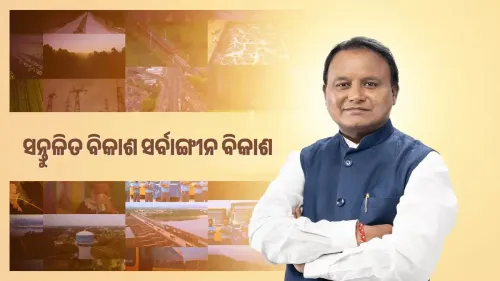
Posting in Odia, CM Majhi declared: 'ବିକାଶର ମୂଳଦୁଆ ହେଉଛି ମୌଳିକ ସୁବିଧା' ('Basic amenities are the foundation of development'). He stated that his government is 'firmly resolved' to ensure electricity, safe drinking water, and all-season road access reach every village, and that work under Mission Power is 'progressing rapidly' toward that goal. The post was tagged with the hashtags #2YearsofLokankaSarakar and #BikasharaDharaOdishaSara, marking two years of his administration.
Policy Backdrop
Majhi took office in June 2024 after the BJP won the Odisha state assembly elections, ending a two-decade rule by the Biju Janata Dal. His administration has aligned state delivery with a cluster of central government schemes: the Saubhagya scheme (launched 2017) for universal household electrification, the Jal Jeevan Mission (launched 2019) for functional tap water connections in rural homes, and the Pradhan Mantri Gram Sadak Yojana (expanded 2015) for all-weather rural road connectivity.
The convergence of these central programmes with state-level missions such as Mission Power reflects a broader pattern in BJP-governed states: measuring governance performance through last-mile delivery of basic services rather than large standalone projects. Odisha, with a substantial rural population spread across tribal and coastal geographies, has historically faced challenges in achieving full saturation of these amenities.
Stakeholders and Impact
The primary beneficiaries are rural households and village panchayats across Odisha, particularly in remote and tribal areas where infrastructure gaps remain most acute. Reliable electricity access supports livelihoods, education, and healthcare delivery, while safe drinking water reduces disease burden and all-weather roads open markets and emergency services to isolated communities.
For the Majhi government, the two-year milestone is also a political moment: the hashtag framing signals an intent to present infrastructure saturation as a measurable governance achievement ahead of future electoral cycles. Village-level coverage data from quarterly progress reports under the combined central-state schemes will be closely watched by both opposition parties and civil society.
What's Next
Progress under Mission Power and allied schemes is expected to be reflected in quarterly coverage reports on village-level electrification, water connections, and road linkages. Any supplementary budget allocations in the next Odisha assembly session could signal the scale of additional state investment being committed alongside central funds. The pace of last-mile delivery in the state's most underserved districts will be the clearest test of whether the government's 'firm resolve' translates into verifiable saturation on the ground.
Point of View
Using infrastructure saturation — electricity, water, roads — as the headline metric rather than announcing a new scheme. This reflects a BJP-wide communication strategy of framing last-mile delivery as the core proof of governance competence, a direct contrast to the project-announcement style of the preceding Naveen Patnaik era. The invocation of Mission Power alongside established central schemes signals an attempt to claim credit for convergence outcomes at the state level. Whether the government can demonstrate verifiable village-level coverage data will determine how durable this political narrative proves to be.
NationPress
26 Oct 2026
Frequently Asked Questions
What is Mission Power in Odisha?
Mission Power is a state-level initiative of the Odisha government under Chief Minister Mohan Charan Majhi aimed at ensuring basic infrastructure — electricity, clean drinking water, and all-weather roads — reaches every village in the state. Specific operational details and launch metrics are yet to be officially published in a verifiable public record.
What did Odisha CM Mohan Majhi announce on 12 June 2026?
CM Mohan Charan Majhi reaffirmed on 12 June 2026 that his government is firmly committed to delivering electricity, safe drinking water, and all-season road connectivity to every village in Odisha, citing Mission Power as the vehicle for this effort.
Which central government schemes support rural infrastructure in Odisha?
Three central schemes underpin rural infrastructure delivery in Odisha: the Saubhagya scheme for household electrification (2017), the Jal Jeevan Mission for rural tap water connections (2019), and the Pradhan Mantri Gram Sadak Yojana for all-weather rural roads (expanded 2015).
How long has Mohan Charan Majhi been Chief Minister of Odisha?
Mohan Charan Majhi became Chief Minister of Odisha in June 2024 after the BJP won the state assembly elections, completing two years in office as of June 2026.
What does #2YearsofLokankaSarakar mean?
The hashtag translates roughly as 'two years of the people's government' in Odia, used by CM Majhi and the BJP to mark the second anniversary of his administration and highlight governance achievements including rural infrastructure delivery.