CM Manik Saha highlights 33% job quota and free scooter scheme for Tripura women
Synopsis
Tripura Chief Minister Dr. Manik Saha says a 33% women's reservation in government jobs and a free scooter scheme for meritorious female college students are producing more job offers and greater enthusiasm for higher education among women in the state.
Key Takeaways
Tripura's BJP-led government has implemented a 33% reservation in state government jobs for women to close the gender gap in formal employment.
A free scooter scheme targets meritorious female college students to remove mobility barriers and boost higher-education enrollment.
Manik Saha says both schemes are already yielding results — more job offers for eligible women and increased interest in higher studies.
Tripura's approach mirrors a broader national trend of states raising women's quotas in public recruitment to 33% or higher .
The policy architecture draws on the precedent of the 73rd Constitutional Amendment (1992) , which mandated women's reservation in Panchayati Raj bodies.
Annual recruitment notifications and education department enrollment figures will be the key indicators of real-world impact.
Two concrete policy levers — a 33% reservation in government jobs and a free scooter scheme for meritorious female college students — are now driving measurable gains for women in Tripura, according to Chief Minister Dr. Manik Saha, who outlined the state's gender-welfare push on Wednesday, 14 October 2026.
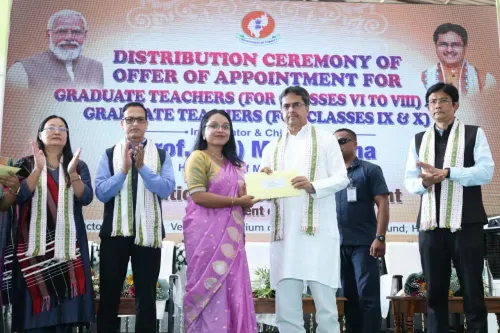
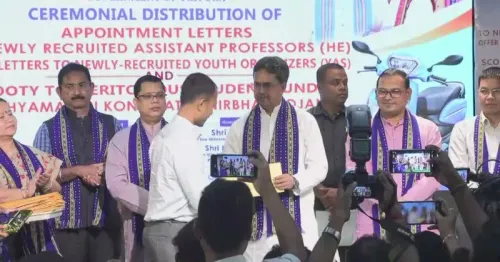
Writing in Bengali, the Chief Minister stated: 'নারী শক্তিকে যাতে আরো বেশি শক্তিশালী করা যায়' — 'so that women's power can be made even stronger' — the government is implementing various schemes, including the one-third job reservation. As a result, he said, more eligible women are receiving job offers than before, while academically bright college girls are receiving free scooters and becoming more motivated to pursue higher education.
One-third of government posts, reserved for women
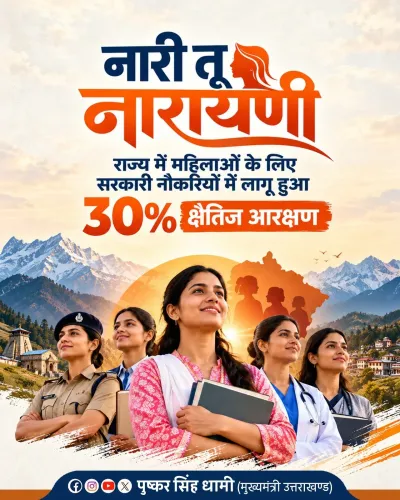
The 33% reservation in state government employment is the centrepiece of Tripura's women-empowerment framework under the BJP-led administration that has governed the northeastern state since 2018. The policy directly addresses Tripura's gender gap in formal employment by guaranteeing a fixed share of recruitment for women across public-sector postings. The constitutional precedent runs deep: the 73rd Constitutional Amendment of 1992 had already mandated 33% reservation for women in Panchayati Raj institutions nationwide, and several states have since extended analogous quotas to broader public-sector hiring.
Tripura is not alone. Across India, multiple state governments have introduced or raised women's quotas in public recruitment to 33% or above, responding to persistent data showing women remain underrepresented in formal employment relative to their share of the population.
Free scooters as a bridge to higher education
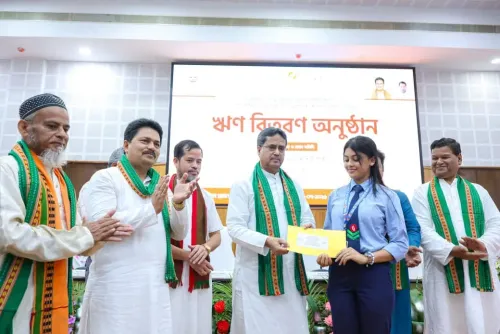
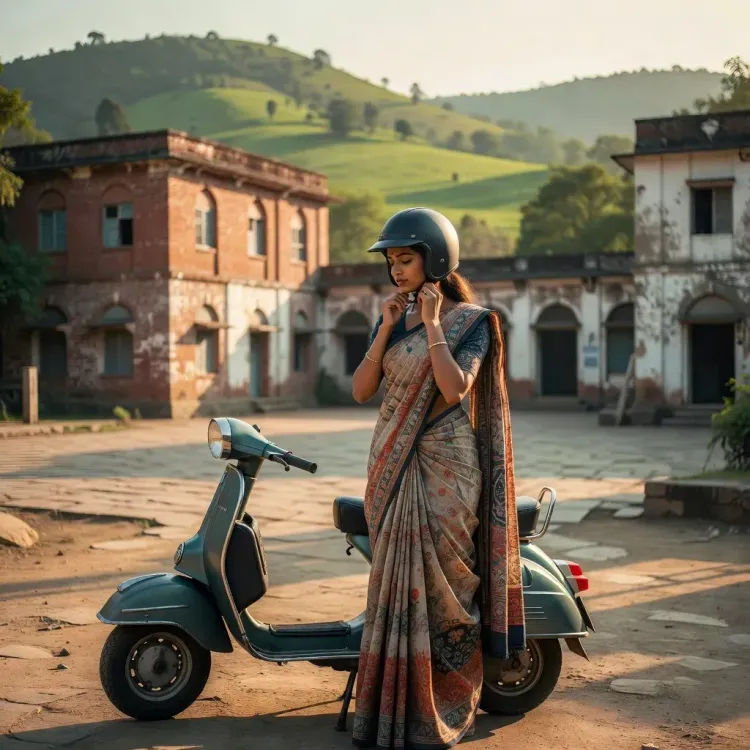
The second initiative — distributing free scooters to meritorious female college students — targets a different barrier: mobility. In a hilly, dispersed geography like Tripura's, the distance between home and a higher-education institution can quietly end a promising student's academic journey. A scooter changes that calculus. Several other Indian states have run parallel mobility-support schemes for female students with the same logic: remove the commute obstacle and enrollment numbers follow.
Dr. Saha's post frames the two schemes as complementary — one creating opportunity at the entry point of the workforce, the other sustaining the pipeline of educated women who will eventually fill those posts. Whether the state's recruitment notifications and education department reports will confirm the trend the Chief Minister describes is the metric to watch in the months ahead.
Tripura's women-welfare push in a national frame
State-level action on women's employment and education has accelerated across India in recent years, often driven by competitive federalism — states watching each other's gender-inclusion metrics and raising their own benchmarks. For Tripura, a small northeastern state with limited industrial depth, the public sector remains the primary formal employment avenue. Making one-third of those posts accessible only to women is, in that context, a significant structural commitment — not a symbolic gesture.
The scooter scheme adds a social signalling dimension too: it tells families that the state will co-invest in a daughter's education. That message, repeated in recruitment cycles and graduation cohorts, compounds over time.
Point of View
Visible benefit (a free scooter) to signal that women's empowerment is both principled and practical. For the BJP in Tripura, anchoring this messaging before any upcoming electoral cycle reinforces the party's 'double engine government' narrative — centre and state acting in tandem on women's welfare. The broader arc is clear: with the Women's Reservation Act 2023 at the national level still awaiting delimitation for full implementation in legislatures, state-level executive action on jobs and education is filling the political and policy vacuum, making CMs the visible face of gender inclusion.
NationPress
14 Oct 2026
Frequently Asked Questions
What is the 33% women's job reservation in Tripura?
The Tripura government has reserved one-third (33%) of state government posts exclusively for women to increase their participation in formal employment and reduce gender disparity in the public sector workforce.
Who is eligible for the free scooter scheme in Tripura?
The free scooter scheme targets meritorious female college students in Tripura, providing them with scooters at no cost to ease commuting challenges and encourage continued pursuit of higher education.
What did Tripura CM Manik Saha say about women's empowerment?
On 14 October 2026 , CM Dr. Manik Saha stated that through the 33% job reservation and the free scooter scheme, more eligible women are now receiving job offers and college girls are showing greater interest in higher studies.
Is 33% women's reservation in government jobs unique to Tripura?
No. Several Indian states have introduced or raised women's quotas in public-sector recruitment to 33% or higher . The constitutional precedent dates to the 73rd Amendment of 1992 , which mandated 33% reservation for women in Panchayati Raj institutions.
How does the free scooter scheme help female students in Tripura?
In Tripura's hilly, dispersed geography, distance from educational institutions is a significant barrier. The free scooter scheme addresses this mobility barrier , enabling female students to attend college more easily and reducing dropout rates at the higher-education stage.