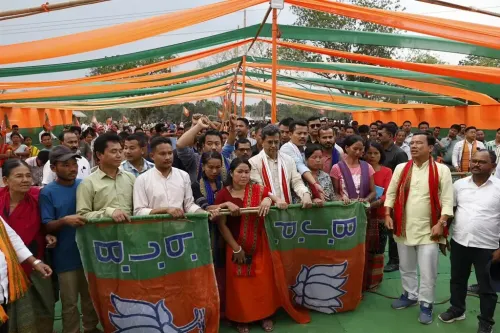
CM Manik Saha inaugurates organic farming workshop in Tripura
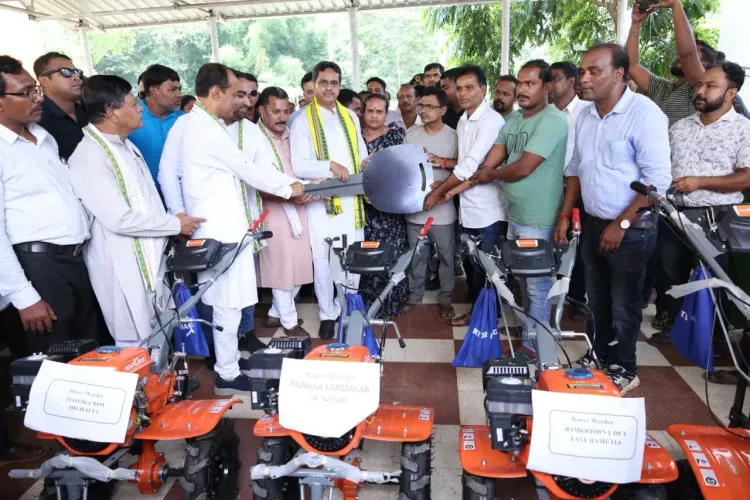
Synopsis
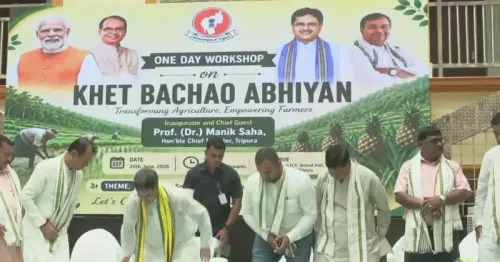
Tripura Chief Minister Dr. Manik Saha inaugurated a one-day sustainable agriculture workshop at Bamutia Berimura School on 26 June 2026, under the central government's Khet Bachao Abhiyan campaign, urging farmers to move beyond chemical-dependent farming toward bio-energy-based, responsible cultivation.
Key Takeaways
Manik Saha attended the inaugural session of a one-day organic farming workshop at Bamutia Berimura School in Tripura on 26 June 2026 .
The event is part of the Khet Bachao Abhiyan , a Government of India initiative to promote sustainable, bio-energy-based agriculture.
Saha framed the shift away from chemical farming as a matter of responsibility and accountability to future generations, not just economic benefit.
The campaign aligns with central schemes including the Paramparagat Krishi Vikas Yojana (2015) and the Mission Organic Value Chain Development for North Eastern Region (2015) .
Tripura has been a priority state for organic farming support due to its agro-climatic conditions and the large share of its population dependent on agriculture.
Similar workshops are expected to be expanded across other districts of Tripura and potentially to neighbouring northeastern states.
Tripura Chief Minister Dr. Manik Saha on Friday, 26 June 2026, attended the inaugural session of a one-day workshop on sustainable agriculture at Bamutia Berimura School in Tripura, encouraging participating farmers to embrace organic and bio-energy-based farming practices. The event was organised as part of the 'Khet Bachao Abhiyan' (Save the Field Campaign), an initiative of the Government of India aimed at promoting sustainable, chemical-free cultivation.
Context
Posting in Bengali on X, Dr. Saha described the campaign as rooted in a sense of responsibility toward the future — not merely economic gain. He wrote: 'শুধুমাত্র অর্থনৈতিক লাভালাভের জন্য রাসায়নিক নির্ভর নয় আজকের কৃষি' ('Today's agriculture is not about chemical dependence for economic profit alone') — framing the shift toward organic methods as an act of accountability to future generations. He credited Prime Minister Narendra Modi's visionary leadership for driving this transformation in India's agrarian economy.
The workshop at Bamutia Berimura School brought together local farmers for a focused, single-day training session on bio-energy-based and sustainable agricultural techniques. Dr. Saha personally participated in the inauguration, signalling the state government's active role in implementing centrally driven agricultural reforms at the grassroots level.
Policy Backdrop
The Khet Bachao Abhiyan fits within a broader national policy direction that has, over the past decade, steadily moved away from chemical-intensive farming. The Paramparagat Krishi Vikas Yojana (PKVY), launched in 2015, laid the groundwork by promoting cluster-based organic farming and reducing chemical input dependency across Indian states.
Separately, the Mission Organic Value Chain Development for North Eastern Region, also initiated in 2015, provided dedicated support to Tripura and neighbouring northeastern states, recognising their agro-climatic suitability for organic crops. Tripura, where agriculture remains a primary livelihood for a large share of the population, has been a consistent beneficiary of these targeted central programmes.
Indian agricultural policy has increasingly linked farmer income, soil health, and environmental sustainability as interconnected national objectives — a framework that campaigns such as Khet Bachao Abhiyan seek to operationalise at the district and village level.
Stakeholders and Impact
The immediate beneficiaries are Tripura's farming communities, particularly smallholders who depend on affordable, sustainable inputs and whose soil health is directly threatened by prolonged chemical fertiliser and pesticide use. One-day workshops of this kind serve as entry points, equipping farmers with knowledge about bio-energy inputs and organic certification pathways.
Organic agriculture practitioners and state agricultural extension officers are also key stakeholders, as the success of cluster-based organic transitions depends heavily on consistent technical support and market linkages. The northeastern region's organic produce has growing export and domestic market potential, making farmer skilling a strategic economic priority as well as an environmental one.
What's Next
The Bamutia Berimura workshop is expected to be one of several such sessions rolled out across Tripura's districts under the Khet Bachao Abhiyan framework. Expansion of similar cluster-formation activities to other northeastern states could follow, given the region's shared agro-climatic profile and existing central scheme infrastructure. The broader test will be whether these awareness-level interventions translate into measurable reductions in chemical input use and verifiable growth in certified organic acreage across the state.
Point of View
Not just policy, reflects a broader national narrative shift that seeks to build farmer buy-in beyond subsidy incentives. Northeastern states occupy a strategic position in India's organic farming push, given their agro-climatic advantages and relatively lower baseline chemical input use. How consistently these one-day interventions are followed up with market linkages and certification support will determine whether the campaign delivers structural change or remains symbolic.
NationPress
26 Jun 2026
Frequently Asked Questions
What is the Khet Bachao Abhiyan?
The Khet Bachao Abhiyan, or 'Save the Field Campaign,' is a Government of India initiative aimed at promoting sustainable, bio-energy-based agriculture and reducing chemical fertiliser and pesticide dependence among Indian farmers.
What happened at the Bamutia Berimura workshop on 26 June 2026?
Tripura Chief Minister Dr. Manik Saha inaugurated a one-day workshop on organic and sustainable farming at Bamutia Berimura School in Tripura, encouraging local farmers to adopt bio-energy-based agricultural practices under the Khet Bachao Abhiyan.
What central schemes support organic farming in Tripura?
The Paramparagat Krishi Vikas Yojana (2015) and the Mission Organic Value Chain Development for North Eastern Region (2015) are the primary central schemes supporting organic farming in Tripura and other northeastern states.
Why is northeastern India prioritised for organic farming schemes?
Northeastern states including Tripura have agro-climatic conditions well-suited to organic cultivation and relatively lower baseline chemical input use, making them strategic targets for India's national organic farming push.
What did CM Manik Saha say about chemical-based farming?
Dr. Saha stated that today's agriculture should not be driven by chemical dependence for economic profit alone, and that moving toward organic methods represents a responsibility and accountability toward future generations.