CM Manik Saha: Tripura Secures ₹1.21 Lakh Crore in MoUs
Synopsis
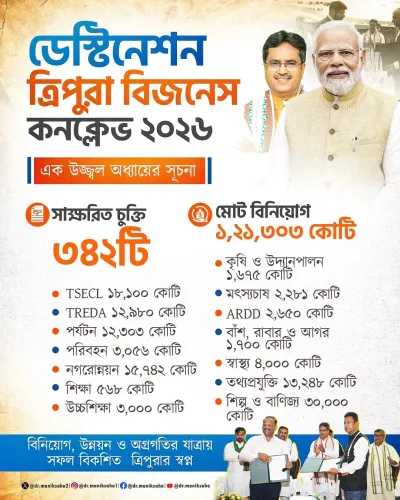
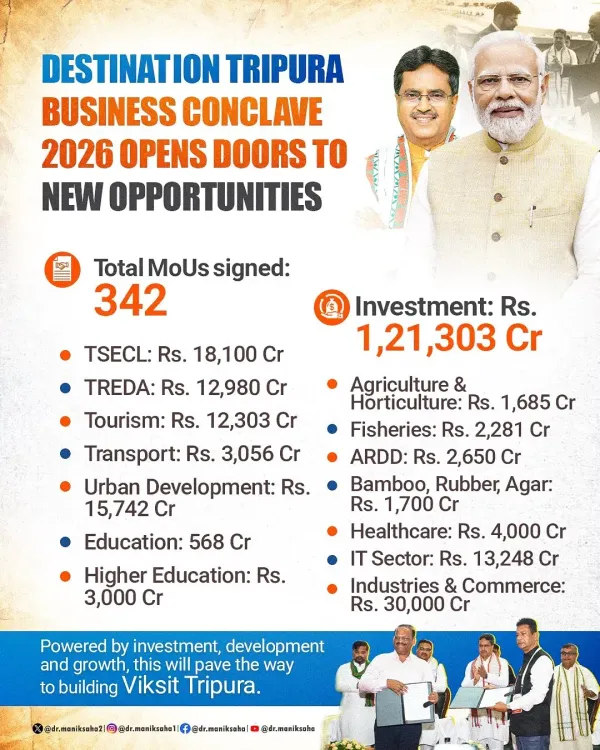
Tripura Chief Minister Dr. Manik Saha announced that the Destination Tripura Business Conclave 2026 yielded 342 MoUs worth ₹1,21,303 crore, positioning the northeastern state as a major destination for private investment under PM Modi's Viksit Bharat vision.
Key Takeaways
342 MoUs were signed at the Destination Tripura Business Conclave 2026 .
Total investment commitments stand at ₹1,21,303 crore .
The conclave is aligned with PM Narendra Modi's Viksit Bharat vision targeting a developed India by 2047 .
Manik Saha described the outcome as 'a new chapter' in Tripura's development journey.
Actual impact depends on the conversion of MoUs into on-ground projects and job creation in the state.
Northeastern India has been a focus of targeted investment and connectivity policy under the federal development framework.
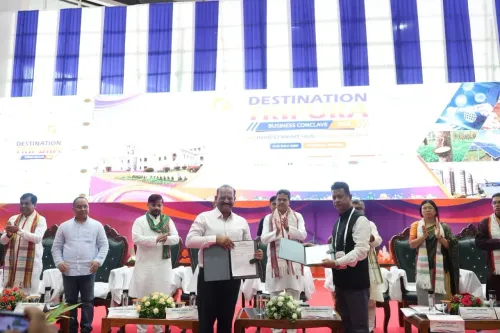
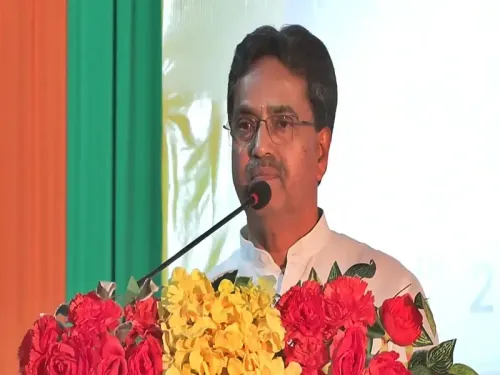
Tripura Chief Minister Dr. Manik Saha announced on Friday, 10 July 2026 that the Destination Tripura Business Conclave 2026 concluded with the signing of 342 Memorandums of Understanding (MoUs) carrying investment commitments worth ₹1,21,303 crore, marking what he described as a new chapter in the state's development journey.
Context
Posting on X, Dr. Saha stated that the conclave has 'ushered in a new chapter in the state's development journey,' with the investments framed as laying 'a strong foundation for building a Viksit Tripura.' He credited the outcomes to the guiding vision of Prime Minister Narendra Modi for a Viksit Bharat — a developed India by 2047.
The Destination Tripura Business Conclave 2026 is a state-organised investment summit designed to attract private capital into Tripura's industrial and infrastructure sectors. The event brought together investors and policymakers to formalise commitments across multiple sectors of the northeastern state's economy.
Policy Backdrop
Prime Minister Modi first articulated the Viksit Bharat vision in 2023, setting a national target of achieving developed-nation status by India's centenary of independence in 2047. State governments across India have since aligned their investment outreach programmes with this overarching framework, using investment summits as a primary instrument to mobilise private capital.
Northeastern states, including Tripura, have received targeted policy attention through connectivity upgrades and development corridors aimed at reducing the region's historical infrastructure gap with the rest of India. Investment conclaves in this context serve both an economic and a political signalling function — demonstrating that the region is open and competitive for business.
Multiple Indian states have hosted similar summits in recent years, with Uttar Pradesh, Gujarat, Tamil Nadu, and Madhya Pradesh among those recording large MoU totals. Tripura's figure of ₹1,21,303 crore across 342 MoUs represents a significant headline number for a state with a comparatively smaller economic base.
Stakeholders and Impact
If a substantial share of the committed investments materialise, they would have transformative implications for Tripura's economy, which has historically depended on agriculture, rubber, and government employment. Sectors likely to attract capital include manufacturing, logistics, tourism, and agro-processing, given the state's connectivity improvements and border trade potential with Bangladesh.
Private investors who signed MoUs at the conclave stand to benefit from state incentives, land allocation, and single-window clearance mechanisms that such events typically formalise. Workers and entrepreneurs in Tripura are the ultimate intended beneficiaries, with job creation and supply-chain development as the downstream goals.
What's Next
The critical metric going forward will be the MoU-to-project conversion rate — the share of signed commitments that translate into ground-level investment, regulatory approvals, and employment. Across Indian states, conversion rates for investment summit MoUs have historically varied widely, making implementation tracking essential.
Observers will watch whether Tripura establishes a dedicated follow-up mechanism, allocates matching state budget support, and fast-tracks land and environmental clearances to give investors confidence. The conclave's outcomes are likely to feature prominently in Dr. Saha's political messaging ahead of any forthcoming electoral cycles in the state.
Point of View
And the headline figure of ₹1,21,303 crore is calibrated to project ambition at a national scale. Framing the outcomes explicitly within PM Modi's Viksit Bharat narrative is a deliberate alignment strategy, reinforcing the BJP's governance credentials in a state where it displaced a long-entrenched left government. The real test, as with every investment summit, is implementation — northeastern states face structural challenges including logistics costs and limited domestic market depth that can slow project execution. If even a third of the committed capital is deployed, it would meaningfully alter Tripura's economic trajectory and set a benchmark for other smaller northeastern states.
NationPress
10 Jul 2026
Frequently Asked Questions
What is the Destination Tripura Business Conclave 2026?
The Destination Tripura Business Conclave 2026 is a state-organised investment summit held in Tripura to attract private capital and formalise investment commitments through MoU signings across sectors such as manufacturing, logistics, and agro-processing.
How much investment was committed at the Tripura Business Conclave 2026?
A total of ₹1,21,303 crore in investment commitments was secured through 342 MoUs signed at the Destination Tripura Business Conclave 2026, as announced by Chief Minister Dr. Manik Saha on 10 July 2026.
What is Viksit Bharat and how does it relate to Tripura's conclave?
Viksit Bharat is Prime Minister Narendra Modi's vision for India to achieve developed-nation status by 2047. The Tripura government has framed the conclave's investment outcomes as a state-level contribution to this national development goal, branding it as building a 'Viksit Tripura'.
Who is Dr. Manik Saha?
Dr. Manik Saha is the Chief Minister of Tripura and a BJP leader. A dentist by profession, he became Chief Minister in 2022 and has focused on attracting investment and aligning the state with central government development programmes.
Will the MoUs signed at the Tripura conclave actually result in real investment?
MoU conversion into actual projects depends on regulatory clearances, land allocation, and investor follow-through. Across Indian states, investment summit MoUs have historically seen varying conversion rates, and tracking implementation will be key to assessing the conclave's real impact.