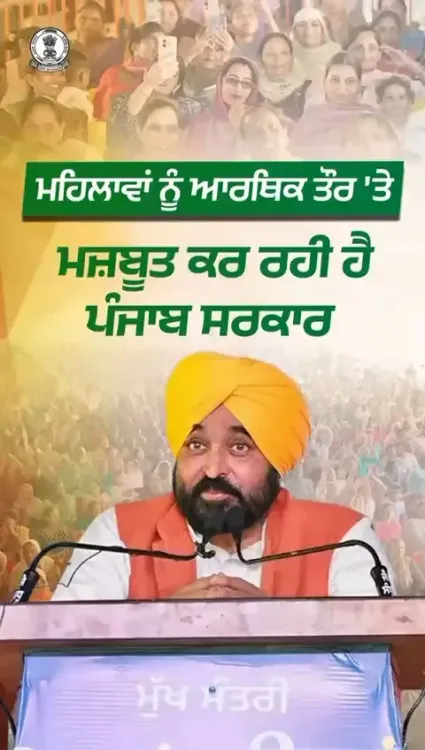
CM Mann to pay ₹51.2 cr to 1.37 lakh Satikar Sakhis
Synopsis
CM Bhagwant Mann announced ₹51.20 crore in incentives for over 1.37 lakh Satikar Sakhis and ₹25 crore for Anganwadi workers driving registration under Punjab's Mukh Mantri Maavan Dhiyan Satikar Yojana, deepening the state's community-led welfare delivery model.
Key Takeaways
1,37,723 Satikar Sakhis are actively assisting women with registration and form-filling under the Maavan Dhiyan Satikar Yojana.
Punjab government will distribute ₹51 crore 20 lakh in incentives to these Satikar Sakhis for their facilitation work.
Anganwadi workers involved in the outreach process will earn a separate ₹25 crore through the same mechanism.
The scheme, Mukh Mantri Maavan Dhiyan Satikar Yojana , provides financial assistance to eligible mothers and daughters across Punjab.
The model integrates existing ICDS Anganwadi networks with newly created Satikar Sakhis to maximise scheme enrolment at the grassroots level.
A grassroots army of over 1,37,723 women facilitators is quietly powering one of Punjab's most ambitious welfare drives — and on Monday, 2 November 2026, Chief Minister Bhagwant Mann announced they are about to be paid for it. The Chief Minister's Office of Punjab confirmed that the government will distribute ₹51 crore 20 lakh in incentives to these 'Satikar Sakhis', and a further ₹25 crore in earnings to Anganwadi workers involved in the same outreach effort.
What the Satikar Sakhis are actually doing on the ground
The Mukh Mantri Maavan Dhiyan Satikar Yojana — loosely translated as the 'Chief Minister's Mothers and Daughters Respect Scheme' — is a Punjab government programme providing financial assistance to eligible mothers and daughters across the state. Reaching every qualifying household, however, is harder than designing the scheme itself. That last-mile problem is what the Satikar Sakhis were created to solve.
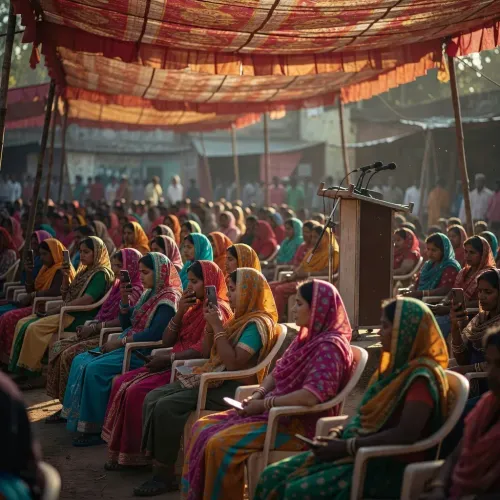
CM Mann stated that these community-level women workers are actively helping residents with registration and form-filling — the two friction points that most commonly shut out rural and semi-urban women from government benefits. With 1.37 lakh Sakhis now active, the programme has built a decentralised network that formal government machinery alone rarely achieves.
The ₹76 crore incentive disbursement — and why Anganwadi workers are in the picture
The announcement bundles two separate payouts. The ₹51.20 crore package goes directly to Satikar Sakhis as recognition of their facilitation work. Alongside them, Anganwadi workers — the frontline childcare and nutrition staff already embedded in communities under the Integrated Child Development Services framework — will earn ₹25 crore through their participation in the scheme's outreach process.
Folding Anganwadi workers into the delivery architecture is a deliberate design choice: they already have established trust in households with young children and mothers, precisely the demographic the Yojana targets. Paying both groups on a performance-linked basis sustains motivation where voluntary participation would eventually thin out.
Punjab's bet on community women as policy infrastructure
The model mirrors a growing pattern across Indian states — pairing direct benefit transfers with local facilitation networks to push enrolment numbers well beyond what awareness campaigns alone deliver. Since the Aam Aadmi Party came to power in Punjab in March 2022, the government has launched several women-focused welfare programmes, and the Maavan Dhiyan Satikar Yojana represents one of its more structurally layered attempts: rather than simply opening an online portal, it has built a paid human chain between the scheme office and the doorstep.
The immediate test is delivery. Announcing incentives and disbursing them are two different milestones — and the Satikar Sakhis' continued engagement will depend on how quickly the ₹51.20 crore actually reaches their accounts.
For over a lakh women who spent months navigating paperwork at kitchen tables across Punjab, the cheque is the proof of concept.
Point of View
Incentive-driven community facilitation. For the AAP government in Punjab, the ₹76-crore combined payout is not just a welfare expense — it is a political investment in a visible, women-led delivery network ahead of future electoral cycles. The inclusion of Anganwadi workers is strategically smart, leveraging an already-trusted institutional presence rather than building parallel structures from scratch. The real credibility test, however, is timely disbursement — delayed payments to frontline workers have undermined similar schemes in other states.
NationPress
2 Nov 2026
Frequently Asked Questions
What is the Mukh Mantri Maavan Dhiyan Satikar Yojana?
It is a Punjab government welfare scheme that provides financial assistance and support to eligible mothers and daughters in the state, with a focus on expanding beneficiary coverage through community-level outreach.
Who are Satikar Sakhis?
Satikar Sakhis are local women facilitators engaged by the Punjab government to help residents — especially women — with registration and form-filling for the Maavan Dhiyan Satikar Yojana at the grassroots level.
How much incentive will Satikar Sakhis receive from the Punjab government?
The Punjab government announced it will distribute ₹51 crore 20 lakh in incentives among the 1,37,723 Satikar Sakhis for their role in facilitating scheme registrations.
What is the role of Anganwadi workers in the Satikar Yojana?
Anganwadi workers are participating in the outreach process for the scheme alongside Satikar Sakhis and will earn ₹25 crore through this facilitation work, leveraging their existing community presence.
How many Satikar Sakhis are currently active under the Punjab scheme?
As of CM Bhagwant Mann's announcement on 2 November 2026, a total of 1,37,723 Satikar Sakhis are active and helping people with registrations and forms under the Maavan Dhiyan Satikar Yojana.