CM Mohan Yadav calls UCC 2026 historic step for women
Synopsis
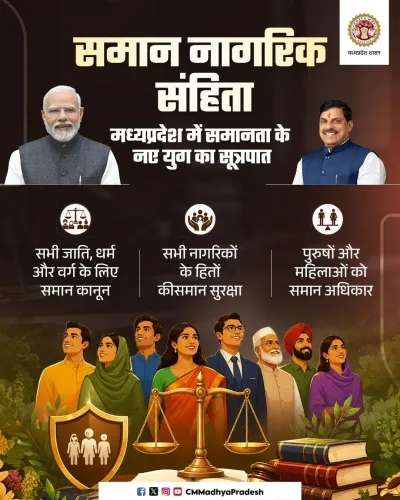
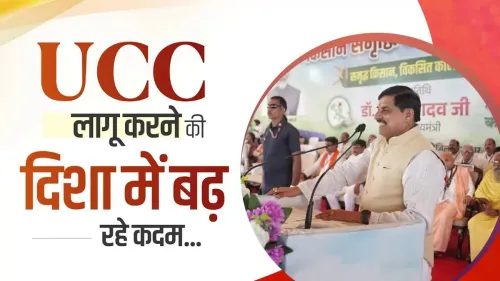
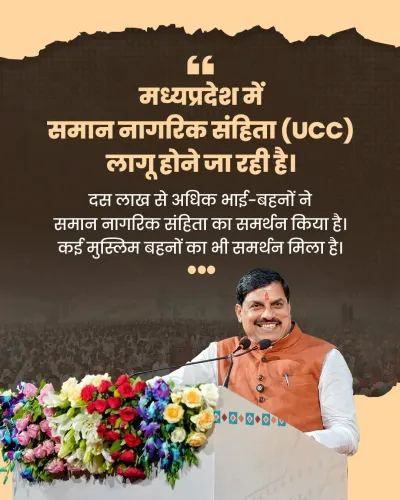
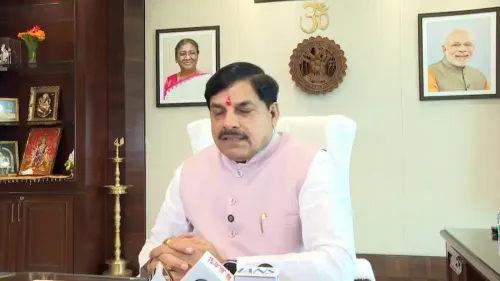
Chief Minister Dr. Mohan Yadav of Madhya Pradesh has described 'Uniform Civil Code 2026' as a historic step toward equal rights and protection for women, invoking a constitutional directive that the BJP has long championed nationally.
Key Takeaways
The Chief Minister's Office of Madhya Pradesh announced on 27 July 2026 that CM Dr.
Mohan Yadav has called the 'Uniform Civil Code 2026' a historic step for women.
The UCC aims to provide uniform personal laws on marriage, divorce, inheritance, and adoption for all citizens regardless of religion.
The initiative is framed as delivering equal rights and protection to mothers, sisters, and daughters in the state.
Article 44 of the Indian Constitution has directed the State to pursue a Uniform Civil Code since 1950 .
The BJP has included UCC as a commitment in its national manifestos since 2014 , and Madhya Pradesh is among the BJP-governed states signalling concrete action.
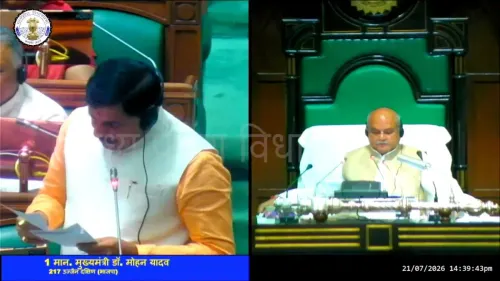
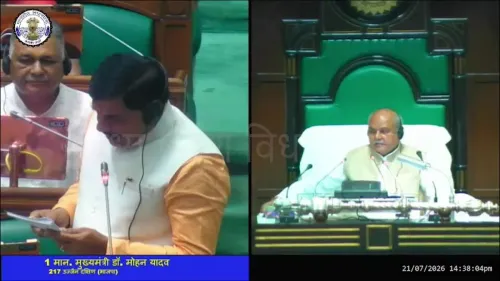
Introduction of a UCC-related bill or framework in the Madhya Pradesh Legislative Assembly is the key development to watch.
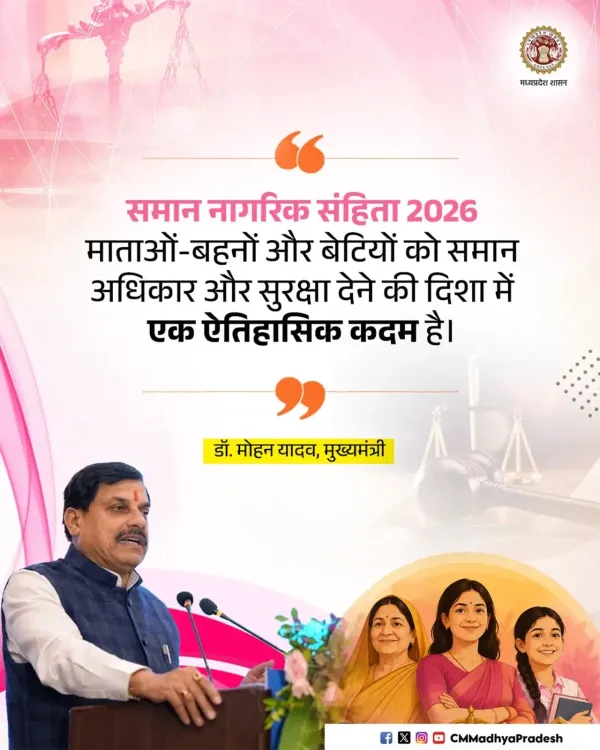
The Chief Minister's Office of Madhya Pradesh, on behalf of Chief Minister Dr. Mohan Yadav, declared on Monday, 27 July 2026 that the 'Uniform Civil Code 2026' is a historic step toward granting equal rights and protection to mothers, sisters, and daughters across the state.
Context
The post, shared from the official Chief Minister's Office account, quotes CM Dr. Mohan Yadav describing the UCC as 'maataon-bahanon aur betiyon ko saman adhikar aur suraksha dene ki disha mein ek aitihasik kadam' — 'a historic step in the direction of giving equal rights and protection to mothers, sisters, and daughters.' The framing places women's empowerment at the centre of the UCC argument, a consistent rhetorical posture of the Bharatiya Janata Party on this issue.
Policy Backdrop
Article 44 of the Indian Constitution, part of the Directive Principles of State Policy since 1950, directs the State to endeavour to secure a Uniform Civil Code for all citizens. The UCC proposes a common set of personal laws governing marriage, divorce, inheritance, and adoption, applicable uniformly regardless of religion. The BJP included a commitment to enact the UCC in its national election manifestos of 2014 and 2019, making it a long-standing pillar of the party's policy platform.
Madhya Pradesh, governed by the BJP, has positioned itself as an active state on social sector reforms and women's welfare. Chief Minister Dr. Mohan Yadav, who assumed office in December 2023, has continued this emphasis, and the invocation of a specific 'UCC 2026' label signals a defined legislative or administrative timeline the state government is working toward.
Stakeholders and Impact
The primary beneficiaries identified by the Chief Minister's Office are women — specifically mothers, sisters, and daughters in Madhya Pradesh. Proponents argue that a Uniform Civil Code would replace personal law systems that, in certain communities, permit unequal treatment in matters of marriage, divorce, and inheritance, thereby strengthening women's legal standing.
Critics of UCC proposals have historically raised concerns about religious freedom and the rights of minority communities to govern personal matters through their own customary laws. Legal scholars and community groups across India have debated the constitutional, social, and practical dimensions of such a code for decades. Any legislative move in Madhya Pradesh would likely invite scrutiny from these quarters as well as from opposition parties in the state assembly.
What's Next
The reference to 'UCC 2026' as a named initiative suggests the state government may be preparing legislation or a formal policy framework for introduction in the Madhya Pradesh Legislative Assembly. Consultations with legal experts, women's groups, and community representatives would typically precede such a step. The broader pattern across BJP-governed states indicates that state-level UCC announcements often serve both as policy groundwork and as political signalling. Whether Madhya Pradesh moves to table a bill or issue an executive framework in the coming months will be the key development to watch.
Point of View
Which is contentious, to gender equality, which commands broader public sympathy. For the BJP, state-level UCC momentum serves a dual purpose: advancing a core ideological commitment while building a record of governance ahead of electoral cycles. Madhya Pradesh naming a specific year in the initiative's title suggests the government intends to move from signalling to legislation, raising the stakes for both supporters and opponents. How the state handles consultations with diverse communities will determine whether UCC 2026 becomes a durable reform or a prolonged political flashpoint.
NationPress
27 Jul 2026
Frequently Asked Questions
What is the Uniform Civil Code 2026 in Madhya Pradesh?
'Uniform Civil Code 2026' is the name given by the Madhya Pradesh government to its initiative to introduce a common set of personal laws — covering marriage, divorce, inheritance, and adoption — applicable to all citizens of the state regardless of religion, with a stated focus on equal rights for women.
What did CM Mohan Yadav say about UCC?
CM Dr. Mohan Yadav described the 'Uniform Civil Code 2026' as a historic step in the direction of giving equal rights and protection to mothers, sisters, and daughters, as stated in a post from the Chief Minister's Office of Madhya Pradesh on 27 July 2026.
Is UCC a constitutional provision in India?
Yes. Article 44 of the Indian Constitution, part of the Directive Principles of State Policy, directs the State to endeavour to secure a Uniform Civil Code for all citizens throughout India, though it is not a justiciable right.
Which states have moved toward a Uniform Civil Code?
Multiple BJP-governed states have explored or announced steps toward uniform civil laws in recent years, with Madhya Pradesh now signalling a defined 2026 timeline. The specifics of legislation vary by state.
How does the UCC affect women's rights?
Proponents argue the UCC would replace personal law provisions in certain communities that allow unequal treatment of women in marriage, divorce, and inheritance, thereby strengthening their legal protections. Critics raise concerns about religious freedom and community autonomy.