CM Mohan Yadav Directs Dairy Expansion, Digital KCC Push in MP
Synopsis
MP Chief Minister Dr. Mohan Yadav has directed that improved cattle breeds be supplied to farmers through private partnerships, rural dairy centres be expanded, cooperative processes be digitised, and a time-bound online Kisan Credit Card portal and e-passbook facility be launched, alongside preparations for events in Indore.
Key Takeaways
Mohan Yadav issued directives on July 3, 2026 covering dairy expansion, digital credit access, and agricultural events.
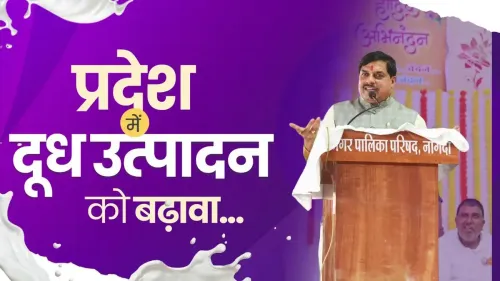
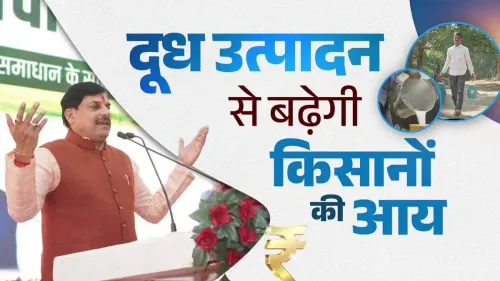
Farmers in Madhya Pradesh are to receive improved cattle breeds through collaboration with private institutions to boost milk production.
Dairy centres in rural areas are to be expanded as part of the state's agricultural infrastructure push.
A time-bound launch of an online Kisan Credit Card (KCC) portal and e-passbook facility has been directed, alongside digitisation of cooperative society processes.
A Vegetable Festival (Sabzi Mahotsav) and an Aquaculture Marketing Symposium are planned for Indore , with effective preparations specifically directed.
The directives align with the national Rashtriya Gokul Mission (2014) and the long-standing Kisan Credit Card scheme (1998) .
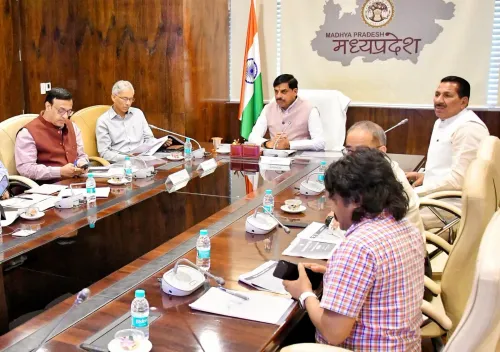
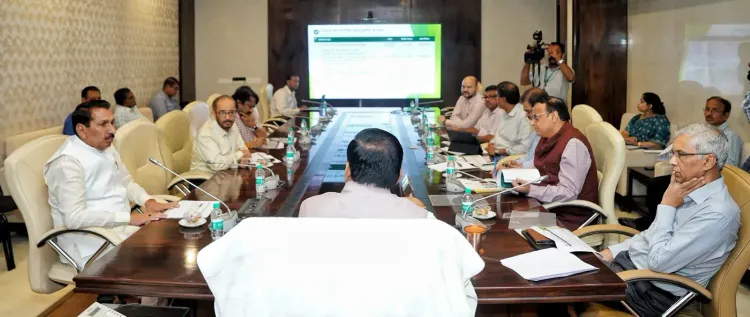
Madhya Pradesh Chief Minister Dr. Mohan Yadav on Friday, July 3, 2026, issued a set of directives covering dairy sector expansion, digitisation of cooperative processes, and preparation for agricultural events in Indore, signalling a multi-front push to strengthen the state's rural economy.
Context
Responding to a post by @Aidalsinghkbjp, Chief Minister Yadav outlined instructions for providing farmers with improved cattle breeds through private sector collaboration, and for expanding dairy centres in rural areas. In his own words (translated from Hindi): 'दुग्ध उत्पादन को बढ़ावा देने के लिए निजी संस्थाओं के सहयोग से किसानों को उन्नत नस्ल की गाय उपलब्ध कराई जाए' ('Improved-breed cows should be made available to farmers through collaboration with private institutions to promote milk production').
The directives also cover the expansion of dairy centres in villages, reflecting the state government's intent to deepen rural dairy infrastructure beyond existing public-sector frameworks.
Policy Backdrop
The cattle breed improvement thrust aligns with the nationally launched Rashtriya Gokul Mission (2014), which was designed to promote indigenous cattle breeds and raise milk productivity across Indian states. Madhya Pradesh has pursued dairy sector growth as part of its broader rural development agenda, with breed improvement and rural infrastructure forming recurring pillars of that effort.
On the credit and digitisation front, the Kisan Credit Card (KCC) scheme — introduced nationally in 1998 — remains a cornerstone of agricultural credit access. The Chief Minister's directive for a time-bound launch of an online KCC portal and an e-passbook facility for farmers reflects the state's alignment with wider e-governance initiatives aimed at simplifying service delivery for rural beneficiaries. Digitisation of cooperative society processes was also specifically included in the directives.
Stakeholders and Impact
Dairy farmers and rural cooperative members stand as the primary beneficiaries of these directives. Access to improved cattle breeds through private partnerships could meaningfully raise per-animal milk yields, while expanded dairy centres in villages would reduce the logistical burden on small and marginal farmers who currently lack nearby collection infrastructure.
The online KCC portal and e-passbook facility, once operationalised, would reduce dependence on physical branch visits and paperwork, a change that could benefit a large share of Madhya Pradesh's farming population that holds or is eligible for Kisan Credit Cards. Cooperative digitisation would similarly reduce processing delays and improve transparency for member farmers.
What's Next
Chief Minister Yadav also directed that effective preparations be ensured for a Vegetable Festival (Sabzi Mahotsav) and an Aquaculture Marketing Symposium, both planned for Indore. These events are intended to strengthen marketing linkages and value chains for vegetable and aquaculture producers in the state.
Key rollout milestones to watch include the launch timelines for the online KCC portal and e-passbook facility, the pace at which private partnerships for cattle distribution are formalised, and the outcomes of the Indore events in terms of market access for farmers. The convergence of these directives suggests a coordinated state-level effort to move simultaneously on production, credit, and market access across the agricultural sector.
Point of View
Credit, and market access — in a single administrative signal, which is notable for its breadth. The emphasis on private sector collaboration for cattle distribution, rather than purely state-driven supply, suggests a pragmatic shift in how Madhya Pradesh intends to scale breed improvement without stretching government logistics. Tying cooperative digitisation to a time-bound KCC portal launch indicates pressure to show measurable e-governance outcomes ahead of what could be a politically visible agricultural calendar. The Indore events further suggest the state is positioning itself to demonstrate value-chain outcomes, not just input-side interventions, to its farming constituency.
NationPress
3 Jul 2026
Frequently Asked Questions
What did MP CM Mohan Yadav direct regarding dairy farming?
CM Dr. Mohan Yadav directed that improved cattle breeds be made available to farmers through private sector partnerships and that dairy centres in rural areas of Madhya Pradesh be expanded to boost milk production.
What is the online Kisan Credit Card portal that Madhya Pradesh plans to launch?
The online Kisan Credit Card (KCC) portal is a digital platform intended to allow farmers to access crop credit facilities without visiting physical branches. MP's CM has directed its time-bound launch along with an e-passbook facility, building on the national KCC scheme that has been in place since 1998.
What events are planned in Indore related to agriculture?
A Vegetable Festival (Sabzi Mahotsav) and an Aquaculture Marketing Symposium are planned in Indore, with CM Yadav directing that effective preparations be ensured for both events to strengthen marketing linkages for farmers.
What is the Rashtriya Gokul Mission and how does it relate to MP's cattle plan?
The Rashtriya Gokul Mission was launched nationally in 2014 to promote indigenous cattle breeds and improve milk productivity. Madhya Pradesh's push to supply improved-breed cows to farmers through private institutions aligns with the objectives of this national programme.
How will cooperative digitisation help farmers in Madhya Pradesh?
Digitising cooperative society processes is expected to reduce paperwork, speed up service delivery, and improve transparency for member farmers, complementing the broader e-governance push that includes the online KCC portal and e-passbook facility.