CM Mohan Yadav, Gadkari launch e-bus, Sugam transport in MP
Synopsis
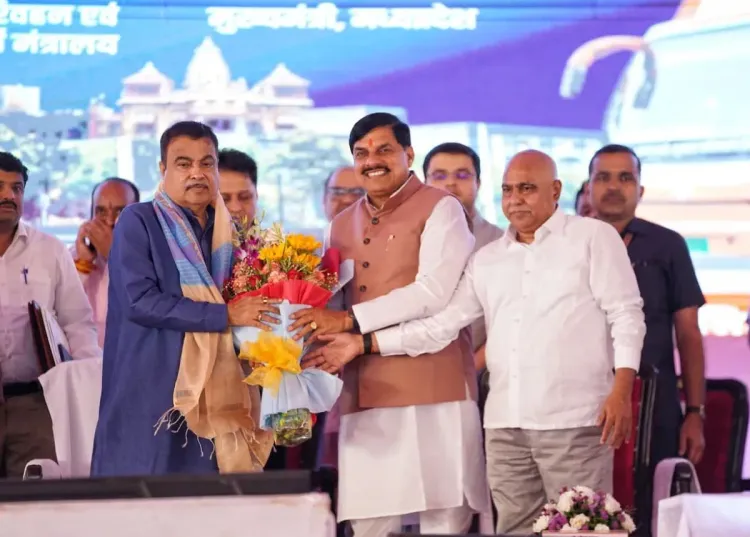
Chief Minister Dr. Mohan Yadav and Union Minister Nitin Gadkari launched the Mukhyamantri Sugam Parivahan Seva and PM E-Bus Sewa at BHEL Dashera Maidan, Bhopal on 25 September 2026, also signing MoUs with IIM Indore and the School of Planning and Architecture for transport planning support.
Key Takeaways
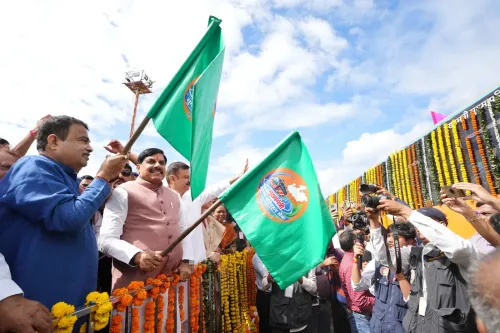
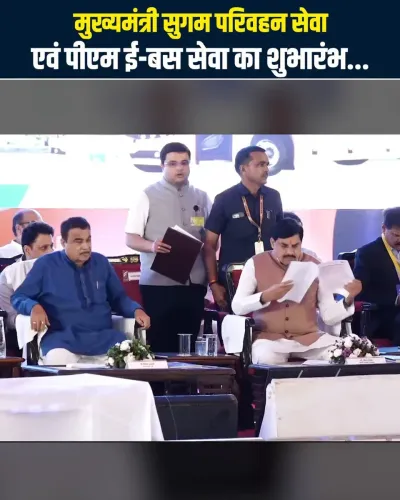
Mohan Yadav and Union Minister Nitin Gadkari jointly launched two transport schemes in Bhopal on 25 September 2026 .
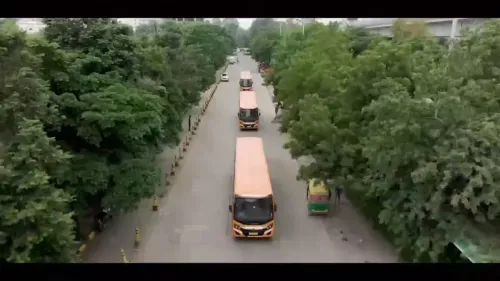
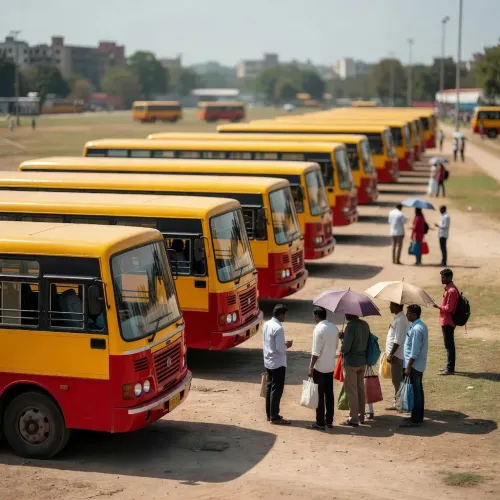
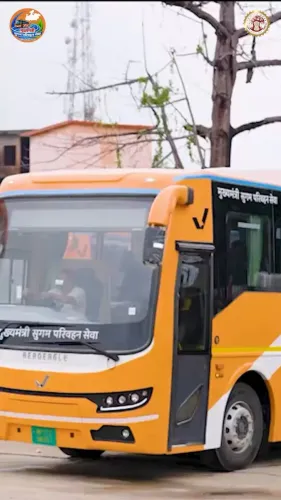
The Mukhyamantri Sugam Parivahan Seva is a new state-level passenger transport initiative aimed at smarter, safer commuting across Madhya Pradesh.
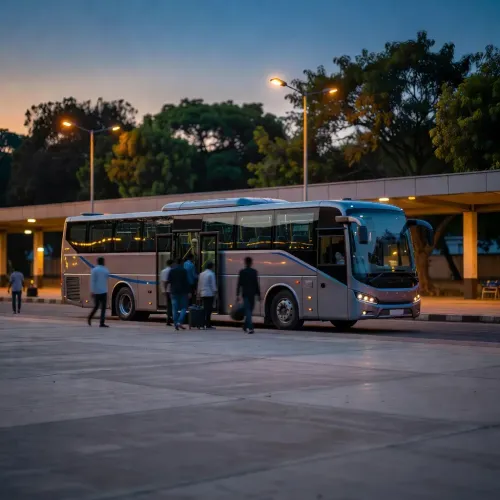
The PM E-Bus Sewa , a central government scheme, will deploy electric buses in Madhya Pradesh's urban corridors to cut emissions.
A booklet on Mukhyamantri Sugam Parivahan Seva was released at the event, signalling a structured, scalable policy framework.
MoUs were exchanged between MP Yatri Parivahan Evam Adhasanrachna Limited and IIM Indore and the School of Planning and Architecture for academic planning support.
The launch was held at BHEL Dashera Maidan, Bhopal , with the state's transport department as a key implementing partner.
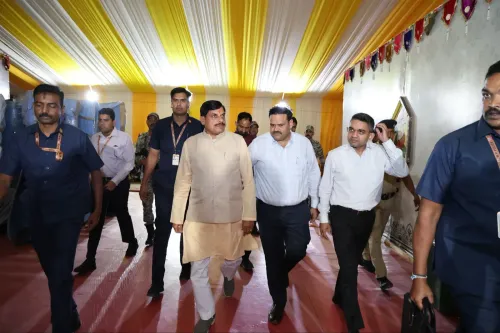
Madhya Pradesh rewired its public transport playbook on Friday, 25 September 2026, when Chief Minister Dr. Mohan Yadav and Union Minister for Road Transport and Highways Nitin Gadkari jointly inaugurated two landmark mobility schemes at BHEL Dashera Maidan, Bhopal — signalling that the state's commuter story is entering a sharply different chapter.
The Chief Minister's Office of Madhya Pradesh announced the twin launch on X, declaring: 'Madhya Pradesh badal raha hai... aaj se smart, suvidhajanakm, surakshit safar' — 'Madhya Pradesh is changing... from today, a smarter, more convenient, safer journey.' The two schemes unveiled at the event are the state's own 'Mukhyamantri Sugam Parivahan Seva' and the centrally-backed PM E-Bus Sewa, together forming a two-track push on both accessibility and clean mobility.
Two schemes, one vision for cleaner, smarter movement
The Mukhyamantri Sugam Parivahan Seva is a state-designed passenger transport initiative built to make everyday commuting more structured and commuter-friendly across Madhya Pradesh. A dedicated booklet on the scheme was released at the event, underscoring that this is a policy framework built to scale — not a one-off pilot. The PM E-Bus Sewa, a central government scheme, pushes electric buses into urban corridors to cut emissions and modernise fleet operations.
The co-presence of Gadkari — the architect of much of India's highway and road-transport reform over the past decade — lends the launch considerable political and institutional weight. It also signals that Bhopal and New Delhi are moving in coordinated lockstep on Madhya Pradesh's mobility upgrade, rather than pursuing parallel tracks.
IIM Indore and School of Planning and Architecture enter the picture
Perhaps the most forward-looking moment of the event was the exchange of Memoranda of Understanding (MoUs) between Madhya Pradesh Yatri Parivahan Evam Adhasanrachna Limited — the state's passenger transport and infrastructure body — and two premier academic institutions: IIM Indore and the School of Planning and Architecture.
Bringing a management institute and an architecture-and-planning school into a transport reform programme is a deliberate design choice. It means route optimisation, demand modelling, urban integration, and station design will be informed by research rigour rather than bureaucratic instinct alone. The MoUs are expected to shape how the new services are planned, phased, and eventually evaluated.
MP's broader mobility arc and what comes next
Madhya Pradesh has been quietly threading state-level transport reforms with central electric mobility programmes over the past two years. The launch today is the most public and high-profile articulation of that strategy. Electric buses reduce both the carbon footprint and the long-term operating cost burden on state transport corporations — a fiscal argument that travels well beyond environmental talking points.
The real test will be the phased rollout of both services across districts beyond Bhopal, and the pace at which the academic partnerships translate into on-ground improvements in route planning and infrastructure design. Today's event drew the blueprint. Execution starts now.
Point of View
With potential implications for how future tranches of central funding are allocated.
NationPress
25 Sept 2026
Frequently Asked Questions
What is Mukhyamantri Sugam Parivahan Seva in Madhya Pradesh?
Mukhyamantri Sugam Parivahan Seva is a state government passenger transport scheme launched by Chief Minister Dr. Mohan Yadav on 25 September 2026 to make commuting smarter, safer, and more convenient across Madhya Pradesh. A dedicated booklet on the scheme was also released at the launch event in Bhopal.
What is PM E-Bus Sewa and which cities in MP will get electric buses?
PM E-Bus Sewa is a central government scheme that deploys electric buses in select urban corridors to reduce emissions and modernise public transport fleets. It was jointly launched in Madhya Pradesh at Bhopal's BHEL Dashera Maidan on 25 September 2026. The phased rollout to other MP cities is expected to follow.
Why did Nitin Gadkari attend the Madhya Pradesh transport launch?
As Union Minister for Road Transport and Highways, Nitin Gadkari co-launched the PM E-Bus Sewa component of the event, signalling strong Centre-state coordination on Madhya Pradesh's public transport reforms.
What MoUs were signed at the Bhopal transport event on 25 September 2026?
Madhya Pradesh Yatri Parivahan Evam Adhasanrachna Limited signed MoUs with IIM Indore and the School of Planning and Architecture to bring academic expertise in management and urban planning to the design and execution of the state's new transport services.
Where was the Madhya Pradesh transport scheme launch held?
The launch event was held at BHEL Dashera Maidan in Bhopal, Madhya Pradesh, on 25 September 2026.