CM Mohan Yadav Hails Historic Narmada Award Settlement
Synopsis
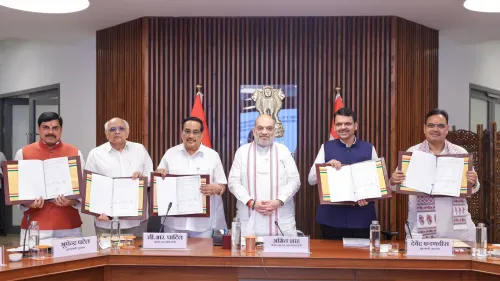
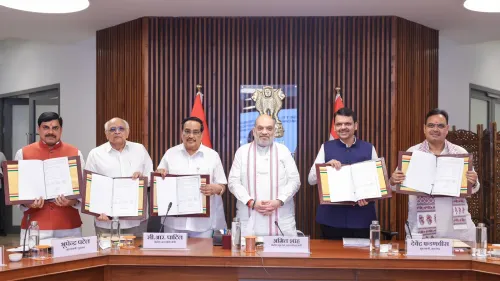
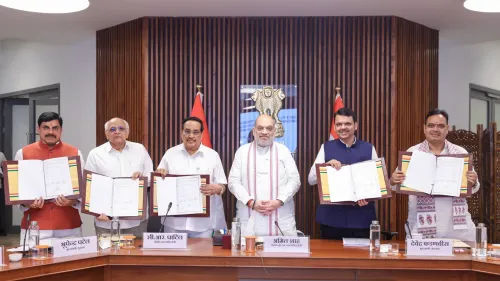
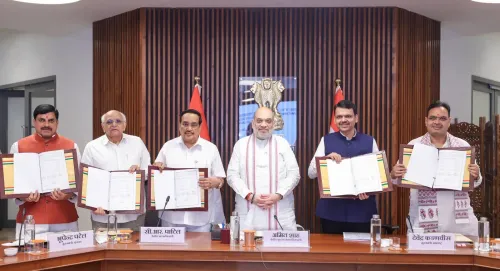
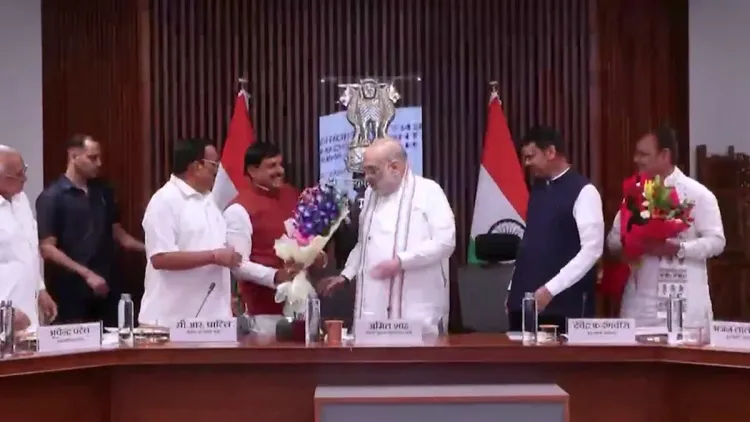
All pending Narmada Award disputes between Madhya Pradesh, Gujarat, Rajasthan, and Maharashtra were resolved at a New Delhi meeting chaired by Union Home Minister Amit Shah, MP CM Dr. Mohan Yadav announced on 7 July 2026, hailing it as a landmark moment for cooperative federalism.
Key Takeaways
All pending inter-state disputes related to the Narmada Award among Madhya Pradesh , Gujarat , Rajasthan , and Maharashtra were resolved at a single meeting in New Delhi .
The meeting was chaired by Union Home and Cooperation Minister Amit Shah .
Union Jal Shakti Minister C.
Patil was also credited for facilitating the resolution.
The original Narmada Water Disputes Tribunal award dates to December 1979 , with implementation disputes persisting for decades since.
Mohan Yadav described the outcome as 'an outstanding example of strengthening cooperative federalism.' Formal gazette notifications and Narmada Control Authority orders are expected as the next steps.
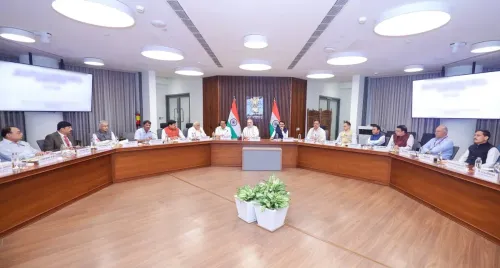
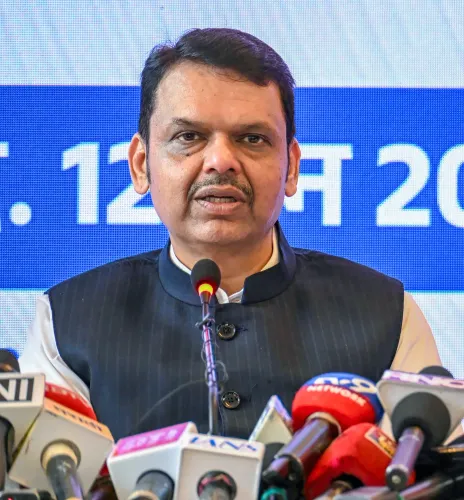
Madhya Pradesh Chief Minister Dr. Mohan Yadav announced on Tuesday, 7 July 2026 that all pending disputes between Madhya Pradesh, Gujarat, Rajasthan, and Maharashtra concerning the Narmada Award have been resolved in a landmark meeting chaired by Union Home and Cooperation Minister Amit Shah in New Delhi.
Context
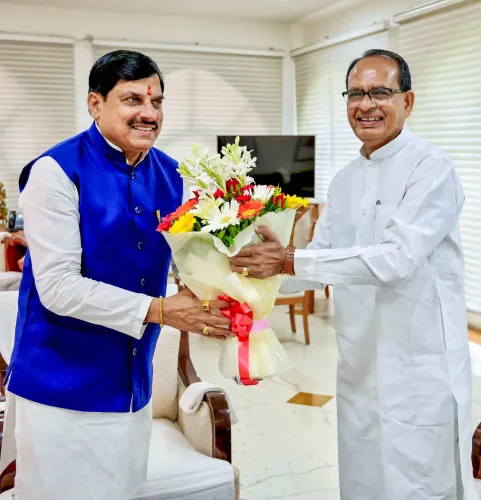
Dr. Yadav described the development as 'historic', stating in his post that the meeting — held under Shah's chairmanship — brought about a resolution of 'all pending matters' of Madhya Pradesh along with the three other riparian states. He expressed gratitude to Prime Minister Narendra Modi, Amit Shah, and Union Jal Shakti Minister C. R. Patil for facilitating the settlement. In his words: 'Sahakari sanghavad ki bhavna ko sashakt karne vala ek utkrisht udaharan' — 'an outstanding example of strengthening the spirit of cooperative federalism.'
The Narmada Water Disputes Tribunal, constituted in 1969, delivered its final award in December 1979, prescribing water shares and submergence levels among the four riparian states. Despite that award, implementation disputes have persisted for decades, creating friction between state governments over water accounting, project clearances, and compensation claims.
Policy Backdrop
The Narmada Control Authority, the statutory body established to implement the 1979 Narmada Award, has long been the arena for inter-state disagreements that resisted resolution through routine administrative channels. The involvement of both the Ministry of Home Affairs and the Ministry of Jal Shakti in brokering this settlement signals a deliberate institutional preference for political coordination over protracted judicial proceedings under the Inter-State River Water Disputes Act.
This approach mirrors the Modi government's broader pattern of deploying senior cabinet ministers as mediators in long-standing inter-state water disputes — a model that has been applied across several river basins where tribunal litigation has dragged on for decades without enforceable outcomes.
Stakeholders and Impact
The four riparian states — Madhya Pradesh, Gujarat, Rajasthan, and Maharashtra — collectively account for a vast share of the Narmada basin's agricultural and drinking-water dependents. Farmers in the basin's command areas, displaced communities awaiting rehabilitation settlements, and state irrigation departments are among the most directly affected stakeholders.
For Madhya Pradesh, which contributes the largest share of the Narmada's catchment area, resolution of pending award-related matters could unblock project clearances and water-accounting adjustments that have held up downstream planning. Dr. Yadav framed the outcome as the dawn of 'a new era of mutual cooperation and coordination among states' under Prime Minister Modi's leadership.
What's Next
The immediate next steps will likely involve a formal gazette notification of the resolved issues and follow-up orders from the Narmada Control Authority on any revised project clearances or water-accounting frameworks. State governments will need to translate the political settlement into administrative and legal instruments before on-ground implementation can begin.
The resolution, if formalised swiftly, could set a precedent for similar negotiated settlements in other inter-state river disputes currently before tribunals — reinforcing the Union government's preference for cooperative, ministerially-brokered outcomes over adversarial litigation.
Point of View
Securing closure on these long-pending matters is a significant administrative win for CM Yadav, who can now point to tangible federal dividends. The framing of the settlement as 'cooperative federalism' is also politically significant: it positions the Centre not as an arbitrator imposing terms, but as a facilitator of consensus — a narrative that serves both the Union government and the ruling party in all four riparian states. Whether the settlement translates into durable on-ground implementation will be the real test of its historic billing.
NationPress
7 Jul 2026
Frequently Asked Questions
What is the Narmada Award and why were there pending disputes?
The Narmada Award is the final order issued by the Narmada Water Disputes Tribunal in December 1979 , allocating river water shares and setting submergence levels among Madhya Pradesh , Gujarat , Rajasthan , and Maharashtra . Despite the award, disputes over water accounting, project clearances, and related matters persisted for decades.
Who chaired the meeting that resolved the Narmada disputes?
Union Home and Cooperation Minister Amit Shah chaired the meeting held in New Delhi on 7 July 2026 , at which all four riparian states reached a settlement on pending Narmada Award matters.
Which states were involved in the Narmada Award dispute resolution?
The four riparian states involved are Madhya Pradesh , Gujarat , Rajasthan , and Maharashtra , all of which share the Narmada river basin .
What is cooperative federalism and how does this settlement relate to it?
Cooperative federalism refers to a model of governance where the Union and state governments work collaboratively rather than adversarially. CM Dr. Mohan Yadav described the Narmada settlement as 'an outstanding example' of this principle, noting that states resolved their disputes through mutual cooperation under central facilitation.
What happens after the Narmada Award disputes are resolved?
The next steps include formal gazette notification of the resolved issues and follow-up orders from the Narmada Control Authority on project clearances and water-accounting frameworks, which will translate the political settlement into enforceable administrative action.