CM Mohan Yadav Hails India's First Naxal-Free Diwali
Synopsis
MP Chief Minister Dr. Mohan Yadav shared PM Modi's declaration that Diwali 2026 marks the first festival after India defeated decades of Naxal-Maoist insurgency, with every district now cleared of left-wing extremist violence.
Key Takeaways
Madhya Pradesh CM Dr.
Mohan Yadav shared PM Modi's statement declaring Diwali 2026 India's first festival after a complete victory over Naxal-Maoist insurgency.
PM Modi framed it as a triple first: end of the decades-long war, every district declared Naxal-free, and crores of citizens free from insurgent fear.
The Naxalite-Maoist insurgency began in 1967 and at its peak engulfed large parts of central and eastern India in the 'Red Corridor.' The SAMADHAN doctrine , introduced in 2017 , combined security operations, road infrastructure and tribal welfare delivery to shrink insurgent space.
Tribal communities across formerly affected districts in Chhattisgarh, Jharkhand, Odisha, Maharashtra and Madhya Pradesh stand to gain from post-conflict development packages.
Ministry of Home Affairs rollout of special development packages in cleared districts will be the key indicator of whether military gains translate into lasting change.
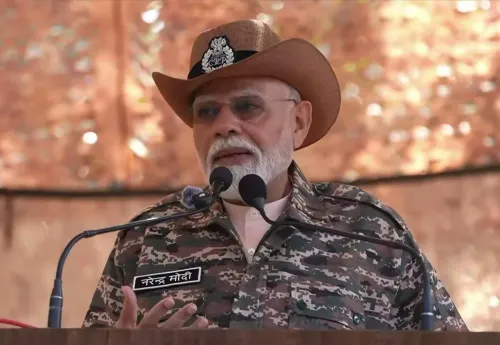
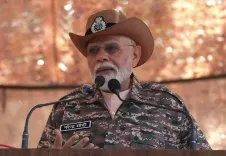
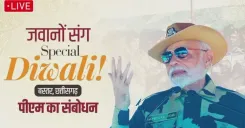
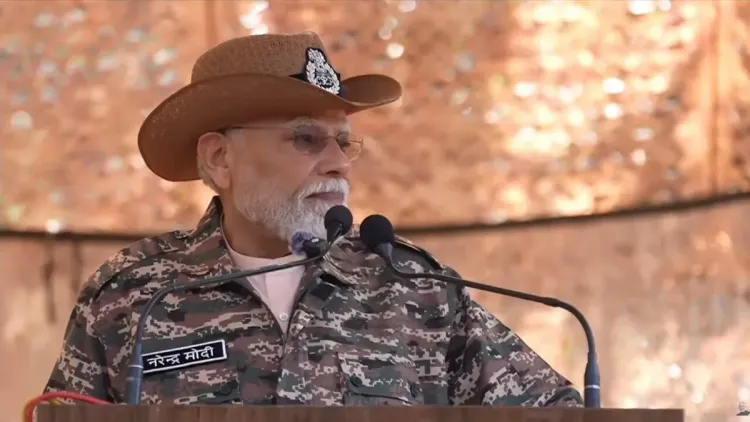
For the first time in decades, Diwali 2026 arrives without the shadow of Naxal violence over any district in India — and Madhya Pradesh Chief Minister Dr. Mohan Yadav marked the moment on Sunday, November 8 by sharing what he called a historic declaration from Prime Minister Narendra Modi.
Quoting the Prime Minister directly on X, Dr. Yadav wrote: 'साल 2026 की ये दिवाली वाकई विशेष है' — 'This Diwali of 2026 is truly special.' The post captures three firsts: the first Diwali after India claims victory in its decades-long war against Naxal-Maoist terror; the first Diwali with every district declared insurgency-free; and the first Diwali where crores of citizens have, in Modi's framing, 'defeated the fear of Naxalism.'
Decades of red corridor violence — and the long road to silence
The Naxalite-Maoist insurgency stretches back to 1967, when an agrarian uprising in Naxalbari, West Bengal ignited a movement that would eventually engulf districts across Chhattisgarh, Jharkhand, Odisha, Maharashtra, Telangana and Madhya Pradesh in a deadly 'Red Corridor.' At its peak, the insurgency was responsible for hundreds of security-force and civilian deaths every year, cutting off tribal communities from development and holding entire districts in a grip of fear.
The Central Armed Police Forces, led primarily by the CRPF, waged a sustained counter-insurgency campaign across this terrain in coordination with state police. The operations were grinding, dangerous, and slow — measured in ambushes neutralised and forest strongholds dismantled rather than in clean battle lines.
The SAMADHAN doctrine: security plus welfare as one strategy
The turning point began to crystallise after 2017, when the Ministry of Home Affairs formalised the SAMADHAN doctrine — an integrated approach combining kinetic security operations, intelligence coordination, road infrastructure into previously inaccessible forest zones, and direct welfare delivery to tribal communities who had long been exploited by Maoist cadres as a recruitment base.
Government data from 2013 to 2021 had already recorded a steady reduction in Naxal-affected districts and violent incidents. The pattern mirrored earlier successes in reducing insurgent violence in India's Northeast, where development investment and targeted operations worked together to shrink the operational space of armed groups. The 2026 declaration, as framed by PM Modi and amplified by CM Yadav, represents the culmination of that multi-decade arc.
What a Naxal-free map means for tribal India
The stakes of this milestone go beyond security statistics. The districts that formed the Red Corridor are home to some of India's most economically marginalised tribal communities — populations who bore the heaviest cost of the conflict on both sides, caught between insurgent coercion and security-force operations. A fully cleared map, if sustained, opens the path for schools, hospitals, roads and banking services to reach communities that had been denied them for a generation.
The Ministry of Home Affairs had flagged special development packages for formerly Naxal-affected districts as the next phase of the SAMADHAN framework — the rollout of those packages will be the real measure of whether the military victory translates into lasting peace for the people it was meant to protect.
Diwali has long been a festival of light triumphing over darkness. This year, the government is making a point of saying the metaphor finally has a map to match it.
Point of View
Diwali, to a security achievement in a way designed to crystallise public memory of the Modi government's counter-insurgency record. By quoting the Prime Minister rather than speaking in his own voice, CM Yadav amplifies the message while positioning himself within the larger BJP national-security narrative. The claim lands at a moment when the government is already shifting its focus from clearing districts to delivering development inside them — the harder, slower, less telegenic second act. Whether the declaration of complete victory holds up against Ministry of Home Affairs ground data will determine how durable this milestone proves to be in India's internal-security discourse.
NationPress
8 Nov 2026
Frequently Asked Questions
What did PM Modi say about Diwali 2026 and Naxalism?
PM Modi declared Diwali 2026 historically special, calling it the first Diwali after India's decades-long victory over Naxal-Maoist insurgency and the first with every district in the country free from left-wing extremist violence.
Is India really Naxal-free in 2026?
The Indian government has declared every district free from Naxal-Maoist insurgency by Diwali 2026. This follows a sustained reduction in affected districts and violent incidents recorded between 2013 and 2021 under the SAMADHAN counter-insurgency framework.
What is the SAMADHAN doctrine against Naxalism?
SAMADHAN is a Ministry of Home Affairs strategy introduced in 2017 that combines kinetic security operations, intelligence sharing, road-building into forest zones, and welfare delivery to tribal communities to eliminate left-wing extremism.
Which states were part of the Naxal Red Corridor in India?
The Red Corridor primarily covered Chhattisgarh, Jharkhand, Odisha, Maharashtra, Telangana and Madhya Pradesh — states where Maoist cadres operated across forest districts and targeted security forces and state infrastructure.
Why did CM Mohan Yadav post about Naxalism on Diwali 2026?
CM Mohan Yadav shared PM Modi's statement to mark what the government calls a historic security milestone — using the symbolism of Diwali, the festival of light over darkness, to underscore the declaration of a Naxal-free India.